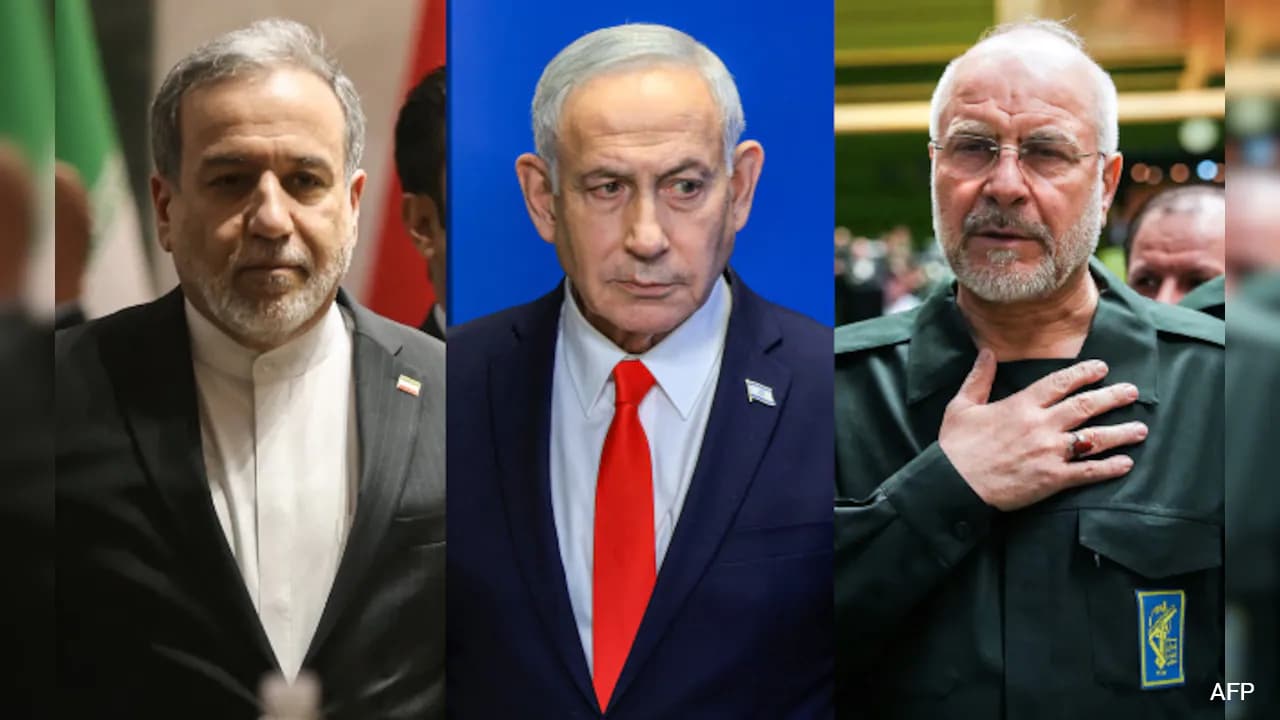
The official denial from the Israeli Prime Minister’s office arrived with expected hostility, dismissing reports that it plotted to assassinate Iran’s top diplomatic envoys as mere fabrication. Yet behind the performative outrage lies a fractures-deep reality of modern geopolitics where allied war aims have split wide open. Washington wants a diplomatic exit from a regional conflagration that began with a devastating escalation earlier this year. Israel, having systematically dismantled Iran’s high command, sees any diplomatic concession as an existential betrayal of its military gains.
When current and former United States officials leaked details of their frantic backdoor warnings to Tehran this week, they exposed a extraordinary dynamic. The White House was so convinced of an impending Israeli strike on Iranian negotiators that it used regional intermediaries to protect its enemy's diplomats from its closest ally. The targets were not rogue field commanders, but Iranian Foreign Minister Abbas Araghchi and Parliament Speaker Mohammad Bagher Ghalibaf. Had either man been eliminated during the high-stakes intermediary peace negotiations held this spring, the diplomatic track would have collapsed completely, plunging the region back into full-scale war.
The Midair Intercept That Rattled Washington
Intelligence reporting indicates that the threat to the Iranian negotiating team was never theoretical. In mid-April, a high-profile diplomatic summit in Islamabad brought Ghalibaf face-to-face with US Vice President JD Vance. The meeting represented the most serious push for a lasting ceasefire since the outbreak of hostilities on February 28, a conflict ignited by the dramatic airstrike that eliminated Supreme Leader Ayatollah Ali Khamenei.
As Ghalibaf’s return flight took off from Pakistan, escorted to the border by Pakistani fighter jets, Iranian intelligence networks picked up an imminent threat. Two Israeli fighter jets had breached western Iranian airspace, entering via Iraq on a trajectory designed to intercept the diplomatic transport.
The aircraft executed a sudden emergency diversion to Mashhad in northeastern Iran. Ghalibaf and his staff escaped the immediate aerial bottleneck, completing their journey to Tehran via an arduous eight-hour overland drive.
To the security establishment in Tel Aviv, Ghalibaf is a target who has twice slipped through their fingers, having previously survived being pulled from rubble during a 12-day conflict in June 2025 and again during a bunker strike early this year. To the State Department and the White House, he and Araghchi represent the final thread of political pragmatism left within Iran's heavily degraded leadership framework.
A Radical Divergence of War Objectives
The friction points between Washington and Tel Aviv are no longer about tactical timing; they are fundamentally about the desired endgame. At the onset of the war in late February, both nations operated under the shared assumption that systemic regime change in Iran was the ultimate goal. The rapid elimination of senior figures, including national security chief Ali Larijani and former foreign minister Kamal Kharazi, left Iran’s traditional chain of command completely shattered.
American intelligence assessments shifted rapidly as the spring advanced. Analysts in Washington concluded that despite the structural decapitation of its top tier, Iran’s political and military architecture would not dissolve into a Western-style democracy or a clean vacuum. Instead, a chaotic collapse promised endless asymmetric warfare and a permanent closure of the critical Strait of Hormuz.
The White House pivoted toward a negotiated settlement designed to stabilize the global energy corridor.
Israel’s security cabinet viewed this shift as a fatal loss of nerve. From the perspective of Israeli military planners, halting the campaign to allow Araghchi and Ghalibaf to negotiate a diplomatic face-saving exit allows Iran to institutionalize its remaining nuclear ambitions.
The Logistics of Backdoor Warnings
The mechanics of how Washington moved to protect the Iranian delegation highlight the sheer breakdown of trust between American and Israeli intelligence agencies. Normally, an allied superpower would use direct intelligence sharing to dissuade a partner from an operation that threatened broader strategic goals. In this instance, US officials realized that formal demarches to Jerusalem were being ignored.
Washington turned to a network of regional intermediaries, specifically Qatar and Pakistan, to deliver real-time security guarantees to Tehran. The messaging was blunt. The United States could not explicitly control Israeli tactical movements, but it would provide the necessary intelligence windows to ensure the Iranian negotiators survived long enough to keep the ceasefire talks alive.
This created a bizarre scenario where American intelligence assets were effectively monitoring Israeli military movements not to assist them, but to tip off the very nation they had been fighting weeks prior.
Pakistan played a particularly aggressive role in this diplomatic shield. As early as March, Pakistani officials had warned their American counterparts that if Araghchi and Ghalibaf were eliminated, there would be no functional government left in Tehran capable of enforcing a ceasefire. The warning was clear: kill the remaining pragmatists, and the West would find itself negotiating with decentralized, radicalized paramilitaries who have nothing left to lose.
The Strategy of Decapitation vs. The Necessity of Governance
The underlying tension relies on an old intelligence dilemma. Can a nation achieve peace purely through the elimination of its adversaries? Israel’s strategy of total decapitation has proven highly effective at disrupting operational logistics, yet it ignores the reality of what happens when a state loses its capacity to govern itself.
+-------------------------------------------------------------+
|               THE DIPLOMATIC RISK MATRIX                     |
+-------------------------------+-----------------------------+
| Israeli Tactical Objective    | Total Decapitation of High  |
|                               | Command                     |
+-------------------------------+-----------------------------+
| US Strategic Objective        | Restored Strait of Hormuz   |
|                               | Freedom of Navigation       |
+-------------------------------+-----------------------------+
| High-Value Negotiators        | Abbas Araghchi              |
|                               | Mohammad Bagher Ghalibaf    |
+-------------------------------+-----------------------------+
| Intermediary Channels         | Doha, Qatar / Islamabad     |
+-------------------------------+-----------------------------+
A complete breakdown of Iranian state authority does not yield a peaceful Middle East. It guarantees a highly unpredictable landscape of regional warlords, unchecked missile stockpiles, and absolute chaos along the major global shipping lanes.
The Trump administration’s insistence that the peace process must play out stems from a desire to lock in a historic foreign policy victory without committing American ground forces to an open-ended stabilization campaign. The White House wants the global economy insulated from energy price shocks, a goal that requires a functioning, legally recognized government in Tehran to sign the accords.
Israel’s ongoing dismissal of these developments as fake news is a necessary public relations posture. Acknowledging that its closest ally actively intervened to protect its primary targets would signal a catastrophic diplomatic rupture that neither government can afford to publicize. But on the tarmac in Mashhad and in the classified briefing rooms of Washington, the message has been clearly received. The war for the future of the region is no longer being fought just between enemies, but between allies who cannot agree on what victory looks like.