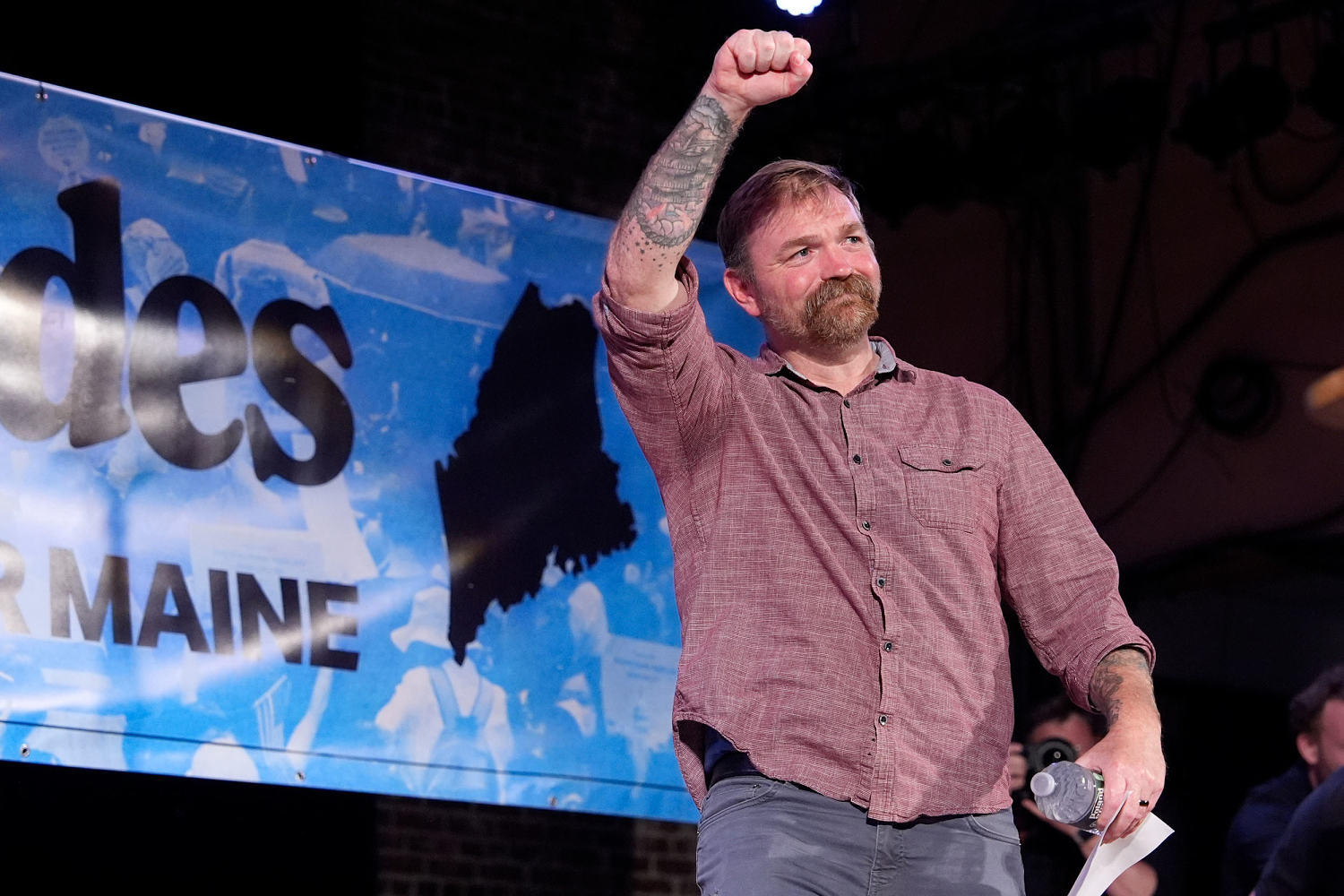
National Democratic strategists in Washington wanted a quiet, professional coronation in Maine to prepare for a grueling general election battle against veteran Republican Senator Susan Collins. Instead, Tuesday’s primary election delivered a high-stakes stress test of a fracturing political coalition. The sudden rise of Democratic front-runner Graham Platner has transformed what should have been a standard midterm primary into a volatile referendum on whether working-class populism can survive a barrage of personal scandals.
Platner, a 41-year-old Marine veteran and oyster farmer, holds a dominant position in the primary voting despite a relentless cycle of damaging headlines. His primary victory became almost guaranteed after incumbent Governor Janet Mills suspended her own Senate campaign in late April, leaving the state party establishment with no viable fallback candidate. For national Democrats, the race has exposed a deep rift between the institutional desire for vetted, disciplined candidates and a grassroots electorate desperate for an aggressive anti-establishment messenger.
The Ghost of the Vetting Failure
The crisis surrounding the Maine primary stems from a fundamental breakdown in how modern political parties evaluate candidates before they reach the ballot. Political establishment figures traditionally favor predictable resumes, corporate fundraising networks, and tightly controlled messaging. Platner represents the absolute antithesis of this model, carrying a background shaped by combat tours, raw internet history, and public personal struggles.
Institutional Vetting Priority   vs.   Grassroots Populist Appeal
------------------------------         --------------------------
• Controlled, safe rhetoric            • Raw, anti-establishment messaging
• Reliable corporate fundraising       • Small-dollar economic outrage
• Predictable, spotless resumes        • Relatable, flawed lived experience
National groups failed to appreciate how deeply Platner's anti-oligarchy platform would resonate with a state electorate feeling squeezed by housing costs and stagnant wages. By the time the national press corps unearthed problematic social media posts, a former Nazi-themed tattoo that Platner claimed he did not recognize and has since covered, and a string of toxic relationship allegations from his past, his grassroots organization was too large to dismantle.
The newest revelations arrived in waves during the days immediately preceding the vote. First came a Wall Street Journal report detailing sexually explicit text messages sent to multiple women early in his marriage to Amy Gertner. This was swiftly followed by a New York Times investigative piece featuring accounts from former girlfriends, including a former Republican operative who described volatile and physically threatening behavior during arguments.
In ordinary political environments, a double-barrel exposure of this magnitude on the eve of an election triggers an immediate campaign collapse. Senior staff resign, endorsements vanish, and fundraising dries up. Yet inside Maine, the institutional gravity failed to pull Platner down.
Why the Scandals Failed to Stick
To understand why the primary electorate did not abandon Platner, one must look at the specific economic geography of Maine. The state's second congressional district and coastal working communities have long felt abandoned by the polite, technocratic policies of mainstream Democrats. When Platner rails against the billionaire class or launches an ad campaign attacking the private equity owners of the Boston Red Sox for ruining the team, his supporters do not hear a politician. They hear someone who shares their anger.
The campaign effectively neutralized the personal controversies by leaning into a narrative of combat-induced trauma and subsequent redemption. Platner openly acknowledged a dark period in his life defined by undiagnosed PTSD and severe alcohol abuse following four combat tours in Iraq and Afghanistan. By framing his past indiscretions as the visible scars of a broken military veteran rather than the entitlement of a career politician, his campaign offered voters a powerful alternative narrative.
Supporters chose to view the steady drip of opposition research as a coordinated hit job engineered by national elites to protect the status quo. In a remarkable demonstration of this dynamic, Platner’s campaign recorded its highest small-dollar fundraising day of the spring in the 24 hours immediately following the New York Times report on his past relationships.
The institutional reaction within the state reflects this grassroots reality. While progressive national figures like Senators Bernie Sanders and Elizabeth Warren previously provided crucial endorsements, local down-ballot Democrats have been forced to walk a hazardous tightrope. Candidates for governor and Congress cannot afford to alienate Platner’s fiercely loyal base, but they also fear being dragged down by his personal baggage in the general election.
Former Maine House Speaker Hannah Pingree summarized the uncomfortable consensus among local leaders by noting that while the women who spoke out deserved to be heard, it was ultimately up to Platner to make his case directly to the voters rather than relying on party surrogates to shield him.
The General Election Trap
While Platner is poised to clear the primary hurdle, his survival strategy has set a dangerous trap for the general election in November. Primary voters are highly ideological and willing to overlook severe personal flaws to secure a fighter who reflects their anger. General election voters are far less forgiving.
Susan Collins has held her Senate seat since 1997 by consistently winning over moderate, independent voters, particularly suburban women who decide statewide races in Maine. By building a defense mechanism around the idea that his private life has been weaponized by a hostile establishment, Platner has locked himself into a scorched-earth populist posture. This approach strengthens his bond with his existing supporters but severely limits his ability to build the broad coalition required to unseat a five-term incumbent.
National Republicans are already preparing a massive advertising onslaught that will ensure every independent voter in Maine is intimately familiar with the details of Platner’s text messages, his past online commentary, and the testimonies of his former partners. The central question for November is no longer whether voters like Susan Collins. It is whether they can bring themselves to vote for an unstable challenger.
The Democratic establishment now faces a grim reality. They are bound to a nominee who refuses to run a traditional, disciplined campaign, whose past contains vulnerabilities that cannot be spun away, and whose base is completely immune to traditional political gravity. The party did not choose this path, but they must now walk it to the end.