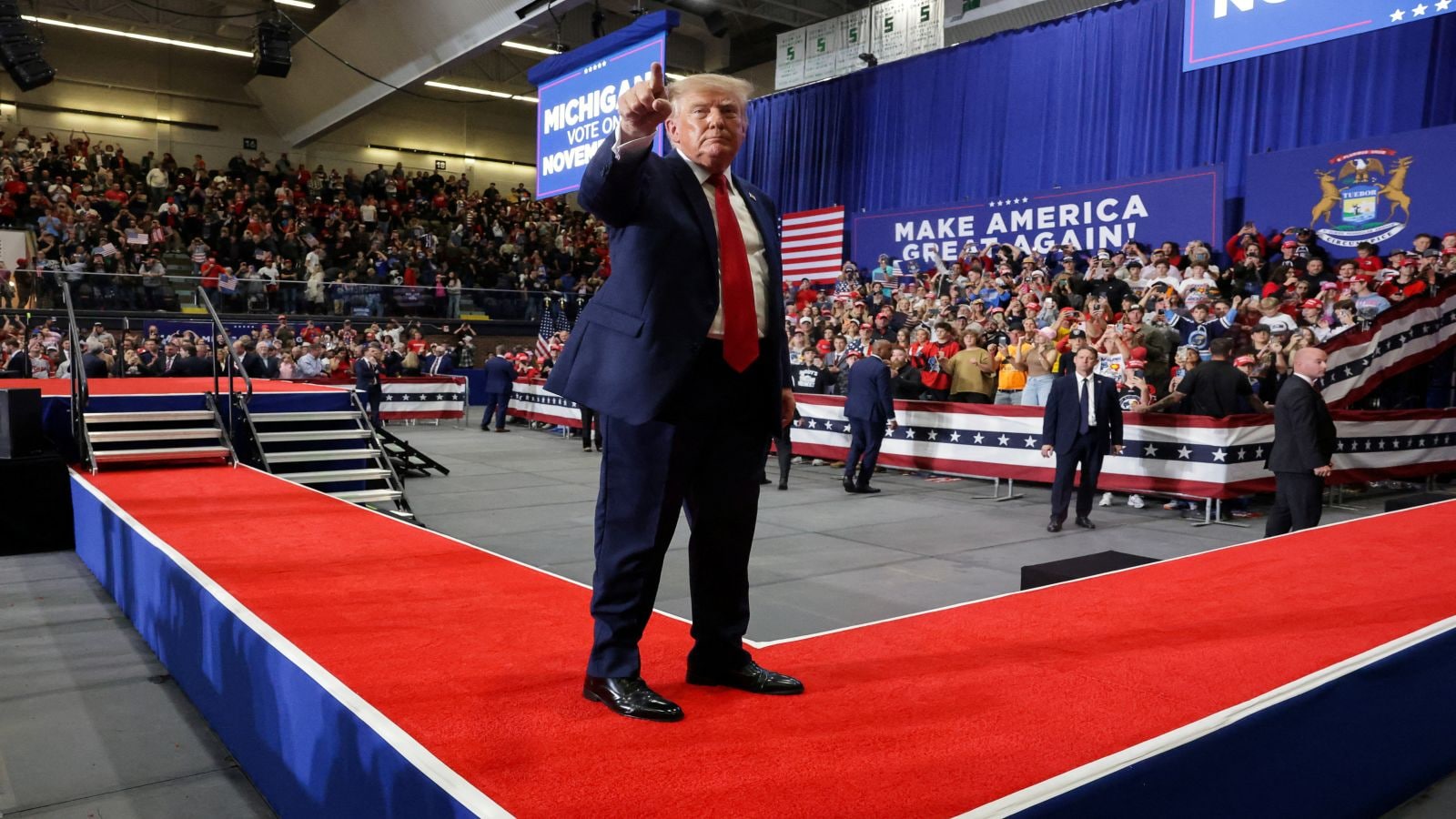
When Israeli opposition leader Yair Lapid labeled Donald Trump’s decision to end US military aid to Israel a "severe political, security failure," he wasn't just taking a routine swipe at Prime Minister Benjamin Netanyahu’s diplomatic strategy. He was sounding an alarm over the potential dismantling of a decades-old security architecture that has long underpinned Middle Eastern deterrence.
The numbers tell a stark story. Under the current 10-year Memorandum of Understanding (MOU) signed during the Obama administration—which runs through 2028—Washington committed to providing Israel with $3.8 billion annually in Foreign Military Financing (FMF) and missile defense funding. Cutting off that pipeline doesn't merely shrink a line item in Jerusalem's budget; it fundamentally alters how the Israel Defense Forces (IDF) procure advanced weaponry, maintain their Qualitative Military Edge (QME), and signal unconditional American backing to regional adversaries like Iran and Hezbollah.
To understand why Lapid reacted with such urgency, you have to look past the immediate partisan point-scoring in the Knesset. In Israeli politics, the health of the US-Israel relationship is the ultimate barometer of a prime minister's competence. By framing the end of US aid as a failure of the current government, Lapid is arguing that Jerusalem lost its most vital strategic anchor on Netanyahu’s watch.
The Mechanics of the $3.8 Billion Lifeline
Most public debates over foreign aid treat the money as a simple cash transfer. That is not how Foreign Military Financing works.
Under the terms of the MOU, Israel is required to spend virtually all of those billions right back in the United States, purchasing American-made defense systems, fighter jets, and precision-guided munitions from contractors like Lockheed Martin, Boeing, and Raytheon. During the previous agreement, Israel was permitted to convert roughly 26 percent of the aid into shekels to spend on its own domestic defense industry—a provision known as Off-Shore Procurement (OSP). The 2016 deal phased out OSP entirely by 2028, tethering the IDF's modernization directly to American assembly lines.
What Happens When the Pipeline Closes
If Washington terminates this funding, the immediate shock hits two distinct areas:
- Procurement Budgets: Israel’s defense establishment plans acquisitions in multi-year cycles. Squadrons of F-35 stealth fighters, KC-46 aerial refueling tankers, and heavy cargo helicopters are financed years in advance using guaranteed FMF credits. Removing that guarantee forces the Israeli Ministry of Defense to either raid domestic social spending to cover the shortfall or scale back its force-building plans.
- Joint Missile Defense: Roughly $500 million of the annual package is dedicated specifically to cooperative missile defense programs, including Iron Dome, David’s Sling, and the Arrow system. These are not one-way donations. The US co-develops these systems, shares the intellectual property, and increasingly buys them for its own forces. Severing the aid structure complicates the legal and financial frameworks that keep those joint engineering teams running.
Why Lapid Calls It a Security Failure
Lapid’s critique rests on a core principle of Israeli national security doctrine: deterrence relies on perception as much as hardware.
For decades, the annual aid package served as a tangible, bipartisan vote of confidence from Washington. Even when the White House and the Prime Minister’s Office clashed over settlements, judicial reform, or military tactics, the check cleared. Regional adversaries understood that an attack on Israel risked confronting the full industrial and logistical weight of the Pentagon.
When a US administration moves to end that aid—particularly an administration previously viewed by the Israeli right as an unquestioned ally—it sends a different signal to Tehran. It suggests that American backing is transactional, conditional, and subject to abrupt reversal. For an opposition leader trying to unseat a long-serving premier, that perception is political gold. Lapid’s argument to the Israeli public is straightforward: a government that alienates Washington to the point of losing guaranteed military support cannot be trusted with the country's survival.
The Nationalist Counter-Argument
Yet Lapid’s outrage collides with a growing school of thought inside Israel—including voices within Netanyahu’s own coalition and conservative think tanks—that views US aid as a golden handcuff.
Critics of the FMF system argue that reliance on American funding carries steep hidden costs:
- Strategic Constraints: Accepting billions in US taxpayer money gives Washington a de facto veto over how, when, and where Israel uses American-supplied munitions. It also restricts Israel’s ability to sell its own defense technology to third-party nations if those systems contain US components or compete with American exports.
- Domestic Industry Erosion: Phasing out Off-Shore Procurement forced Israeli defense firms like Elbit Systems, Rafael, and Israel Aerospace Industries (IAI) to shift manufacturing jobs to the United States to capture FMF dollars. Ending the aid frees Israel to invest directly in its own sovereign manufacturing base.
- Economic Maturity: When large-scale US military aid began in the 1970s, Israel was a developing economy strained by hyperinflation and existential conventional wars. Today, Israel boasts a high-tech economy with a GDP exceeding $500 billion. Proponents of weaning off US aid argue that a wealthy nation shouldn't depend on foreign subsidies that invite political interference from Capitol Hill.
In a hypothetical scenario where Israel transitions to a purely commercial relationship with the Pentagon—paying cash for weapons rather than relying on grants—Jerusalem would theoretically gain total operational autonomy. No American president could threaten to withhold a congressionally mandated aid tranche to extract diplomatic concessions.
The catch, of course, is cost. Absorbing a $3.8 billion annual hit—roughly 15 to 20 percent of Israel’s total defense budget—requires massive tax hikes, deep cuts to healthcare and infrastructure, or ballooning national debt at a time when the economy is already absorbing the staggering costs of multi-front conflict and reserve duty mobilization.
Washington's Shifting Calculus
To understand why Trump’s move happened at all, you have to look at the ideological realignment inside the Republican Party.
For years, unconditional support for Israeli aid was an untouchable orthodoxy among GOP lawmakers. That consensus has fractured under the weight of the "America First" movement. A vocal wing of the party increasingly views foreign aid—to Ukraine, to NATO allies, and even to Israel—as a drain on domestic resources that entangles the US in overseas conflicts.
Trump has long viewed alliances through a balance-sheet lens, questioning why the United States subsidizes the defense of wealthy nations. By pushing to end direct military grants to Israel, the White House isn't necessarily signaling hostility toward Jerusalem; rather, it is applying the same transactional standard to Israel that it has applied to European allies. From Washington’s perspective, transitioning Israel from an aid recipient to a paying customer allows the White House to claim it is saving American taxpayers billions while still selling US weapons to a key partner.
The Bipartisan Erosion Problem
What makes this moment particularly dangerous for Lapid and the broader Israeli security establishment is that the threat to US aid isn't coming from just one side of the American political aisle.
While populist Republicans question the financial cost of foreign assistance, progressive Democrats have spent years campaigning to condition or cut military aid to Israel over human rights concerns and Palestinian civilian casualties. Traditionally, pro-Israel advocates in Washington could rely on mainstream Republicans and moderate Democrats to lock arms and defeat any attempt to touch the MOU.
If the Republican White House itself abandons the principle of guaranteed military aid, that bipartisan firewall collapses. Once the precedent of ending or withholding FMF is established from the right, future Democratic administrations will face far less institutional resistance if they choose to impose strict political conditions on weapons sales. Lapid sees this clearly: you cannot rebuild a bipartisan consensus once both ends of the American political spectrum decide that cutting off Israel serves their domestic interests.
The Real Price of Independence
The debate triggered by Lapid’s condemnation forces Israel to confront a reality it has deferred for half a century.
For decades, Jerusalem enjoyed the best of both worlds—sovereign decision-making backed by an American financial safety net. That era is closing. Whether Israel adapts by drastically expanding its domestic munitions production, seeking new defense partnerships in Europe and Asia, or restructuring its economy to self-fund its military, the transition will be painful. An abrupt severance of US aid doesn't just test the resilience of the IDF's supply chain; it strips away the diplomatic insulation that has protected Israel in international forums for generations.
Without the institutional anchor of the Memorandum of Understanding binding the Pentagon and the Israeli Ministry of Defense together, every future arms deal becomes a separate political battle in Washington, subject to the shifting moods of the White House and Congress.