Peru is trapped in a loop of political self-destruction, and the latest presidential election has pushed its fragile institutional framework to the brink. Following the tabulation of the absolute final votes by the National Office of Electoral Processes, right-wing candidate Keiko Fujimori emerged with a microscopic lead of just 49,641 votes. Out of more than eighteen million ballots cast, she captured 50.13 percent compared to 49.87 percent for her left-wing rival, Roberto Sánchez. The immediate aftermath has not been a transition of power, but an explosion of legal challenges, street mobilizations, and an absolute refusal by the losing camp to accept the legitimacy of the outcome. Sánchez, representing the Juntos por el Perú coalition, has aggressively denounced what he characterizes as a systemic fraud in development, promising an international legal offensive that includes an appeal to the Inter-American Commission on Human Rights. This deep institutional fracture ensures that whoever occupies the Palacio de Gobierno will inherit a country that is fundamentally ungovernable.
The crisis did not emerge from a vacuum. Peru has endured a grueling decade marked by a revolving door of presidents, corruption scandals that swallowed entire political classes, and the dramatic ousting of Dina Boluarte. For Fujimori, this fourth attempt at the presidency represents a culmination of a lifelong political crusade, but her razor-thin victory possesses no real mandate. Sánchez has capitalized on deep-seated anti-fujimorismo, a potent social force in the rural highlands and the southern provinces, to build a narrative of disenfranchisement. By demanding the total invalidation of votes cast by Peruvians living abroad and challenging thousands of specific polling station protocols, the left is deploying a scorched-earth legal strategy. This approach directly mirrors the exact tactics used in previous electoral cycles, turning the simple act of counting votes into an ideological war of attrition.
The Ground Shifts in Lima
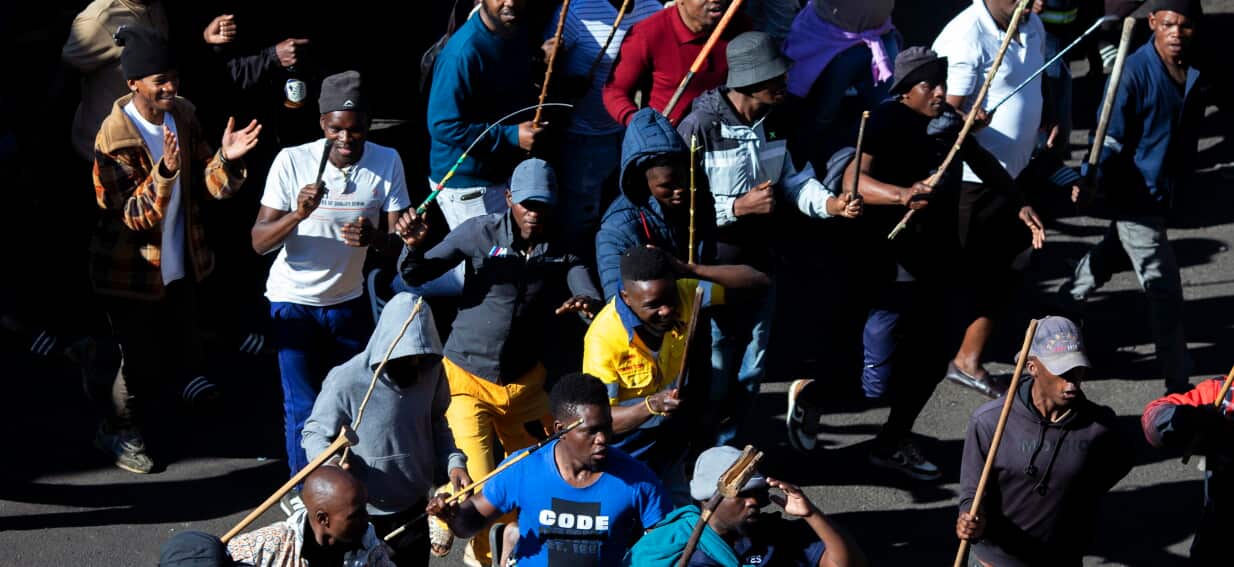
The capital city has transformed into an arena of competing anxieties. Massive demonstrations have paralyzed downtown corridors, with national police forces deploying tear gas to separate rival factions. Sánchez has actively rallied his base, calling for a patriotic and popular resistance to defend what he insists is the true will of the populace. His supporters view the electoral authorities with profound suspicion, convinced that the economic elite in Lima orchestrated a quiet administrative coup to keep the left out of power.
This skepticism is fueled by a profound historical disconnect. The vast geographic polarization of the vote highlights two entirely distinct nations coexisting within the same borders. Fujimori completely dominated the affluent coastal regions and the commercial hubs of Lima, where the fear of economic radicalism remains a powerful motivator. Sánchez swept the rural interior, the Andean sierra, and the Amazonian departments, regions that have historically felt abandoned by the central state. When the vote from abroad favored Fujimori, it provided the mathematical tip that secured her lead, sparking immediate allegations from the left that these external votes were manipulated or structurally flawed.
The legal mechanisms designed to resolve these disputes are buckling under the sheer volume of challenges. Each contested ballot box requires a formal review by Special Electoral Juries, a slow process that plays out in public hearings. Rather than building confidence, these public deliberations have become flashpoints for conspiracy theories, with both sides micro-analyzing every statement made by election officials.
Anatomy of a Razor-Thin Margin
The math of this election is brutal. Fujimori secured 9,223,369 votes, while Sánchez captured 9,173,755. A shift of less than twenty-five thousand votes would have completely reversed the outcome of the entire election.
+-----------------------------------------------------------------+
| PERU 2026 RUNOFF FINAL COUNT (100% SCRUTINIZED)                 |
+-----------------------------------------------------------------+
| Candidate         | Party / Coalition       | Votes     | Share |
+-----------------------------------------------------------------+
| Keiko Fujimori    | Fuerza Popular          | 9,223,369 | 50.13%|
| Roberto Sánchez   | Juntos por el Perú      | 9,173,755 | 49.87%|
+-----------------------------------------------------------------+
| Margin of Victory | 49,641 votes                        | 0.26% |
+-----------------------------------------------------------------+
Sánchez has built his non-recognition strategy around this narrow margin, focusing specifically on the international vote. Tens of thousands of Peruvians living in Europe, the United States, and other Latin American nations cast ballots that heavily favored Fuerza Popular. The left argues that logistical irregularities, delayed polling station openings overseas, and chain-of-custody gaps should invalidate large portions of the international tally. If those votes were to be discarded, the domestic total would hand the presidency to Sánchez.
The Fujimori campaign has rejected any notion of an irregular count. Her running mate, Luis Galarreta, countered that the rules of the electoral game cannot be rewritten based on a candidate's personal displeasure with the results. Fuerza Popular maintains that the procedures laid out in the organic electoral laws must be strictly followed, emphasizing that a recount can only occur for specific boxes officially flagged by the decentralized office of electoral processes. They argue that the left's strategy is an intentional attempt to delay the official proclamation by the National Jury of Elections, hoping to create a power vacuum.
The Strategy of Disputed Legitimacy
Sánchez is playing a high-stakes game that extends far beyond the borders of Peru. By announcing an impending recourse before the Inter-American Commission on Human Rights, the left is attempting to internationalize the dispute. They know that international legal bodies move at a glacial pace, meaning a definitive ruling from the human rights court could take years to materialize. The true objective of this strategy is not an immediate reversal of the count, but the permanent denial of political legitimacy to the incoming administration.
An un-proclamated president or a leader ruling under a permanent cloud of suspicion cannot govern effectively. If every major policy initiative or executive decree is met with the argument that the administration holds power illegally, the state grinds to a halt. Sánchez is establishing a narrative of martyrdom that will serve as the foundation for a permanent opposition movement, ensuring his political relevance and maintaining a high state of mobilization among his followers.
This tactic represents a profound danger to the concept of democratic consensus. When the official institutions tasked with refereeing an election are systematically painted as corrupt actors, the entire concept of peaceful democratic transition disappears. The losing side no longer sees a temporary political defeat, but a criminal theft of their rights, justifying increasingly radical forms of resistance.
Institutions Under Siege
The National Jury of Elections and the National Office of Electoral Processes are operating under unprecedented pressure. Staff members have faced targeted harassment, and the physical headquarters of these institutions require constant military protection. The structural vulnerability of these organizations stems from a deeper systemic lack of trust that has built up over decades of political instability.
Peru has lacked a stable party system for a generation. Political vehicles are frequently built around specific personalities rather than cohesive ideologies, making them inherently volatile. When these personalized parties clash in a tight election, there are no established institutional channels to absorb the shock. The conflict inevitably spills out into the streets and the courts, forcing legal bodies to make decisions that are seen as inherently political.
The transition timeline is incredibly compressed. The official proclamation of results must occur before the middle of July, with the formal presentation of credentials scheduled at the National Theater. Fujimori has already begun signaling her intent to form a cabinet, publicly identifying immediate priorities such as restoring internal public order and preparing for the severe climate impacts of the El Niño phenomenon. Yet, her appeals for national unity ring hollow to nearly half the country, who view her impending inauguration as an illegal usurpation.
The upcoming months will test whether Peru can survive another highly polarized presidential term without a complete collapse of its democratic framework. With a Congress that is bound to be deeply fractured and a population that is thoroughly exhausted by years of constant political warfare, the margin for error is non-existent. The ultimate tragedy of this election is that the final counting of the ballots, meant to provide clarity and closure, has instead initiated a dangerous new chapter of national instability.