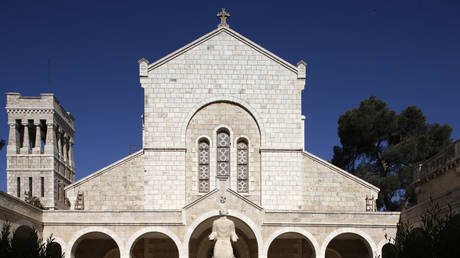
The academic year in East Jerusalem was supposed to begin with the usual rush of children carrying backpacks through ancient stone archways. Instead, the gates of every Christian school across the city remain locked.
All 15 private Christian educational institutions, serving more than 8,500 students, announced an indefinite suspension of classes following the refusal of Israeli authorities to renew military entry permits for over 70 teachers, administrators, and support staff who reside in the nearby West Bank. This sudden administrative cutoff has paralyzed school operations, leaving classrooms without instructors and administrators without legal recourse to cross the military checkpoints separating Bethlehem and Ramallah from Jerusalem.
The General Secretariat for Christian Educational Institutions issued a blunt statement noting that the unexpected block on permits affects everything from specialized instruction to critical health, cleaning, and security services. Without nearly thirty percent of essential personnel able to reach their posts, maintaining a secure and stable learning environment became impossible.
Bureaucratic Mechanics of Access
To understand why a refusal of paperwork can completely hobble a centuries-old school system, one must examine the strict legal geography governing Jerusalem. Private Christian schools in the city have historically relied on a blended workforce. Local Jerusalem residents staff many positions, but a vital contingent of specialized teachers, language instructors, and administrative personnel commute daily from West Bank towns like Bethlehem.
These educators hold Palestinian Authority identification cards. Under the regulatory apparatus maintained by Israel, crossing from the West Bank into East Jerusalem requires individual security clearances and renewable entry permits.
For decades, an established protocol existed. While subject to political fluctuations, administrative exemptions or specific work permit categories generally allowed educators to pass through checkpoints.
The system has tightened severely. Following sweeping regional escalations, entry restrictions for West Bank ID holders working in Israel expanded into near-total freezes. While industrial and construction sectors navigated complex quota systems or underground labor channels, institutional education found itself trapped in a rigid security matrix. When applications for the 2026-2027 academic term hit the desks of military coordinators, they were met with silent denials or abrupt non-renewals.
Institutional Strains and Wider Pressures
School principals emphasize that this permit crisis does not occur in a vacuum. Educational leaders point to a compounding series of pressures designed to fragment the indigenous Christian community's institutional independence in Jerusalem. Over recent years, these schools have weathered sustained disputes over curriculum modifications, property tax exemptions, and municipal zoning harassment.
Denying entry to educators from the West Bank targets the backbone of these institutions. Many of these teachers possess rare proficiencies in advanced subjects or hold institutional memory crucial for running accredited programs. When a teacher living ten kilometers away in Bethlehem cannot cross a concrete barrier to stand in front of a Jerusalem classroom, the school's viability fractures.
Church officials have noted the sharp contrast between diplomatic declarations and bureaucratic realities. International delegations frequently hear assurances from state representatives regarding the protection and freedom of Christian minorities in the region. Yet local administrators face a daily reality of administrative attrition. Restricting the movement of teachers between interconnected holy cities effectively isolates Jerusalem's Christian institutions from their surrounding demographic and cultural environment.
Parents and community councils find themselves caught in the middle of this standoff. The school year has barely begun, and families are already organizing alternative childcare while demanding that international diplomatic channels intervene to secure emergency permits.
Pastors and community leaders stress that education is a fundamental pillar of community survival in the city. If these schools cannot open their doors, families face difficult choices about remaining in Jerusalem or relocating outside the municipal boundaries.
The locks remain on the gates, and thousands of children wait for a resolution at the checkpoints