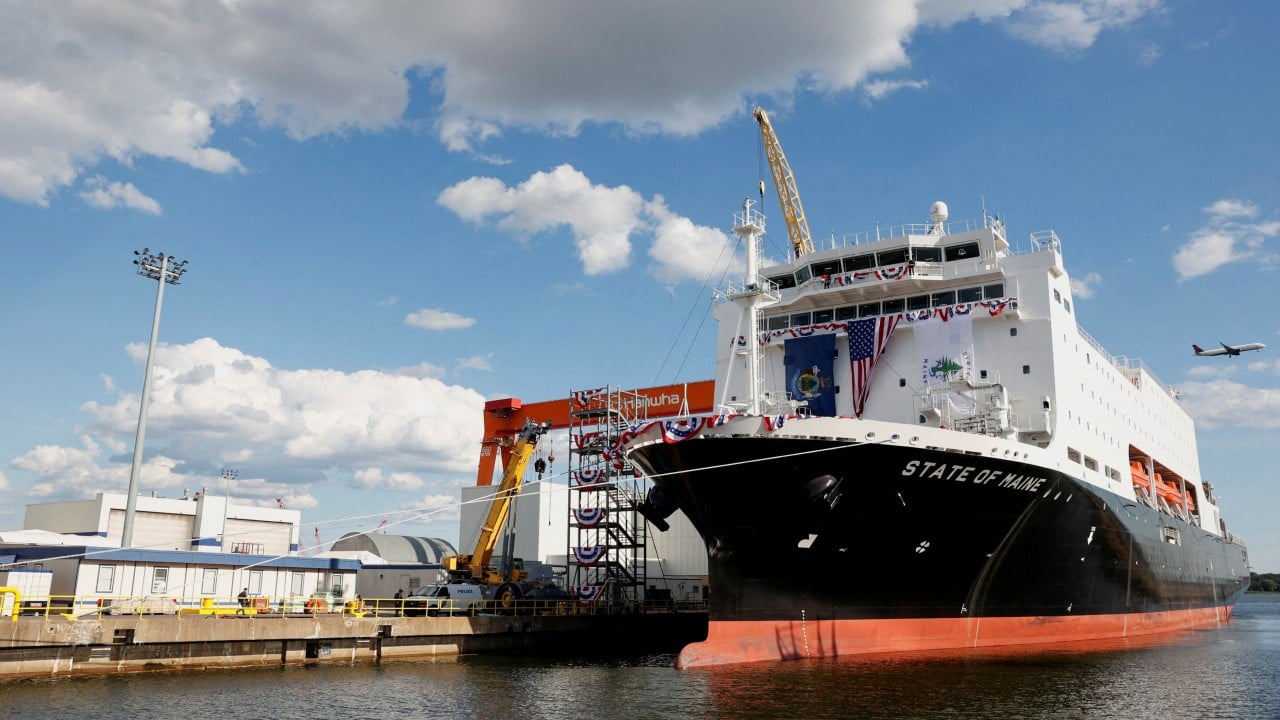
The United States Navy is running out of ships, and Washington is finally admitting it cannot fix the problem alone. Under a national security presidential memorandum signed by President Donald Trump, foreign shipbuilders that invest heavily in American yards are temporarily permitted to construct up to two naval vessels in their home countries. This policy pivot breaks decades of protectionist precedent, shattering statutory barriers like the Burns-Tollefson Amendment that once mandated absolute domestic construction for American warships. South Korean heavy industries, anchored by conglomerates like Hanwha Ocean, stand to profit immensely from this structural emergency.
The Anatomy of an Industrial Collapse
For decades, American naval architecture relied on a closed ecosystem. Domestic shipyards enjoyed guaranteed federal contracts, insulation from international market forces, and a steady stream of defense appropriations. That insulation bred systemic stagnation.
Today, domestic capacity cannot match the strategic expansion requirements demanded by geopolitical competition in the Pacific. Yards in Norfolk, San Diego, and Pascagoula suffer from chronic labor shortages, aging physical infrastructure, and severe supply chain bottlenecks. Maintenance overhauls for existing destroyers and submarines run years behind schedule.
The math is unforgiving. When a single nuclear attack submarine takes nearly a decade to roll out, the industrial base is no longer serving its primary function. It is decaying.
Enter the foreign partner model, modeled loosely on previous icebreaker agreements with Finland. By allowing foreign entities that acquire or build domestic U.S. infrastructure to construct initial hulls abroad, the White House is importing industrial competence.
The Hanwha Monopoly and the Geoje Pipeline
Right now, only one major South Korean player holds the exact operational keys to unlock this directive: Hanwha Group.
Through its acquisition of the Philly Shipyard in Pennsylvania and concurrent moves to expand its footprint, Hanwha satisfies the rigorous statutory requirement of owning a major American shipbuilding facility. The blueprint is straightforward. Hanwha can lay down initial surface combatants—such as variants akin to its advanced 3,600-ton Chungnam-class frigates—at its massive shipyard in Geoje, South Korea, where efficiency and automated throughput dwarf anything currently operating in Philadelphia.
Once those initial two hulls are delivered across the Pacific, subsequent construction must transition entirely to American soil. This creates a transitional bridge. The U.S. Navy gets immediate hulls in the water while the Philly Shipyard undergoes a multi-billion-dollar transformation to absorb Korean manufacturing methodologies, robotic welding techniques, and modular assembly line choreography.
Rival domestic yards and labor unions view this arrangement with deep suspicion. The prospect of foreign conglomerates holding sway over naval supply chains touches raw nerves in Rust Belt politics. Yet, the strategic imperative of countering Chinese naval output outweighs protectionist dogma. Beijing's shipyards outproduce American capacity by orders of magnitude, a disparity that traditional congressional funding increases failed to close.
Secondary Pressures on Competitors
The policy shift is forcing a frantic reaction from other major players. HD Hyundai Heavy Industries and Samsung Heavy Industries, long dominant in commercial liquefied natural gas carriers and container ships, find themselves on the outside looking in because they lack pre-existing American yard ownership.
That exclusion will not last. Industry intelligence suggests these giants are actively hunting for U.S. acquisition targets or equity partnerships to qualify for upcoming tranches of the memorandum. The barrier to entry is high, requiring hundreds of millions in capital expenditure and commitments to train an American workforce from scratch.
Furthermore, the types of eligible vessels are strictly bounded. The memorandum permits overseas construction exclusively for three specific categories: surface combatants, consolidated cargo replenishment tankers, and roll-on/roll-off logistics vessels. Complex nuclear submarines and aircraft carriers remain strictly prohibited from foreign yards, preserving the most sensitive tiers of military technology within domestic security perimeters.
The Execution Risk
Every structural shortcut carries hidden liabilities. Transferring advanced naval combatant blueprints across international jurisdictions invites intellectual property friction and strict regulatory oversight from defense export controls.
Training an American blue-collar workforce to match the hyper-efficient cadence of South Korean dockworkers requires an extraordinary cultural and educational alignment. Pennsylvania technical schools and union halls must adapt to entirely different management styles and production cadences. If the technology transfer fails to stick during the domestic transition phase, the program risks creating a hybrid model that satisfies neither speed nor domestic employment goals.
The Pentagon faces a 90-day window to finalize detailed procurement strategies under the new directive. How the Department of Defense navigates congressional oversight, protectionist lobbying, and the raw need for maritime mass will determine whether this initiative becomes a permanent blueprint for allied defense integration or a temporary fix for a broken system.
The oceans do not wait for bureaucratic reform, and Washington has finally recognized that buying time requires buying ships from anyone capable of building them efficiently.

.full.3529161.png)
