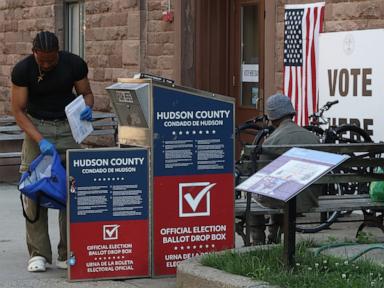
When New Jersey Governor Mikie Sherrill revealed that a Motor Vehicle Commission software glitch improperly added roughly 6,600 non-citizens to state voter rolls between 2023 and 2024, Washington Republicans seized the opportunity. Capitol Hill leaders immediately converted a state-level administrative error into federal political momentum, using the incident to demand the immediate passage of the Safeguard American Voter Eligibility (SAVE) Act before Congress breaks for summer recess. Yet behind the political theater lies a critical disconnect: the bill being pushed as a definitive defense would not have prevented the New Jersey automated database failure.
The political machinery in Washington operates on outrage and timing. A state government error, hidden for over a year under former Governor Phil Murphy, provided precisely the spark national conservatives needed to galvanize support for sweeping election reform. But a rigorous examination of the code, the vendor contract, and the legal framework of voter registration reveals a far more complex reality than congressional floor speeches suggest.
Anatomy of a DMV Database Failure
Administrative mistakes in state bureaucracies rarely happen with malicious intent. They stem from flawed logic trees in software systems designed by private contractors.
In June 2023, New Jersey updated its Motor Vehicle Commission transaction portals to streamline driver's license applications and automatic voter registration under federal motor-voter guidelines. The intent was routine: when residents applied for or renewed a driver's license, the terminal asked standard eligibility questions.
[Applicant at DMV Terminal] ──> Selects "NOT A CITIZEN"
                                          │
                                          ▼
                         [Vendor Software: Idemia]
                                          │
                  (Logic Error: Overrode user choice to "Yes")
                                          │
                                          ▼
                      [Data Transferred to Election Database]
                                          │
                                          ▼
                        [6,600 Non-Citizens Registered]
When non-citizens explicitly checked the box stating they were not United States citizens, the software provided by government contractor Idemia suffered a catastrophic processing failure. Instead of flagging those files to suppress voter registration, the system inverted the answer. It transferred the data directly to local election officials as valid voter applications.
The individuals involved did not lie. They answered the prompt truthfully. The software overrode their selection and placed them on the voting rolls anyway.
State records indicate that out of the 6,600 individuals affected, fewer than 400 actually cast ballots in subsequent elections, representing approximately 0.009% of votes cast statewide in recent major contests. State election officials confirmed that no local or statewide election outcome was altered by these votes. Yet the political fallout was immediate and devastating.
The SAVE Act and the Misaligned Remedy
Congressional leaders quickly pointed to New Jersey as empirical proof that non-citizens are routinely casting ballots across America. Their proposed solution, the SAVE Act, mandates that every citizen present physical proof of citizenship, such as a passport or birth certificate, when registering to vote.
A forensic analysis of the New Jersey case reveals why this legislative remedy misses the mark.
The SAVE Act targets applicant fraud. It assumes that individuals are actively seeking to bypass registration barriers by making false statements on paper or electronic forms.
The New Jersey incident was a backend data corruption event. Had the SAVE Act been law in 2023, an applicant presenting an immigration visa or green card at the DMV would still have answered "No" to the citizenship prompt. The broken software would still have processed that file as an eligible registration and transmitted it downstream.
Passing new federal identity rules does nothing to fix bad code running inside state agency mainframes.
Comparing Federal Legislation to State Administrative Failures
| Issue Dimension | Proposed SAVE Act Provisions | What Occurred in New Jersey |
|---|---|---|
| Primary Focus | Demanding physical citizenship proof (passports, birth certificates) | Systemic data inversion by private contractor software |
| User Intent | Assumes applicants intend to fraudulently register | Applicants explicitly declared non-citizenship status |
| Point of Failure | Front-end registration requirements | Back-end database processing and state data transmission |
| Policy Impact | Restricts voter registration procedures nationwide | Requires software auditing and state vendor accountability |
Bureaucratic Silence and Political Exposure
What transformed an engineering error into a major political scandal was the decision by state authorities to keep the problem hidden.
Former Governor Phil Murphy's administration identified and corrected the code in mid-2024. Yet, state officials chose not to inform the public or county election boards. They quietly quietly adjusted the software, leaving thousands of non-citizens registered on county voter rolls without notifying the individuals affected.
When Governor Sherrill assumed office and uncovered the prior administration's non-disclosure, she launched an independent investigation led by outside counsel. But by then, the damage was done. The omission created a credibility vacuum that opponents quickly filled.
State agencies frequently rely on legacy software layers stacked on top of modern web interfaces. When third-party vendors handle critical public infrastructure, oversight is often delegated to mid-level project managers who lack technical auditing capabilities. The government assumes the software functions as specified until a crisis exposes the fault.
Idemia and state officials have engaged in mutual blame. The vendor pointed out that election authorities bear ultimate legal responsibility for verifying voter eligibility before issuing voter cards. Election boards countered that they operate on the assumption that incoming data from state agencies has already passed basic filtering protocols.
The Congressional Recess Reality
As lawmakers prepare to leave Washington for late-summer recess, the debate over voter registration has become a central battleground.
Party strategists view the SAVE Act not merely as policy, but as a vital messaging tool. For proponents, forcing a vote before recess forces vulnerable moderate candidates into a difficult corner: vote against a popular-sounding security bill or support legislation that civil rights groups argue places undue burdens on voters without passports or updated birth certificates.
The reality of state-level administration gets lost in the partisan noise. Modernizing voting infrastructure requires quiet, tedious technical work: rigorous system testing, mandatory open-source audits of agency software, and direct communication channels between state agencies and county clerks.
Political grandstanding on Capitol Hill produces dramatic headlines, but it leaves the real vulnerabilities in state data infrastructure untouched. Until federal and state lawmakers address the technical governance of third-party software vendors, automated glitches will continue to disrupt public trust long after Congress has departed Washington.
Watch this USA Today report on the New Jersey voter registration software glitch to see how state leaders and national politicians reacted to the disclosure. This coverage highlights the debate between state accountability and national political strategy.


