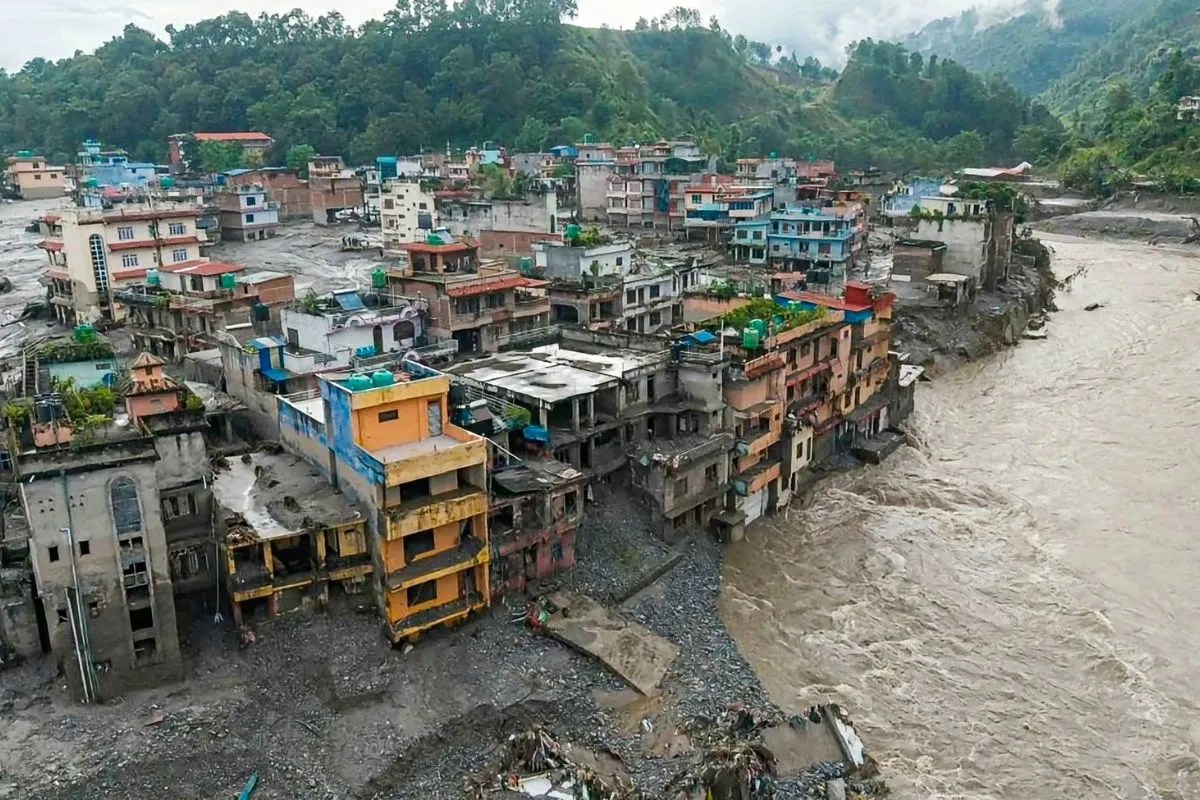
The Bhote Koshi river did not merely overflow its banks; it detonated. When an avalanche-induced mudslide slammed across the Nepal-China border into the Rasuwa district, it triggered a wall of water and debris that instantly obliterated roads, bridges, and hydropower infrastructure. The resulting catastrophe left hundreds dead and nearly a thousand missing, exposing the fragile underbelly of Himalayan disaster response. Amid this unfolding tragedy, international intervention arrived with predictable ceremony. The United States announced a pledge of $500,000 in emergency assistance, while the World Health Organization mobilized essential medical supplies and multipurpose tents. Yet, looking past the diplomatic press releases reveals a stark reality. Half a million dollars is a drop in the ocean against a calamity of this magnitude, raising hard questions about the true cost of global aid theater when regional ecosystems collapse.
The Arithmetic of International Assistance
Foreign aid declarations follow a well-worn script. Washington’s allocation, channeled through Catholic Relief Services, is earmarked for emergency shelter, basic relief items, and water, sanitation, and hygiene services. Concurrently, the WHO office in Kathmandu scrambled to dispatch medicines to support frontline health delivery.
These resources matter. On the ground, every tarp and medical kit prevents secondary outbreaks of waterborne disease.
However, scaling the financial response against the destruction tells a sobering story. Whole communities in Rasuwa were wiped off the map. Critical transport arteries vanished, isolating survivors and turning search-and-rescue operations into an agonizingly slow foot-slog across unstable terrain.
Financial pledges of five hundred thousand dollars amount to fractional bookkeeping when weighed against the reconstruction of pulverized infrastructure and the economic livelihoods of thousands of displaced families. Diplomacy relies on symbolic numbers. Ground zero demands structural capital that international donors routinely fail to provide in the crucial early hours.
Cross-Border Vulnerabilities and the Silence Upstream
The genesis of the Rasuwa disaster points to vulnerabilities far beyond Nepal’s domestic regulatory control. Flash floods originating from high-altitude terrain near the border highlight an urgent, unaddressed geopolitical hazard. Geological shifts and glacial melting in the broader Himalayan architecture create ticking time bombs. When a massive debris dam forms upstream and subsequently ruptures, downstream communities bear the brunt without adequate early-warning telemetry.
Nepal finds itself on the front lines of a climate crisis authored largely by global carbon emitters. The meteorological data indicates that traditional monsoon patterns have mutated into violent, concentrated delivery systems of water.
Early warning systems between neighboring sovereign states remain fragmented. Information sharing during a transnational hydrological shock is often delayed by bureaucratic inertia.
By the time cross-border alerts reach local authorities in mountain valleys, the water has already arrived. International partners like the US and the UN agencies rush in with post-disaster bandages, yet they consistently underinvest in the transboundary monitoring networks required to prevent these catastrophes in the first place.
The Invisible Toll on Foreign Nationals and Local Rescuers
The human cost extends deeply into international populations, complicating rescue management. Reports from the National Disaster Risk Reduction and Management Authority and the Nepal Tourism Board indicate that hundreds of foreign nationals, alongside local citizens and diaspora visitors, remain unaccounted for. This transformed a localized natural disaster into a complex consular emergency.
The Ministry of Foreign Affairs was forced to establish a specialized Emergency Response Team just to track missing tourists from dozens of countries. Embassy lines flashed with frantic calls from Washington, New Delhi, and European capitals.
Diplomatic anxiety naturally gravitates toward the safety of expatriates and citizens abroad.
This creates an implicit skew in resource allocation. Specialized search teams often find themselves diverted toward areas where foreign trekkers were last pinged, while remote indigenous settlements wait longer for heavy excavation equipment.
Meanwhile, Nepali security personnel and Armed Forces units carry out exhausting recovery operations under perilous conditions, frequently operating without basic heavy-duty gear. Several have paid with their lives while trying to claw survivors out of the mud. Their sacrifices rarely feature prominently in foreign policy statements that highlight donor generosity.
Structural Blind Spots in Global Disaster Relief
Pledging funds through global awards and third-party contractors introduces administrative friction. Bureaucratic pipelines mean that relief money often trickles down slowly while local markets in Kathmandu experience immediate supply crunches.
Emergency logistics in high-altitude environments require specialized aviation assets and heavy engineering corps. A modest financial grant does not instantly translate into operational helicopters or structural engineers clearing blocked gorges.
The structural flaw lies in reactive financing models. Donors wait for bodies to be counted before authorizing funds.
True resilience requires shifting capital toward pre-positioned assets, localized reinforcement of riverbanks, and autonomous community-level disaster response units that do not have to wait for international clearance to act. Until the global aid architecture pivots from public relations posturing to genuine structural partnership, mountain communities will remain perpetually exposed to the next inevitable crest of the river.