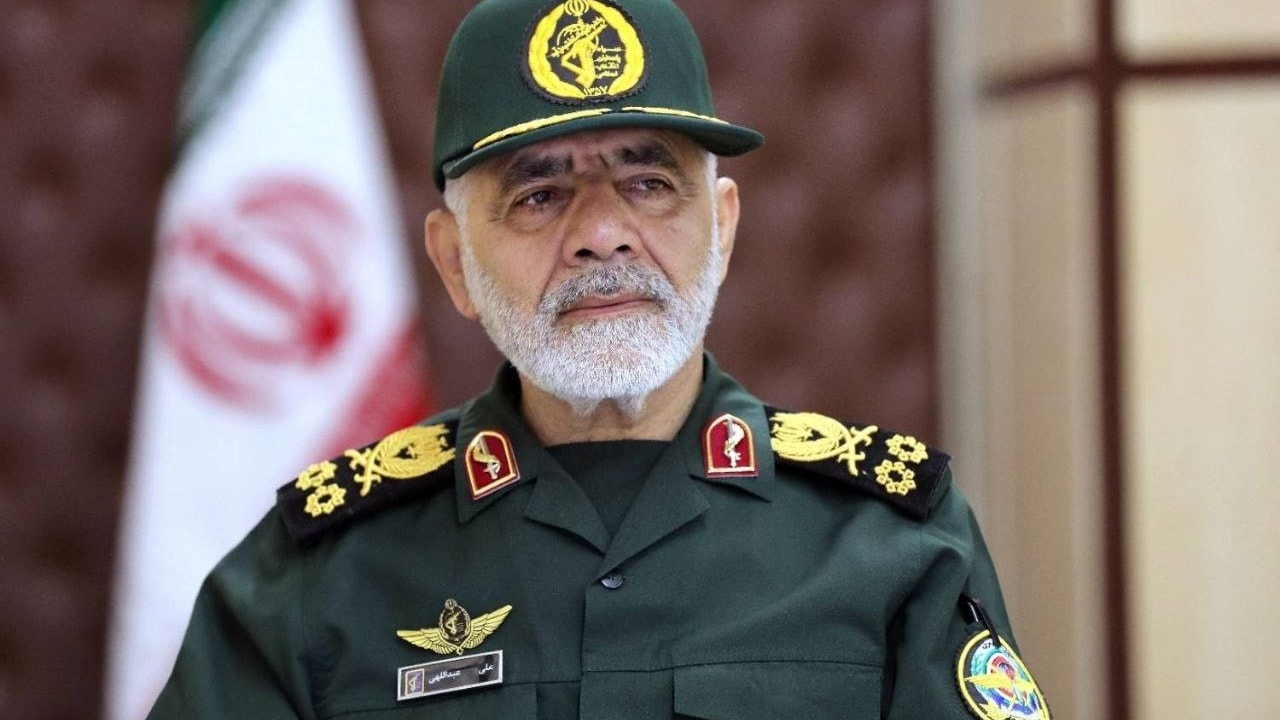
Major General Ali Abdollahi now stands at the absolute apex of Iran's armed forces. Appointed by Supreme Leader Mojtaba Khamenei, Abdollahi has assumed the role of Chief of the General Staff of the Islamic Republic of Iran Armed Forces, a promotion that cements his status as the primary architect of Tehran's wartime operational command. This massive leadership shift follows a sequence of high-profile casualties among senior commanders during recent regional conflicts, forcing Tehran into a swift, sweeping defense restructuring.
To understand Abdollahi's rise is to decode the structural evolution of Iran's military apparatus. He is not a charismatic political figurehead or an accidental bureaucrat. He is an institutional insider whose career spans decades of logistics, security management, and high-level operational command within both the Islamic Revolutionary Guard Corps and conventional administrative organs.
The Making of a Military Manager
Born in Gilan province in 1959, Abdollahi's trajectory mirrors the hardening of the post-revolutionary state. He cut his teeth during the grueling years of the Iran-Iraq War, serving across various provincial corps and ground force formations within the IRGC.
Unlike commanders whose fame stems entirely from battlefield heroics, Abdollahi earned his reputation through administrative survival and logistical competence. He moved through the gears of the state apparatus during the presidency of Mahmoud Ahmadinejad, serving as governor of Gilan and Semnan provinces before stepping into the Ministry of Interior as Vice Minister for Security.
This dual pedigree—part revolutionary commander, part bureaucratic operator—gave him an intimate understanding of internal state security and state resource allocation. When he transitioned back into senior military staff roles, including his tenure as the deputy for readiness, logistics, and industrial research, he was already uniquely positioned to understand the grinding realities of sanction-hit military supply chains.
Consolidating the High Command
The catalyst for Abdollahi's current prominence arrived amid profound crisis. Following the assassinations of previous commanders during regional escalations, Abdollahi took over the operational leadership of the Khatam al-Anbiya Central Headquarters in 2025.
Khatam al-Anbiya is the nerve center of Iran's defense architecture. It coordinates between the conventional army and the IRGC, serving as the ultimate operational brain during wartime. By placing Abdollahi at its helm, and subsequently merging elements of its strategic planning with the General Staff under the latest decrees from Supreme Leader Mojtaba Khamenei, Tehran has signaled a desperate need for absolute institutional cohesion.
Abdollahi's appointment is accompanied by other veteran hardliners, including Ahmad Vahidi taking command of the IRGC and Kioumars Heydari stepping in as Abdollahi's deputy. This generation of leadership possesses a shared, deeply entrenched worldview shaped by decades of confrontation with Western powers.
Rhetoric Meets Operational Reality
Abdollahi has never hidden his ideological posture. At international security conferences, he has routinely characterized the United States as a primary driver of global instability, using blunt diplomatic and military rhetoric.
However, looking past the public declarations reveals a pragmatic focus on hybrid warfare, cognitive threats, and rapid response capabilities. His mandate under the new decrees requires the total integration of armed forces infrastructure to withstand modern electronic, cyber, and conventional pressures.
The restructuring is designed to remove bureaucratic friction between separate military branches. In a prolonged conflict environment, structural delays are fatal. Abdollahi's entire career has been built on fixing logistical bottlenecks and streamlining command lines.
Whether this consolidation of power will achieve its intended defensive deterrence remains to be seen. What is certain is that Tehran has handed the keys of its entire military machine to a veteran administrator who knows how to keep the engine running under fire.