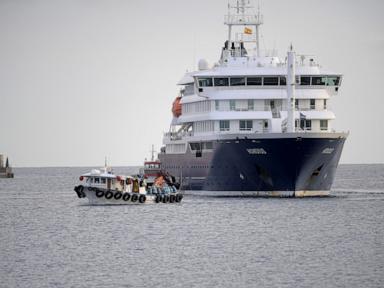
On July 2, 2026, the World Health Organization officially declared an end to the terrifying Andes hantavirus outbreak aboard the polar exploration cruise ship MV Hondius. The formal announcement followed the successful 42-day quarantine and negative testing of the final contact, closing a multi-nation public health emergency that left three dead and thirteen infected. While international health agencies are celebrating the containment as a victory for cross-border contact tracing, the incident exposes a glaring vulnerability in commercial maritime travel. The crisis may be over, but the structural failures that allowed a highly lethal pathogen to spread through a luxury vessel remain entirely unaddressed.
The maritime industry has spent decades refining protocols for typical shipboard infections like norovirus or influenza. A virus that causes severe respiratory failure and transmits person-to-person through the air or close physical contact, however, completely shatters the existing playbook for shipboard safety.
The Mirage of Containment
When the MV Hondius departed Ushuaia, Argentina, on April 1, 2026, the passengers onboard were anticipating a pristine journey through the remote waters of the South Atlantic, including a stop at Tristan da Cunha. Instead, they became trapped inside a floating incubator.
Health officials now suspect that the index patient contracted the Andes strain of hantavirus during land-based excursions in rural parts of South America before boarding. Because hantavirus has an incubation period stretching from two to six weeks, the initial passenger showed no symptoms during embarkation screenings. This long, silent delay allowed the virus to slip past every standard maritime defense.
By mid-April, the true horror of the situation began to unfold. On April 11, a Dutch passenger died on board under uncertain medical circumstances. Thirteen days later, when the ship docked briefly at the hyper-isolated British territory of Saint Helena, thirty passengers disembarked. Among them was the first victim's wife. Within forty-eight hours of being evacuated to a hospital in Johannesburg, South Africa, she too succumbed to the virus.
A third fatality occurred on board on April 28, a German woman whose body remained trapped on the ship for days as ports repeatedly denied entry to the stricken vessel.
Public health tracking soon revealed a terrifying epidemiological shift. Unlike almost every other strain of hantavirus, which requires direct human contact with the urine, droppings, or saliva of infected rodents, the Andes strain can jump from human to human. The confined spaces of a cruise liner, characterized by shared dining halls, narrow corridors, and recirculated air ventilation systems, provided the ideal environment for this rare form of transmission.
The Geometry of a Floating Incubator
To understand how a land-based rodent virus managed to cripple a modern, luxury expedition ship, one must look at the physical architecture of commercial cruise vessels. The MV Hondius is a state-of-the-art vessel built for polar exploration, designed to accommodate 196 passengers across 95 cabins, alongside a crew of 72. It is engineered to withstand extreme environmental conditions outside, but its interior layout creates an inescapable proximity.
Epidemiologists investigating the outbreak quickly realized that standard isolation protocols were entirely insufficient for the Andes virus. When a passenger began showing signs of severe acute respiratory distress, the ship’s medical bay—typically staffed by a single doctor and a couple of nurses—was instantly overwhelmed. Treating hantavirus pulmonary syndrome requires intensive care units, mechanical ventilation, and sophisticated hemodynamic monitoring. A cruise ship medicine cabinet cannot substitute for a terrestrial tertiary-care hospital.
The international response soon became a frantic, multi-country logistical nightmare. As the ship sailed north across the Atlantic, it transformed into a pariah. Governments weighed the humanitarian duty of assisting the sick against the terrifying prospect of introducing a human-transmitting hantavirus with a 23 percent case fatality rate onto their own soil.
A Fragmented Global Bureaucracy
The management of the MV Hondius crisis exposed deep fractures in the International Health Regulations framework. When the United Kingdom first notified the World Health Organization about the cluster of severe respiratory illness on May 2, the ship was already in deep water, desperate for a port that would allow it to dock.
The timeline of the vessel's forced wandering reads like a manual on bureaucratic paralysis.
- April 24: The ship stopped at Saint Helena to offload the remains of the first victim and thirty passengers, initiating a desperate medical airlift to South Africa.
- May 3: The ship arrived off the coast of Praia, Cape Verde. Local authorities scrambled to create a makeshift isolation zone and sent basic medical supplies to the ship, but full disembarkation was deemed too risky.
- May 10: Spain finally demonstrated international solidarity by permitting the ship to dock in Tenerife, Canary Islands, allowing sick passengers to be stabilized and repatriated via chartered medical flights to six European nations and Canada.
- May 18: The vessel finally reached its destination port of Rotterdam in the Netherlands, where the remaining crew and medical officers were subjected to rigorous retesting and strict quarantine.
While health officials tracked over 650 contacts across 33 different countries, the administrative friction between these jurisdictions slowed the deployment of targeted containment strategies. Port health authorities in different hemispheres frequently disagreed on the definition of high-risk contact versus low-risk contact, leading to inconsistent quarantine mandates for departing passengers.
The Science of the Andes Variant
The biological reality of the Andes virus makes the cruise industry's lack of preparedness even more damning. First isolated in Argentina in the 1990s, the Andes strain has long been known to medical science as an outlier among hantaviruses.
Most hantaviruses in North America, such as the Sin Nombre virus, are strictly zoonotic. If you do not breathe in dust contaminated with deer mouse droppings, you will not catch the disease. The Andes variant mutated to allow interpersonal transmission, a biological deviation that transforms a localized rural health hazard into an international biosecurity threat.
[Rodent Reservoir] ---> [Index Patient (Land Exposure)] ---> [Human-to-Human Transmission (Shipboard Closures)]
When an infected individual coughs or breathes in close quarters, droplets carrying the viral payload can be inhaled by those nearby. On the MV Hondius, passengers dined together, walked the same enclosed decks, and breathed air filtered through standard marine HVAC systems.
The virus causes a rapid, catastrophic shift in capillary permeability. The lungs of the patient rapidly fill with fluid, effectively drowning them from the inside out. Without specific antiviral treatments or an approved vaccine, medical staff can do nothing but offer supportive care, waiting to see if the patient's immune system can fight off the invasion before the lungs fail completely.
The Cost of the All Clear
The World Health Organization's declaration that the outbreak is over provides a convenient narrative of resolution for the cruise line industry. It allows corporate executives to reassure the public that the system worked, that containment was achieved, and that the seas are safe once again. This perspective ignores the sheer luck involved in preventing a broader international catastrophe.
Dozens of passengers from the MV Hondius returned to their home countries during the incubation phase. In the United States, eighteen passengers returned and were forced into a grueling 42-day isolation period, with sixteen housed at the University of Nebraska Medical Center in Omaha. Had any of those individuals broken quarantine or flown on commercial aircraft while actively symptomatic, the transmission chains would have multiplied exponentially across major urban transit hubs.
The containment succeeded because the passengers on this specific voyage happened to be a small, highly trackable cohort on a specialized expedition vessel. If a similar outbreak were to occur on a contemporary mega-cruise ship carrying upwards of six thousand passengers across multiple weekly port-of-call rotations, tracing every casual contact would be a statistical impossibility.
The cruise industry cannot continue to treat rare, high-consequence pathogens as anomalous acts of God that require no structural changes to shipboard design or operational protocol. The MV Hondius was a warning shot, a clear demonstration that the boundaries between isolated wilderness reservoirs and global commercial tourism have completely dissolved. Expecting understaffed shipboard medical clinics to contain human-transmitting lethal variants without advanced isolation facilities is a strategy built on willful blindness.
The final contact has tested negative and returned home, but the structural vulnerabilities that made the MV Hondius a prison of infection remain entirely intact for the next voyage.