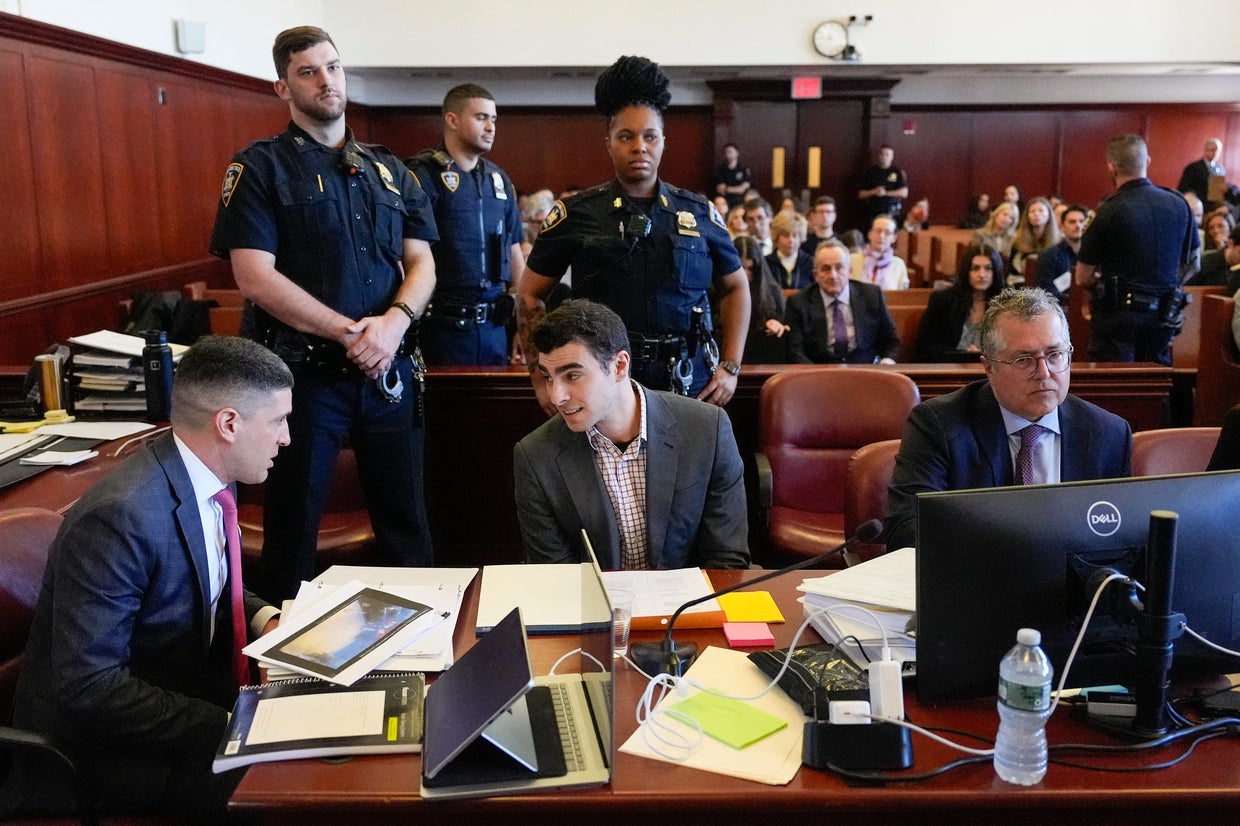
The courtroom in lower Manhattan fell silent on a Friday morning as Luigi Mangione stood before U.S. District Judge Margaret Garnett and stripped away months of legal maneuvering. Facing a battery of federal charges resulting from the December 2024 assassination of UnitedHealthcare CEO Brian Thompson, Mangione did not negotiate a plea deal. Instead, he entered an open guilty plea to two counts of federal stalking resulting in death, admitting flatly that he tracked the executive to a Midtown hotel and shot him with a 3D-printed weapon.
The admission brought a sudden, shocking halt to what promised to be a protracted federal trial. Yet, rather than closing the book on one of the most high-profile corporate assassinations in modern history, the plea opened a volatile new chapter in American jurisprudence. Defense attorneys immediately mobilized a high-stakes legal offensive, filing a motion to throw out a separate New York state murder prosecution on the grounds of double jeopardy.
The Anatomy of an Open Plea
When a defendant pleads open to an indictment without an agreement from prosecutors, they surrender their leverage. There are no promised sentence reductions, no concessions, and no guarantees. Prosecutors from the Southern District of New York made it clear they intend to push for the statutory maximum of life imprisonment when sentencing commences.
Mangione acknowledged every element of the federal indictment with chilling composure. He described posing as an institutional investor via email to extract logistical details about UnitedHealthcare's upcoming conference. He detailed how he traversed city streets with a suppressed, homemade firearm before ambushing Thompson from behind.
For the family of the slain executive, the confession provided a measure of accountability. Yet the abrupt pivot left legal analysts scrambling to parse the tactical calculus behind the defense strategy. Why would a 28-year-old defendant facing life behind bars confess unconditionally to federal crimes just weeks before confronting a state murder trial that carried its own 25-years-to-life exposure?
The Double Jeopardy Collision Course
The answer lies in the friction between dual-sovereignty prosecutions. For months, defense counsel Karen Friedman Agnifilo argued that subjecting Mangione to separate federal and state trials for the exact same underlying conduct violated foundational constitutional protections against being tried twice for the same offense.
By pleading guilty to the federal stalking counts—and formally admitting under oath to the shooting—Mangione's legal team locked down the evidentiary record. They now argue that the state murder charge pending in Manhattan is legally inseparable from the federal offense to which he has already been convicted and judged.
Constitutional scholars are deeply divided over whether this strategy will succeed. While the dual-sovereignty doctrine traditionally allows both state and federal governments to prosecute a defendant if their conduct violates the laws of both jurisdictions, unique statutory overlaps in federal stalking-resulting-in-death charges create an untested grey area. If a state court accepts the defense motion, Manhattan District Attorney Alvin Bragg's office could be blocked from prosecuting the state murder indictment, effectively neutralizing a trial that had captured national attention.
Public Grievances and the Reality of Systemic Frustration
Beneath the intricate procedural warfare lies a darker undercurrent that has polarized public perception since the morning of the shooting. Defense representatives pointed directly to the root causes cited by Mangione during his court appearance, noting that years of agonizing physical trauma following a severe back injury left him isolated and deeply embittered by bureaucratic hurdles within corporate healthcare.
While prosecutors and law enforcement officials forcefully maintained that cold-blooded murder can never serve as a valid instrument of social protest, the case has undeniably struck a raw nerve. Supporters gathered outside the courthouse, reflecting widespread public exhaustion with the friction of modern medical coverage administration. The convergence of corporate power, institutional failure, and vigilante violence has transformed the docket into a cultural flashpoint.
The judicial system will determine the final parameters of Mangione's confinement when U.S. District Judge Margaret Garnett delivers her sentence. Whether New York state prosecutors will be permitted to present their murder case in September remains a high-stakes question hanging over an already strained legal apparatus.
The courtroom cleared, leaving behind a profound institutional reckoning over how justice is administered when private grievances metastasize into public execution.