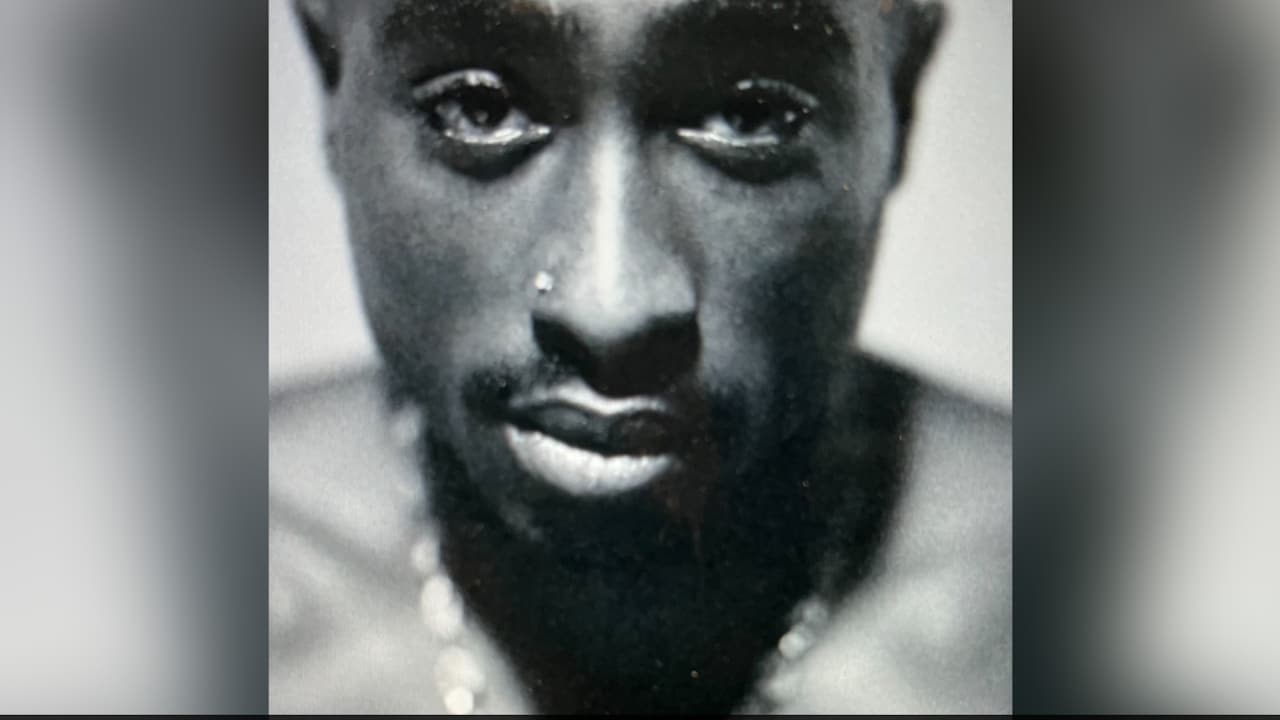
Nearly three decades after a fusillade of bullets tore through a white BMW near the Las Vegas Strip, the legal system is finally attempting to answer the question that haunted generations of music fans: Who killed Tupac Shakur?
The trial of Duane "Keffe D" Davis has commenced in a Clark County courtroom, bringing center stage a complex web of street politics, cultural mythology, and institutional delay. Davis, a former Compton gang leader, faces a first-degree murder charge with a deadly weapon. Prosecutors allege he orchestrated the September 1996 drive-by shooting that cut down one of hip-hop's most influential artists.
Yet, looking past the initial headlines reveals a trial built on a foundation of paradoxes. The man in the defendant's chair is not accused of pulling the trigger. Instead, the state’s entire case rests heavily on public confessions Davis himself manufactured years after the fact, transforming his own bravado into a legal noose.
The Anatomy of a Delayed Prosecution
For years, the murder of Tupac Shakur sat as an open wound in American pop culture. It generated countless conspiracy theories, true-crime paperbacks, and speculative documentaries. Law enforcement agencies faced persistent criticism for institutional inertia.
The turning point did not arrive via a breakthrough forensic discovery or an anonymous whistleblower. It arrived because the prime mover of the conspiracy could not stop talking about it.
Davis wrote a memoir, Compton Street Legend, and sat for extensive police interviews and media documentaries. In those forums, he openly detailed his positioning in the white Cadillac from which the fatal shots were fired. He described handing the weapon to his nephew, Orlando "Baby Lane" Anderson.
For career investigators, watching a suspect package his own confession for commercial consumption is a surreal experience. Prosecutors are banking on the reality that a jury will view these admissions as ironclad truth.
However, defense attorneys are aggressively challenging the admissibility of those statements. They argue that past conversations with law enforcement were conducted under implied immunity deals. This tension forms the legal bedrock of the trial. If the judge restricts these statements, the state's momentum could stall. If the statements stand, the defense faces an uphill climb to neutralize the defendant's own recorded voice.
Street Politics and Corporate Hip-Hop
To understand why this trial is happening now, one must look beyond the courtroom walls and examine the volatile intersection of gang culture and the commercial music industry in the mid-1990s.
Shakur was signed to Death Row Records, a powerhouse label spearheaded by Marion "Suge" Knight. Death Row operated with an aggressive street-adjacent posture, intertwined with Los Angeles-area street factions like Mob Piru. On the other side of the ledger sat Bad Boy Records out of New York, fueling a stylized geographic rivalry that media outlets framed as an East Coast versus West Coast war.
The night of September 7, 1996, began with a Mike Tyson boxing match at the MGM Grand in Las Vegas. Following the event, a physical altercation broke out in the casino lobby. Shakur and Knight, alongside their associates, targeted Orlando Anderson—Davis's nephew—in retaliation for an earlier dispute involving a Death Row employee.
In the calculus of street governance, an assault on a family member of a high-ranking shot caller could not go unanswered. According to the prosecution, Davis procured a Glock .40 caliber handgun, assembled a carload of retaliators, and hunted down Shakur's vehicle.
This dynamic highlights a grim reality of the era. The lines separating corporate boardrooms, major record labels, and underground street syndicates were perilously thin. Millions of dollars in record sales flowed alongside street-level retaliation. The justice system is now tasked with untangling that violent ecosystem thirty years after the fact.
The Challenge of Assembling an Impartial Jury
Selecting a jury for a trial of this magnitude is an exercise in sociological excavation. Potential jurors walk into the courtroom carrying three decades of cultural mythology, media consumption, and personal bias regarding Shakur’s legacy.
Legal experts note that screening panels requires ferreting out deeply entrenched preconceptions. Some prospective jurors grew up idolizing Shakur as a revolutionary poet and cultural prophet. Others harbor skepticism toward the hip-hop industry or preconceived notions about street gangs.
Furthermore, the logistical weight of a month-long trial creates heavy burdens for working citizens. Court administrators must weed out financial hardships while ensuring the final panel can evaluate complex gang mechanics without prejudice.
The defense will lean heavily on these gray areas. They intend to argue that Davis's past statements were exaggerated or fabricated to boost book sales and media clout. In the entertainment world, myth-making is a lucrative commodity. In a criminal court, that same myth-making can carry a life sentence.
The Evidentiary Maze
With Orlando Anderson having died in an unrelated shooting in 1998, and other occupants of the vehicle long passed, Davis remains the sole surviving figure linked directly to the physical execution of the crime. This leaves prosecutors with a narrow evidentiary path.
They must prove that Davis acted with premeditation and intent, legally qualifying his actions as first-degree murder under accomplice and conspiracy theories. The state will present granular testimony regarding gang hierarchies, weapon acquisition, and the immediate aftermath of the shooting near Flamingo Road and Koval Lane.
Conversely, the defense strategy aims to undermine the reliability of the state's narrative. Confessions given years after an event to documentarians and podcasters often blur the line between actual participation and posturing. Defense counsel will push the jury to look at the lack of immediate physical evidence linking Davis to the pull of a trigger, emphasizing that storytelling does not always equal forensic proof.
As opening statements give way to testimony, the courtroom sits at the intersection of history and accountability. The proceeding is not merely a murder trial for an aging former gang leader. It is an examination of an entire era of American music, capturing a moment when the friction between cultural brilliance and street violence reached a fatal climax under the neon lights of Nevada.