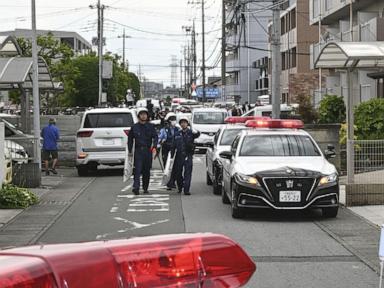
The multi-day siege of Utsunomiya, a bustling regional capital of half a million residents north of Tokyo, ended with a single tranquilizer dart on a Tuesday afternoon. For three days, a 100-kilogram Asiatic black bear completely paralyzed the city, forcing the unprecedented closure of all 94 public primary and junior high schools, shutting down a university campus, and emptying heavily trafficked shopping arcades. While international wire services covered the incident as a bizarre, localized curiosity, the shutdown of Utsunomiya is actually the tipping point of a massive ecological and demographic crisis threatening urban Japan.
Japan is losing control of its wilderness borders, and the metrics are staggering. The national bear population has surged to an estimated 57,800 animals. Concurrently, the Environment Ministry tracked a record-breaking 238 casualties from bear attacks in the last fiscal year, including 13 fatalities. Nationwide sightings shattered historical data, surpassing 50,000 in a single twelve-month span, a figure that more than doubled any previous spike. For a different look, see: this related article.
To understand why a major metropolis just 100 kilometers from Tokyo collapsed into lockdown over a single animal, one must look past the immediate panic. The crisis is not driven by a sudden mutation in wildlife behavior, but by the systemic collapse of rural Japanese society.
The Satoyama Buffer Has Evaporated
For centuries, urban Japan was protected from apex predators by a traditional geographical buffer known as the satoyama. This consisted of managed woodlands, agricultural foothills, and small border villages that separated the dense mountain forests from coastal valleys. Humans occupied these spaces, collected firewood, cultivated bamboo, and harvested nuts. Their active, noisy presence created a natural psychological barrier that wild animals instinctively avoided. Further insight on this matter has been published by Al Jazeera.
That barrier is completely gone.
As Japan struggles with an unprecedented demographic decline, rural villages are emptying out entirely. The younger generations migrate exclusively to Tokyo, Osaka, and regional hubs like Utsunomiya. The remaining population consists largely of the elderly, who are physically unable to clear vegetation or maintain active farms.
As fields lie fallow and abandoned homesteads are reclaimed by brush, the wilderness creeps closer to the concrete.
Bears no longer cross a dangerous human zone to reach cities. The forest now connects directly to municipal property. In Utsunomiya, the captured bear did not stick to peripheral brush; it scaled backyard fences, swam through urban waterways, and roamed a central wholesale market. The city had recorded a mere two unconfirmed sightings in the previous year. This week, residents logged dozens of confirmed encounters within blocks of the main railway station.
Climate Disruptions and the Empty Forest
Monoculture forestry practices initiated in the mid-twentieth century have exacerbated the issue. Vast swathes of Japanese mountains were replanted with cedar and cypress for timber production. These trees do not produce the acorns, beechnuts, or berries that foraging wildlife requires.
Compounding this structural lack of biodiversity, climate instability has ruined the remaining natural food harvests in native deciduous forests.
Unpredictable weather patterns and unseasonable heatwaves cause mass failures in acorn crops, an ecological phenomenon known as mizunara mast failure. When the mountains produce no food, animals have a binary choice: starve or migrate toward human trash.
Urban centers provide an endless buffet of high-calorie alternatives. Densely packed residential neighborhoods offer unharvested fruit trees in elderly residents' gardens, unsecured household garbage, and agricultural waste. Once an animal associates concrete environments with easy food, its fear of humans disappears.
The Lost Generation of Local Hunters
The immediate state response to the Utsunomiya incident highlights a critical vulnerability in public safety infrastructure. When the bear was spotted near a library and a community center, the municipal government deployed police officers carrying riot shields and long sticks. They were completely unequipped to neutralize a large, frightened predator.
The defense of Japanese municipalities has historically rested on the shoulders of the Ryuyukai, the national hunters' association.
National Bear Casualties (Fiscal Year)
---------------------------------------
Total Casualties: 238
Fatalities:       13
Annual Sightings: 50,000+
The association is facing its own demographic extinction. The average age of a licensed hunter in Japan is now well over 60, with a significant percentage of active trackers in their 70s and 80s. Dwindling numbers and physical limitations mean local chapters cannot keep pace with 50,000 sightings across the country.
Furthermore, Japanese gun laws are among the strictest in the world. A licensed hunter faces severe legal scrutiny, potential lawsuits, and the revocation of their permit if they discharge a firearm in a residential area, even when acting at the request of local police.
In a recent parallel crisis in Fukushima prefecture, an aggressive bear infiltrated a residential district, mauled four people, broke into an electronics factory, and escaped through a window. Local authorities could not deploy lethal force safely due to dense housing layouts. The city mayor later remarked that the animal had been observed operating water taps to drink, displaying a level of urban adaptation that standard police forces cannot handle.
Drones and AI Barriers Cannot Replace Human Presence
Faced with a lack of personnel, municipal governments are turning to technology to plug the gaps. Utsunomiya officials successfully deployed thermal-imaging drones to track their target through a university campus before pinning it down on private property for a veterinarian to sedate. Other prefectures are testing facial-recognition cameras trained to spot wildlife at the edges of town and automated sirens that blast heavy metal music or artificial wolf barks.
These are temporary fixes for a structural shift.
Technology can monitor an encroachment, but it cannot recreate the physical deterrent of an active human population. The Tokyo administration recently established a ministerial task force and revised hunting regulations to ease restrictions on urban firearm discharge during wildlife emergencies. Yet, relaxing rules does not magically conjure younger, capable trackers to replace the aging volunteer forces.
The national roadmap for population management now explicitly calls for systematic culls to reduce overall numbers. Environmental groups argue that indiscriminate culling avoids the underlying issue of habitat destruction, but for local governments staring down empty classrooms and deserted shopping centers, ecological philosophy is secondary to immediate public safety.
Japan's urban centers are designed for absolute predictability and safety. The ongoing crisis proves that the line separating the hyper-modern city from the untamed forest has dissolved. Until the structural issues of rural abandonment and forest mismanagement are corrected, single animals will continue to possess the power to lock down major economic hubs.