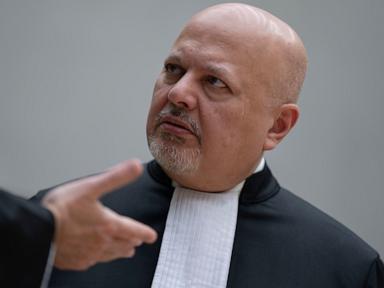
The international legal order is fracturing from within. On June 19, 2026, Britain’s Bar Standards Board issued an immediate interim suspension against Karim Khan, stripping the embattled prosecutor of his right to practice law in England and Wales. This regulatory strike follows his formal suspension on June 8 by the International Criminal Court governing body after an arduous investigation into allegations of serious sexual misconduct. While headline writers focus entirely on the sordid details of the accusations, the real story lies in the complete paralysis of the global justice system. A single regulatory decision in London has exposed how fragile the world’s court of last resort truly is.
Khan has fiercely denied all accusations of impropriety. His legal representatives at the London firm Carter-Ruck argue that political forces have hijacked the process. Yet, the suspension by his home bar association is a staggering blow to an attorney who built his career on absolute legal authority. The move by the Bar Standards Board ensures that Khan cannot step foot into a British courtroom while an internal panel reviews his conduct over the next four weeks. This is not merely a personal crisis for a prominent barrister. It is an institutional disaster that threatens to derail high-profile war crimes investigations spanning multiple continents.
The Friction Between Law and International Politics
The timing of this internal collapse could not be more dangerous. Khan spent the last few years aggressively pursuing arrest warrants for high-ranking officials, including Russian President Vladimir Putin and top political leaders in Israel and Hamas. These actions turned the prosecutor into a lightning rod for global geopolitical anger. The Trump administration responded with aggressive sanctions against Khan and his top staff, freezing assets and restricting travel. Those sanctions are already severely complicating the daily operations of the court in The Hague. Now, with the chief prosecutor sidelined, the entire office is in a state of suspended animation.
The International Criminal Court was established in 2002 under the Rome Statute to handle cases that domestic legal systems refused or failed to address. It was meant to be insulated from domestic political whims. Instead, it has become deeply entangled in them. Khan's defense team openly alleges that the Assembly of States Parties stepped outside its legal boundaries. They claim the executive bureau of the oversight body overrode an advisory panel of judges who had previously reviewed a United Nations report and concluded that misconduct was not definitively established. This dispute points to a massive structural flaw within the court. The line between independent legal accountability and political interference has completely blurred.
A Timeline of Institutional Decline
The crisis did not emerge overnight. Whistleblower documents first surfaced in 2024, alleging that Khan had transferred a female assistant into his immediate office under questionable circumstances. Rumors circulated through the halls of The Hague for nearly two years, creating deep internal rifts. By May 2025, the pressure became too intense to ignore. Khan agreed to step down on voluntary leave while the United Nations Office of Internal Oversight Services conducted a confidential 18-month investigation.
During that period, his two deputies assumed command. The arrangement was intended to project stability. It failed. The publication of a summary of the United Nations report in April 2026 revealed what investigators called a factual basis for the claims of non-consensual sexual behavior. The finding gave his political detractors all the ammunition they needed.
The Regulatory Squeeze from London
The British Bar Standards Board operates under strict public interest mandates. When a registered barrister faces findings of serious misconduct from an international body, the regulator rarely hesitates to protect the integrity of the profession. The interim suspension issued on Friday is an automatic protective measure rather than a final verdict on guilt. However, the optics are devastating. The very jurisdiction that trained Khan and launched him onto the global stage has judged his continued practice to be an immediate risk to the reputation of the bar.
An interim suspension panel will convene within the next month to review the decision. Khan’s legal team will undoubtedly argue that the findings from The Hague are tainted by political bias. They face an uphill battle. Regulatory bodies in the United Kingdom look at concrete administrative findings, and the executive bureau’s ruling of a serious breach of duty is a heavy weight to counter. If the British suspension is upheld long-term, Khan’s credibility as an officer of the law will be permanently broken, regardless of what happens in New York next month.
The Secret Ballot That Will Decide Everything
The ultimate fate of the chief prosecutor now rests in the hands of the 125 member states that form the Assembly of States Parties. A special session has been abruptly scheduled for July 24, 2026. Strikingly, the meeting will not take place at the court's home in The Hague. Officials have shifted the venue to New York. The reason is purely logistical. Every member state maintains a permanent diplomatic mission at the United Nations, making an emergency gathering far easier to coordinate on short notice.
The mechanics of the upcoming session are highly complex and fraught with diplomatic tension. To permanently remove a sitting chief prosecutor from office, a strict qualified majority is required. Sixty-three countries must cast a secret ballot in favor of his ouster. This process has never been utilized in the twenty-four-year history of the court. Diplomats are working behind the scenes to calculate the numbers, but nothing is certain.
The Problem of Succession
If Khan is removed, the court enters uncharted territory. No clear consensus candidate exists to replace him. The two deputy prosecutors currently managing daily operations have kept the office afloat, but they lack the permanent mandate required to sign off on major new indictments or structural policy changes. The court risks falling into a prolonged period of administrative stagnation at the exact moment the world is demanding decisive action on ongoing global conflicts.
- Operational delays: Investigations into war crimes in various regions are stalling due to the lack of a permanent, authoritative signature.
- Diplomatic vulnerability: States hostile to the court's mission are actively using the leadership vacuum to challenge the legitimacy of existing warrants.
- Internal morale crisis: Staff members in The Hague face an uncertain future, unsure who will lead the office by the end of the summer.
A Legacy of Exposure
The core issue extends far beyond the career of one man. The crisis demonstrates that the international legal framework lacks the resilience to withstand a simultaneous assault from external geopolitical adversaries and internal administrative scandals. While Khan’s lawyers prepare their arguments for the London hearing and the New York summit, the victims of global atrocities are left waiting. The promise of international justice was built on the idea of unassailable moral authority. When that authority is questioned at the highest level, the entire structure begins to collapse.
The next few weeks will dictate whether the International Criminal Court can reform its internal governance or whether it will devolve into an ineffective bureaucratic relic. The global community requires an independent judiciary that can hold the powerful accountable without being consumed by its own internal failures. Right now, that ideal looks further away than ever.