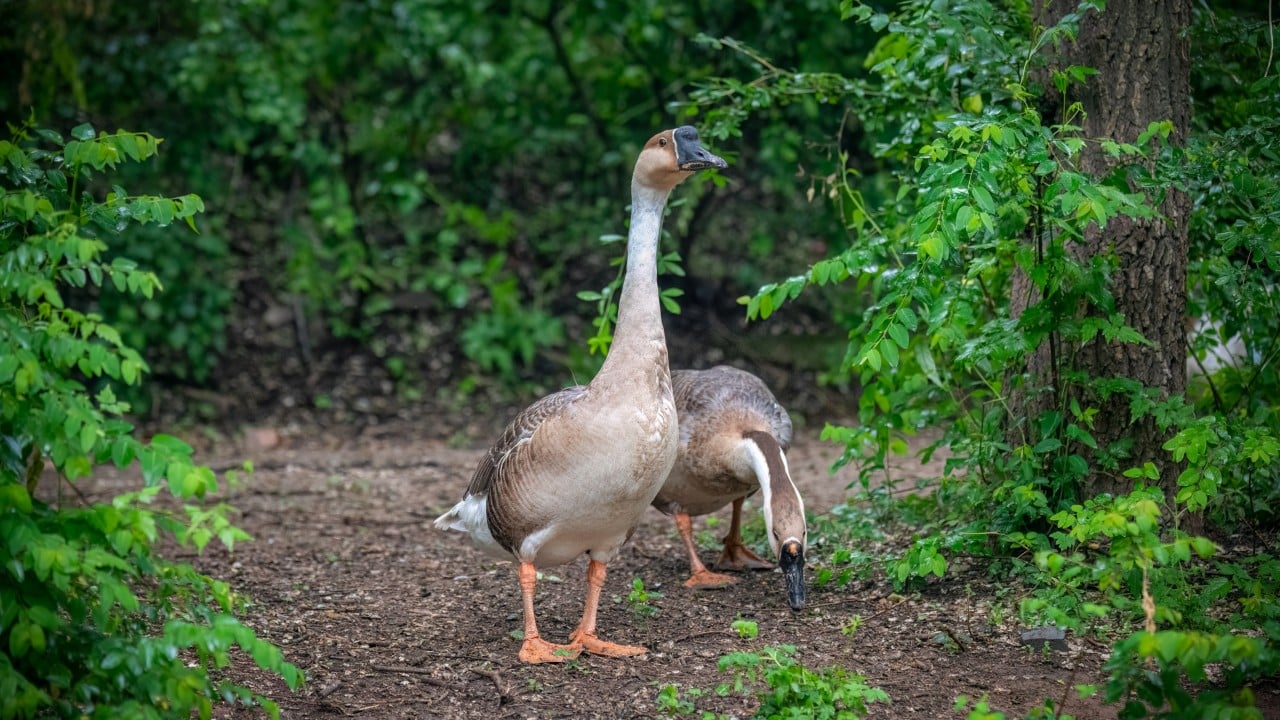
A new population of the migratory swan goose has established a genetic footprint in the Chinese capital over the past century, driven by an accelerated convergence of shifting weather patterns and intense agricultural expansion. For decades, wildlife biologists have tracked the macro-level decline of wild Anser cygnoides across its historic Central Asian migratory flyways. Yet, beneath the broad narrative of habitat loss lies a quieter, localized evolutionary twist. Urban encroachment, altered hydrological networks, and persistent farming practices around Beijing have not merely displaced wildlife; they have acted as an unintended crucible for rapid genetic divergence.
To understand why this matters, one must look past standard conservation checklists and examine the mechanics of avian adaptation. Historical tracking data indicates that migratory waterbirds rely heavily on predictable stopover points and stable climatic cues to govern their annual cycles. When agricultural development drained local wetlands and systematically replaced native vegetation with cultivated fields, the ecological pressures on these birds fundamentally changed. Instead of pushing the local population toward total extinction, these environmental alterations created a novel ecological niche. The birds that lingered or adapted to the artificial water bodies and agricultural waste grain near the urban periphery experienced distinct selective pressures compared to their remote, wild counterparts in Mongolia and Siberia.
Genomic analysis reveals that this regional isolation is leaving a permanent mark on the population structure of the Beijing swan goose. Whole-genome sequencing methodologies deployed in recent environmental studies demonstrate that localized microclimates and human-modified food sources accelerate genetic sorting. Traits linked to metabolic efficiency, thermal tolerance, and behavioral synchronization with agricultural cycles are prioritized by natural and artificial selection. When a migratory species becomes semi-resident because winter feeding grounds are suddenly stabilized by agricultural runoff and warming winter temperatures, the traditional gene flow slows down.
This phenomenon challenges traditional conservation orthodoxies. For years, wildlife management agencies treated genetic distinctiveness as a proxy for pristine, undisturbed heritage. If a population diverged from the baseline wild type, it was often viewed through a lens of contamination or hybridization with domestic stock. However, the Beijing swan goose data suggests a more complex reality. Evolution in the Anthropocene is happening at an accelerated pace, often mediated entirely by human activity. The traits allowing these birds to persist within a heavily urbanized and farmed metropolitan zone are starkly different from those required in the high-latitude steppes.
Consider a hypothetical scenario to illustrate the mechanism: a flock of migratory geese encounters an artificial reservoir flanked by expansive cornfields during a delayed autumn freeze. If local agricultural waste provides a reliable, high-calorie food source well into winter, and urban heat island effects slightly moderate local ambient temperatures, the biological cost of flying thousands of kilometers south drops significantly. Birds possessing genetic variations that favor sedentary residence over endurance migration survive better in this specific micro-environment. Over several generations, the allele frequencies shift. What begins as behavioral plasticity hardens into genetic divergence.
The implications for wildlife policy are severe. Conservation frameworks are typically built to preserve historical baselines rather than dynamic, human-driven evolutionary trajectories. If regional populations are actively adapting to the agricultural and climatic realities of modern mega-cities, protecting them requires acknowledging that nature is no longer separate from human infrastructure. Preserving the Beijing swan goose cannot mean locking the environment into a nineteenth-century museum exhibit. It demands managing the messy intersection where agricultural runoff, urban expansion, and wild avian genetics collide.
Field researchers continue to map the exact loci responsible for these rapid adaptations, moving past generalized assumptions about climate vulnerability. Every new genome sequenced from these urban-adjacent flocks tells a story of survival under duress. The genetic distinctiveness of the capital's geese is a monument to ecological resilience, forged in the friction between human ambition and wild instinct. Whether these localized adaptations will serve as a blueprint for other species or remain an isolated anomaly depends entirely on how much breathing room remaining wetlands are granted against the relentless expansion of concrete and crops.


