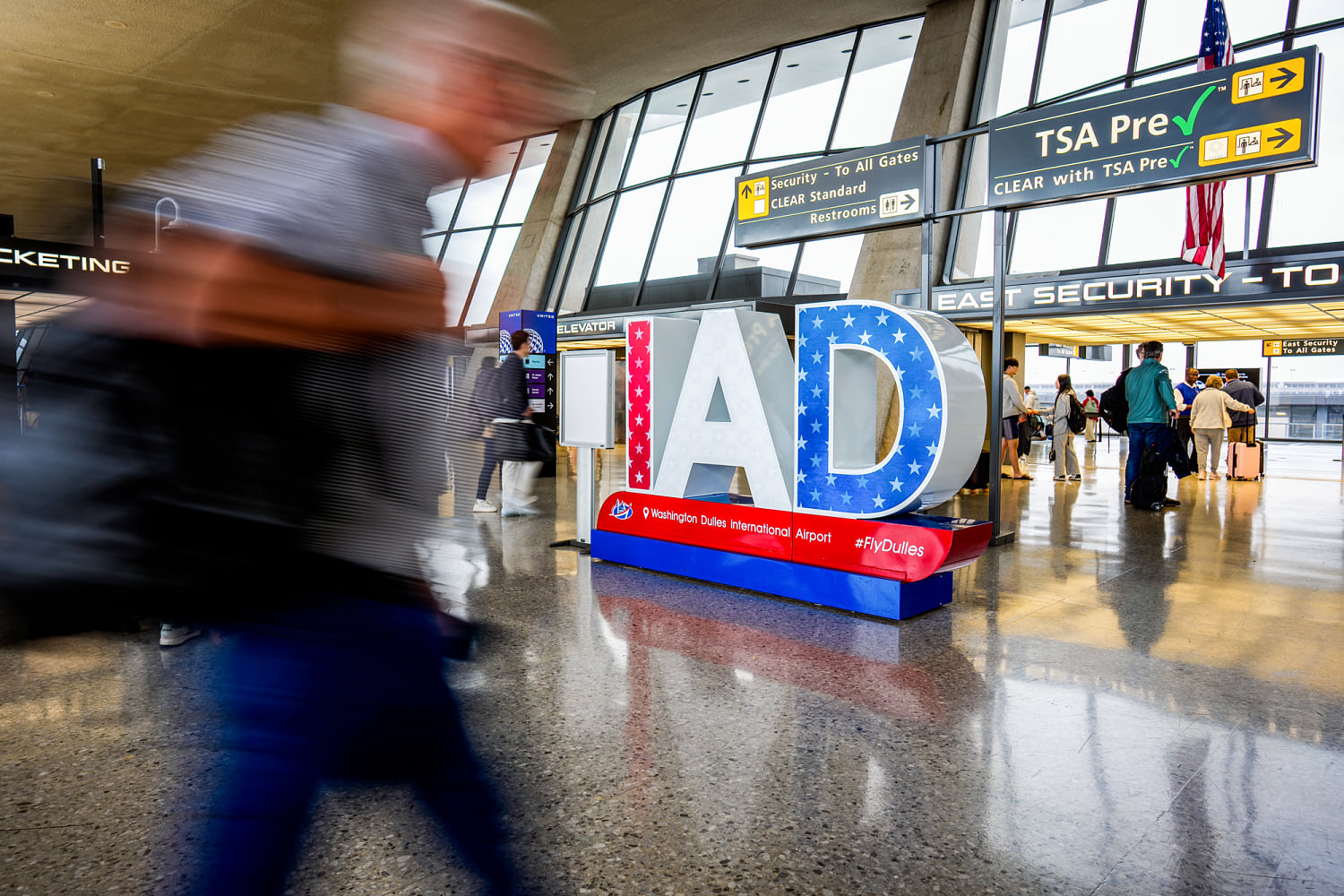
Washington Dulles International Airport has long tested the patience of global travelers. President Donald Trump is moving forward with a $22 billion overhaul plan designed to drag the northern Virginia aviation hub into the modern era by eliminating its infamous mobile lounges and expanding concourse capacity. The multi-billion-dollar price tag addresses decades of operational bottlenecks, but the logistics of funding, structural execution, and stakeholder alignment reveal a complex financial puzzle hidden behind the architectural renderings.
For decades, the airport experience at Dulles has been defined by a stark architectural contradiction. Eero Saarinen designed a modernist masterpiece with a sweeping, iconic roofline that remains a landmark of mid-century aviation architecture. Inside that gorgeous shell, however, functional reality often stalled out.
Travelers stepping off long-haul international flights routinely faced the grueling wait for the airport's vintage mobile lounges. These massive, bus-like contraptions colloquially known as people movers have shuttled passengers across the tarmac since 1962. While they once represented futuristic design, they evolved into slow-moving symbols of transit frustration.
The Architectural Battlegrounds
Behind the White House announcement lies a series of high-stakes proposals from engineering giants and financial institutions that competed for the redesign. Private sector bidders initially pitched radical departures from the current layout. One proposal from an engineering firm envisioned a complete greenfield reconstruction, building an entirely new secondary terminal on the opposite side of the sprawling property.
That approach was quickly shelved. Realities of active airfield management made it impractical to construct a parallel airport without grinding daily commercial flight operations to a halt.
Another bold pitch came from financial heavyweight BlackRock, which proposed a comprehensive public-private partnership. Under their model, the firm would not only finance and construct the massive renovation but also assume operational control of the facility, wresting authority away from the Metropolitan Washington Airports Authority.
That takeover model collided with fierce resistance from United Airlines, the dominant carrier controlling roughly two-thirds of the passenger traffic at Dulles. United fiercely protected its operational footprint, objecting to a third-party entity seizing control of airport revenues and management levers.
The Financial Mechanics
The chosen path splits the difference between heavy state oversight and private capital deployment. Financing the $22 billion price tag falls squarely onto the shoulders of the airport authority and the airlines operating out of the hub.
Airlines typically recoup these capital expenditures through passenger facility charges and ticket fee adjustments over multi-decade bonding periods. When terminal expansions cost billions of dollars, those expenses ripple directly down to the consumer ticket counter. The fundamental question hanging over the project is straightforward. How much will everyday travelers absorb through higher ticket prices for flights originating out of northern Virginia?
Furthermore, the physical state of the current infrastructure demands aggressive intervention. The temporary C and D concourses, originally constructed in the mid-1980s as a stopgap measure, have remained functional workhorses for over forty years. They feature cramped boarding areas, complaints of jet fuel odors, and inadequate gate counts relative to the surging international volume.
Dulles handled a record 29 million passengers recently, a traffic volume that simply overwhelms facilities built for an entirely different era of commercial aviation.
Logistics of the Overhaul
The newly detailed blueprint abandons the mobile lounges entirely. In their place, planners intend to construct an expanded underground U-shaped aerotrain system alongside significantly more moving sidewalks. The existing underground transit loop serves only a subset of concourses, leaving United’s heavy passenger loads dependent on surface-level transfers.
The master plan also shifts parking lots closer to the main terminal footprint. Navigating the vast asphalt expanses that currently separate vehicles from the Saarinen terminal has long been a grueling trek for passengers hauling heavy luggage.
Critics note that while modernizing the terminal interior and introducing linear concourses will streamline operations, coordinating construction around millions of annual flyers requires microscopic precision. The Metropolitan Washington Airports Authority must balance long-term modernization with the immediate pressures of maintaining on-time departures for international carriers.
Aviation infrastructure projects of this magnitude rarely adhere to strict timelines or initial budgets. As engineering crews prepare to break ground on the massive multi-year transformation, the true test will not be the elegance of the White House models, but whether the financial engine can sustain the build without pricing everyday flyers out of the capital region's primary international gateway.