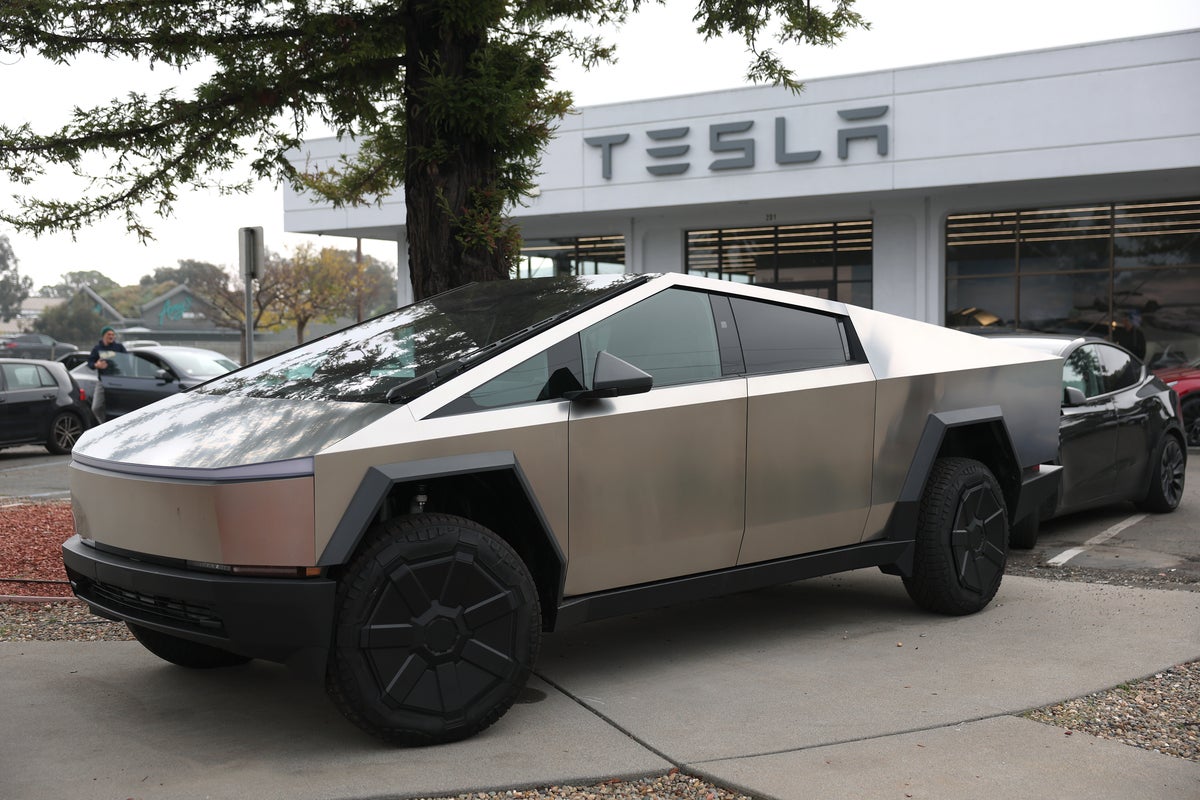
In August 2025, Justine Saint Amour was driving her Tesla Cybertruck along the 69 Eastex Freeway in Houston when the vehicle, operating on Full Self-Driving (FSD) software, allegedly attempted to drive straight off a Y-shaped overpass. Instead of following the curve to the right, the stainless steel behemoth barreled toward a concrete barrier, leaving Saint Amour with permanent spinal injuries and a million-dollar lawsuit against the manufacturer. While the crash itself is a terrifying localized incident, the legal filing in Harris County District Court exposes a much deeper, systemic rot within Tesla’s engineering culture.
The lawsuit does more than just cite a software glitch; it takes the unprecedented step of alleging negligent retention of Elon Musk as CEO. This is not a standard product liability claim. It is a direct assault on the corporate governance that allowed a single individual to override engineering safeguards in favor of a cost-cutting philosophy that may have turned a luxury pickup into a kinetic hazard.
The Engineering Revolt and the LiDAR War
The core of Saint Amour’s argument rests on a decision made years ago that most consumers have long forgotten. Inside the glass-walled conference rooms of Tesla, a war was waged between the engineers and the CEO. Technical staff reportedly advocated for the inclusion of LiDAR (Light Detection and Ranging) and radar sensors—the industry standard for depth perception and redundancy used by rivals like Waymo and Mercedes-Benz.
Musk famously dismissed LiDAR as a "crutch," insisting that "vision" (a camera-only approach) was the only way to achieve true autonomy. The Houston crash suggests the "vision" was blind. By stripping away hardware sensors to save on manufacturing costs and simplify the supply chain, Tesla removed the very fail-safes that could have identified the concrete barrier as a solid obstacle rather than a navigational path.
This isn't just about a "bug." It is about deterministic engineering failure. When a vehicle relies solely on cameras, its perception is only as good as the lighting conditions and the software's ability to interpret 2D pixels as a 3D world. On a complex interchange like the Eastex overpass, the software’s internal model of reality collapsed.
The Illusion of the Unbreakable Exoskeleton
Tesla marketed the Cybertruck as a futuristic tank, emphasizing its cold-rolled stainless steel exoskeleton. In reality, the truck’s rigidity may be its greatest liability for its own occupants. Traditional automotive design relies on crumple zones—parts of the frame designed to buckle and absorb the energy of an impact.
When a Cybertruck hits a concrete wall, the kinetic energy has nowhere to go but into the cabin. The physics are brutal. A 6,600-pound mass coming to a dead stop transfers the force directly to the human spine. Saint Amour’s diagnosis of three herniated discs is a clinical manifestation of this design philosophy. The truck didn’t "protect" her; its refusal to deform likely amplified the shock to her body.
A Pattern of Catastrophic Design
- Electronic Door Latches: Several lawsuits filed in 2025, including the tragic Piedmont, California case, highlight how the lack of mechanical door releases in the rear of the vehicle can trap occupants during a post-crash fire when the low-voltage battery fails.
- The 48V Architecture Gamble: While the transition to a 48V electrical system was hailed as a technical leap, it created a reliance on digital communication for basic mechanical functions like steering and braking. If the power cuts, the driver is often left with zero physical connection to the wheels.
- Pedestrian Lethality: The sharp, unyielding angles of the front bumper are a nightmare for urban safety. While it might survive a 35 mph impact with a pole, a human pedestrian has virtually zero chance of survival against a vertical wall of steel.
The Myth of Full Self-Driving
The branding of "Full Self-Driving" has become a legal albatross for Tesla. Regulators in California have already ruled the term unambiguously false. By the time Saint Amour purchased her used 2024 model in early 2025, the company had tried to walk back the branding by adding the word "(Supervised)" to the dashboard.
However, the psychological damage was done. High-end journalism requires us to look at the Human-Machine Interface (HMI). When you tell a driver for a decade that the car can drive itself, you create a state of "automation complacency." The driver’s brain disengages. By the time the Cybertruck decided to dive off the overpass, the fraction of a second required for a human to re-engage and physically move a steer-by-wire yoke was simply not enough.
Tesla’s legal defense often rests on the fact that the driver is ultimately responsible. But from a tort perspective, if a product is designed to encourage the very behavior that leads to the accident, the manufacturer shares the blame. You cannot sell a "self-driving" car and then claim it's the driver's fault when it tries to drive into a wall.
The Corporate Negligence Argument
The Houston lawsuit is a bellwether because it targets the retention of Elon Musk. This moves the conversation from the garage to the boardroom. The board of directors has a fiduciary duty to ensure the company’s products are safe and its CEO is not a liability.
By allowing Musk to override the concerns of his best engineers regarding LiDAR and driver monitoring, the board may have greenlit a product that was "defective by design." The discovery process for this case will likely unearth internal memos and emails from 2022 and 2023 where engineers warned about the limitations of the "Vision" system. If those warnings were ignored to meet a delivery deadline or to keep the stock price afloat, Tesla isn't just facing a million-dollar payout; it's facing a fundamental restructuring of how it builds cars.
The Cybertruck was supposed to be the vehicle that defined the next century of transport. Instead, it is becoming a case study in how cult of personality can derail safety standards.
If you own one of these vehicles, the directive is clear: Treat every mile as a test flight. The software is not your co-pilot; it is a beta program with access to your life. The next step is for the National Highway Traffic Safety Administration (NHTSA) to move beyond investigations and mandate a hardware retrofit for all "Vision-only" vehicles, though the cost of such a move would likely be the most expensive recall in automotive history.