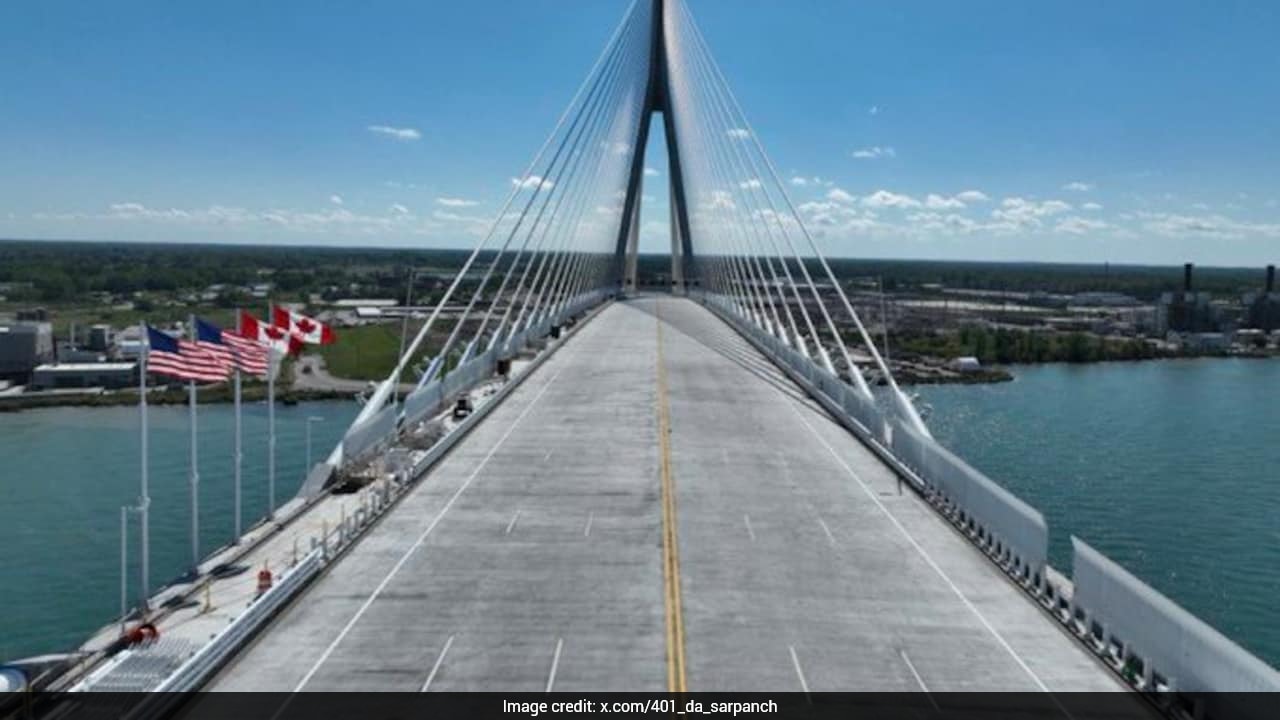
The Gordie Howe International Bridge will finally host its official ribbon-cutting ceremony this Friday, June 12, 2026, with traffic scheduled to flow on June 15. Canadian Prime Minister Mark Carney confirmed the launch, brushing aside months of high-stakes diplomatic friction. This ends a tense standoff that began in February when U.S. President Donald Trump threatened to block the six-lane crossing connecting Windsor, Ontario, and Detroit, Michigan. The White House maintains that the administration intends to secure the best deal for Americans, but Ottawa is moving forward regardless. Beneath the political theater lies a complex web of sovereign financing, corporate lobbying, and trade treaties that almost derailed North America’s most vital supply chain.
The dispute is not merely a spat over concrete and steel. It represents a fundamental clash between traditional cross-border infrastructure pacts and aggressive transactional diplomacy.
The Zero Dollar Asset
To understand why a major infrastructure asset became a political target, look at the contract signed fourteen years ago.
Under the 2012 Canada-Michigan Crossing Agreement, the Canadian government took on an unusual burden. Ottawa agreed to bankroll the entire construction cost of the bridge, a price tag that eventually climbed to roughly $6.4 billion CAD ($4.7 billion USD).
The state of Michigan paid nothing.
In return for absorbing the financial risk, Canada negotiated a straightforward cost-recovery mechanism. Ottawa collects 100% of the toll revenues until its multi-billion-dollar investment is fully recouped. Once that financial finish line is crossed, the net profits will be split evenly, leaving the bridge jointly owned by Canada and Michigan.
The mechanism seemed air-tight until February, when the White House claimed the United States was getting absolutely nothing from the arrangement. The administration demanded immediate negotiations for an instant 50% equity stake in the asset, bypass-cutting the multi-year toll-recovery process entirely.
National border infrastructure requires operational approval from federal agencies on both sides. By threatening to withhold U.S. customs staffing or delay border-patrol integration, a president can turn a finished engineering marvel into an expensive, idle pier.
The Billionaire Shadow Over Detroit
While Washington framed its objections around trade fairness and the use of domestic steel, local industry insiders point to an influential private interest that spent decades trying to kill the project.
For nearly a century, commercial truck traffic between Windsor and Detroit relied heavily on the Ambassador Bridge. That bridge is a privately owned span held by the billionaire Moroun family. The Ambassador Bridge operates as one of the most lucrative monopolies in global transit, handling over 25% of all merchandise trade between the United States and Canada.
Automotive manufacturing relies on just-in-time delivery systems. A single vehicle chassis often crosses the Detroit River multiple times during assembly as different components are added in Ontario and Michigan plants. For decades, the Moroun family collected tolls on nearly every bumper, engine block, and steering column moving through this corridor.
The Gordie Howe International Bridge breaks this monopoly. It links Canada's Highway 401 directly to Michigan’s Interstate 75, allowing trucks to bypass city streets entirely.
The Moroun family launched intensive public relations campaigns and multiple lawsuits to halt the Canadian-backed competitor. During the initial planning phases, advertisements aired in specific media markets, framing a publicly owned bridge as an unnecessary government intervention that threatened American jobs. Though these legal maneuvers failed in court, the underlying arguments resurfaced in recent political rhetoric, particularly the false claim that the bridge lacked American content.
Prime Minister Carney countered these claims directly during phone calls to Washington, noting that American workers built the U.S. plaza and that both Canadian and American steel mills supplied the structural components.
Tariffs and Retail Politics
The bridge standoff did not occur in a vacuum. It flared up during a broader dispute involving agricultural trade, electric vehicle policies, and local retail regulations.
Tensions mounted when Ontario implemented restrictions that limited the shelf space available for imported American spirits and beverages in provincial retail outlets. The move drew sharp criticism from U.S. trade representatives. At the same time, Canada's trade discussions with Beijing regarding green technology and vehicle supply chains created friction with Washington's broader economic goals.
The timing of the bridge opening is tied to a more critical economic deadline. Ontario Premier Doug Ford is in Washington this week to negotiate extensions for the United States-Mexico-Canada Agreement (USMCA). The trade pact faces a mandatory joint review by July 1, and it is set to expire in 2036 if the three nations cannot reach an agreement.
Using a nearly finished trade corridor as leverage is a classic negotiation tactic, even if it disrupts local economies.
The Local Reality of Global Friction
For the logistics managers and manufacturing executives who run the Detroit-Windsor industrial corridor, the political back-and-forth caused significant logistical uncertainty.
Consider a hypothetical automotive logistics firm operating out of southwestern Ontario. If the bridge remained blocked, the company would have to continue absorbing the costs of traffic delays on the aging Ambassador Bridge, where congestion regularly adds hours to delivery schedules. In a factory system where a twenty-minute delay can pause an entire assembly line, those hours translate directly into lost revenue.
The opening of the bridge provides immediate structural relief, but it does not erase the broader risk profile for cross-border commerce. The incident demonstrates that even when an infrastructure project is fully funded, legally binding, and vital to corporate supply chains, it remains vulnerable to sudden changes in national trade policy.
Regional leaders on both sides of the river have spent weeks preparing for the opening, relying on the underlying legal agreements to carry the project across the finish line. Windsor Mayor Drew Dilkens noted that the operational clauses within the binational contract left little room for permanent obstruction, suggesting that federal agencies face a legal obligation to staff the ports of entry once construction concludes.
The ribbon-cutting ceremony on Friday will mark the physical completion of an eight-year engineering effort. Yet, as the first trucks prepare to cross the river on June 15, the long-term management of the border will require constant navigation of shifting political currents rather than just relying on the strength of the concrete.