The formal announcement of a nationwide truce in Yemen brought a rare, fragile quiet to a population exhausted by years of war. International diplomats celebrated the breakthrough as a historic turning point. Ordinary citizens dared to imagine a future without airstrikes, fuel queues, and front-line artillery fire. But fragile political agreements rarely survive the collision between lofty diplomatic communiqués and the brutal reality on the ground.
Yemen's truce started unraveling not through a single, massive military offensive, but through a calculated accumulation of small fractures. A delayed commercial flight from Sanaa airport. An unexpected airstrike in a contested province. A choked maritime blockade that prevented vital goods from reaching starving communities. These events were dismissed by international observers as minor violations or bureaucratic hiccups. They were actually warning signs of a deeper structural collapse. Understanding why the truce dissolved requires examining the competing interests that signed the paper while simultaneously preparing for the next phase of conflict.
The Anatomy of a Broken Agreement
Diplomacy in protracted civil wars relies on constructive ambiguity. Mediators often draft agreements that allow warring factions to interpret key clauses in mutually exclusive ways. This strategy secures signatures on the dotted line. It also guarantees future disaster.
The truce brokered by the United Nations aimed to freeze military positions, open Sanaa International Airport to commercial flights, and ease restrictions on fuel imports entering the Red Sea port of Hodeidah. On paper, these steps offered immediate humanitarian relief. In execution, every single provision became a bargaining chip.
The government in Sanaa, controlled by the Houthi movement, viewed the opening of the airport as a sovereign right and a long-overdue correction. The internationally recognized government in Aden, backed by a regional coalition, viewed the same flights as a security vulnerability that could be exploited for arms smuggling or intelligence operations. When administrative delays turned into weeks of canceled flights, the political goodwill evaporated.
Trust is the scarcest commodity in any conflict zone. When one side perceives that the other is using humanitarian concessions for military advantage, retaliation follows swiftly.
The Logistics of Suffocation
Economic warfare often inflicts more damage than bullets. While frontline fighting largely stagnated during the initial months of the truce, the invisible war of logistics and supply chains intensified.
The blockade of Hodeidah port remained a primary flashpoint. The internationally recognized government insisted on rigorous inspection mechanisms to prevent the importation of dual-use materials and advanced weaponry. Houthi authorities countered that these inspections were intentionally slow, designed to create artificial fuel shortages, extort merchants, and break the civilian population's will to resist.
Container ships sat stranded for weeks off the coast. Demurrage fees mounted into millions of dollars, costs that were immediately passed down to consumers already living in extreme poverty. A bag of flour or a gallon of diesel became luxury items in areas under nominal truce protection.
When economic suffocation continues despite a ceasefire, the agreement loses its legitimacy in the eyes of the public. Civilians see no tangible dividend from peace when their children remain malnourished and hospitals lack basic fuel to run generators. A truce that preserves a population's misery is merely a pause in hostilities, not an end to war.
Military Realignment Under the Cover of Peace
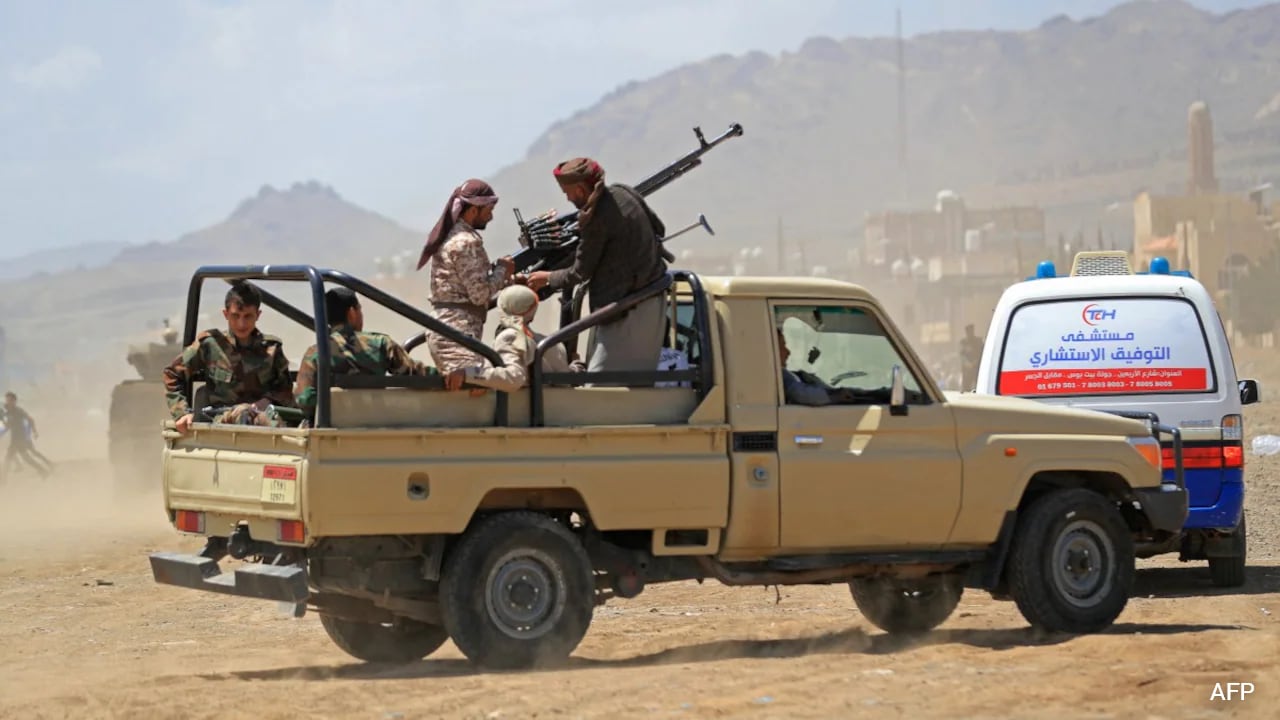
Armies do not stand still during a ceasefire. They rearm, reorganize, and redeploy. While international monitors focused on the absence of major offensive operations, local commanders used the lull to fix supply lines and recruit fresh fighters.
The frontline areas around Marib and Taiz never truly quieted down. Snipers continued their grim work. Trench networks grew deeper. Drones hummed overhead, mapping enemy positions for the day the truce finally shattered beyond repair.
Neither side entered the diplomatic process with the intent of permanent disarmament. Both viewed the pause as a tactical necessity. The Houthis needed to consolidate territorial gains in the north and west, while the coalition partners needed time to manage internal fractures and rebuild command structures.
When an agreement is treated as a tactical breathing space rather than a strategic transition to peace, its expiration date is baked into the ink. The moment the military balance shifted or internal political pressures mounted, breaking the truce became the more attractive option for leadership cadres on both sides.
The Failure of External Mediation
International mediation efforts in Yemen have long suffered from a fundamental structural flaw. Mediators focus heavily on securing the buy-in of regional and international heavyweights while treating local factions as subordinate actors who can be pressured into compliance.
This top-down approach ignores the complex web of localized grievances, tribal politics, and economic incentives that drive the conflict from the bottom up. When a national truce is signed in a luxury hotel thousands of miles away, fighters in a trench outside Taiz or merchants staring at customs delays in Hodeidah feel no ownership over the text.
Furthermore, international actors often lack the sustained leverage required to enforce compliance. Sanctions threats are frequently ignored or circumvented. Diplomatic reprimands carry little weight when local leaders believe their survival is at stake.
The international community wanted a success story. They declared victory prematurely, framing a temporary cessation of violence as a permanent settlement. That diplomatic hubris blinded them to the daily erosion of the agreement on the ground.
Beyond the Brink
Yemen's experience offers a brutal masterclass in the fragility of modern peace processes. A truce that fails to address the underlying political economy of a war will inevitably collapse under the weight of its own contradictions.
Flights delayed, airstrikes launched, ports blockaded. These were not random anomalies. They were the predictable symptoms of a peace process built on sand, designed to satisfy external demands for de-escalation rather than internal demands for justice and survival. As the quiet gives way to the familiar rhythm of artillery and sirens, the primary casualty is not just an international agreement, but the remaining hope of a generation caught in the crossfire