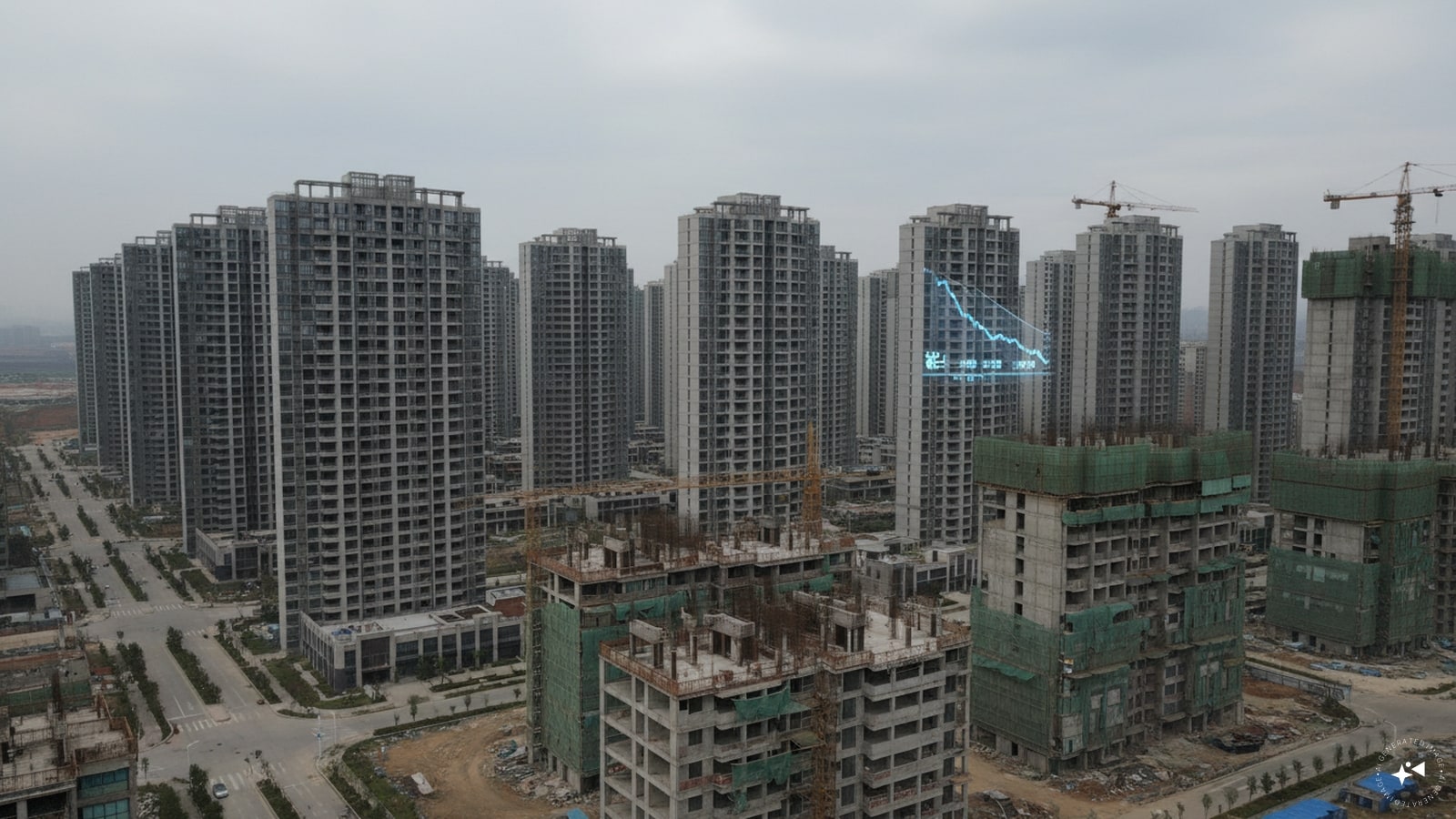
The headlines repeat with numbing regularity. New home prices across major Chinese urban centers continue their downward slide, stripping away billions in household wealth and confounding policymakers in Beijing. Yet mainstream financial reporting misses the structural reality. This is not a standard cyclical downturn that will respond to interest rate cuts or localized purchasing vouchers. The old engine of China's economic model—fueled by speculative real estate, relentless vertical expansion, and endless local government land sales—has seized up permanently.
For decades, property served as the primary repository for domestic savings. Alternative investment channels remained tightly restricted by capital controls, leaving families with few options outside of concrete and steel. When home prices rose year after year, it created a potent wealth effect that drove broader consumer spending.
That mechanism has inverted. With roughly seventy percent of household wealth tied up in residential real estate, falling asset values have triggered a deep psychological and financial retreat. Families are not merely pausing purchases; they are aggressively deleveraging. Even as borrowing costs drop, consumer caution persists because the fundamental social contract of Chinese housing has broken. People are no longer buying an appreciating asset. They are buying an asset with an uncertain delivery date, constructed by developers buried under insurmountable debt.
Local governments find themselves trapped in the same structural vice. For years, regional authorities relied on land sales to municipal developers to fund public services and service their own off-balance-sheet borrowing vehicles. As primary land auctions stall, municipal balance sheets face an unprecedented squeeze. The resulting fiscal pressure limits the state's capacity to orchestrate a massive, debt-financed bailout of the kind deployed during previous global downturns.
Historical parallels offer sobering context. Japan's asset price bubble burst in 1990, setting off a multi-decade adjustment phase where balance sheet repair took precedence over growth. Property investment turned from a growth engine into a persistent structural drag. China's current trajectory bears striking resemblances to that historical precedent. Real estate investment has shifted from adding momentum to weighing down growth, and an oversupply of completed and uncompleted housing inventory casts a long shadow over new construction starts.
Beijing has attempted various interventions, ranging from easing mortgage restrictions to encouraging state-backed entities to absorb excess housing inventory. Yet these measures treat the symptoms rather than the disease. Incremental liquidity injections cannot convince a risk-averse populace to re-enter a broken market. The structural overhang of housing stock means that normalization will take years, not quarters.
The broader implications extend far beyond domestic consumption. As Chinese households curtail domestic investment and hoard cash, domestic demand remains subdued. This domestic absorption failure has direct consequences for global trade flows, altering current account balances and exporting deflationary pressures worldwide.
Navigating this transition requires acknowledging that the old economic model is gone for good. Until domestic consumption finds new drivers that do not rely on property speculation, the protracted correction in urban housing values will remain the defining anchor on economic momentum.