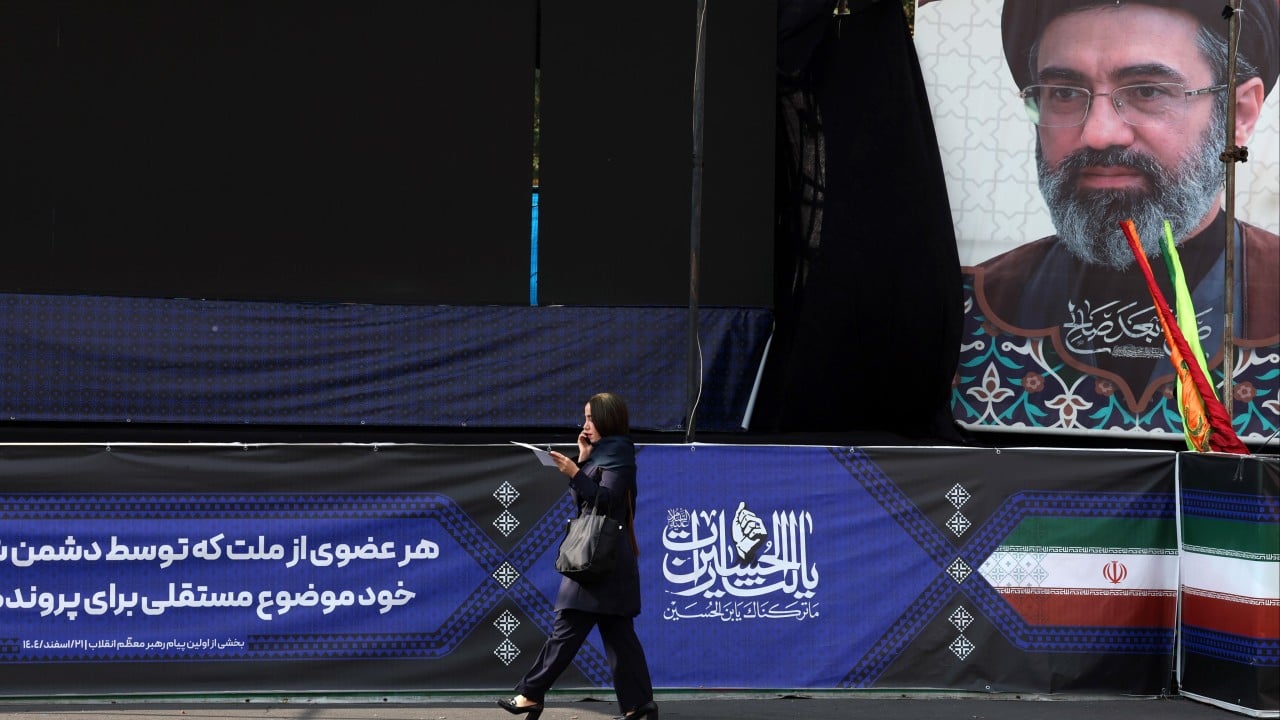
Granting blanket military authority to respond immediately and anywhere a threat emerges shifts Iran’s command structure away from deliberate political vetting toward decentralized, rapid retaliation. In practical terms, that directive compresses the time between a perceived strike or sabotage and a kinetic or asymmetric response, while placing heavier operational weight on field commanders.
Headline coverage often treats orders like this as pure theater or an automatic countdown to full-scale war. After decades covering defense ministries, intelligence briefings, and regional standoffs, I look at the mechanics first. A supreme leader issuing a broad mandate to strike back without waiting for a fresh round of diplomatic consultations is rarely just a slogan for state media. It is an institutional adjustment designed to solve a specific problem: deterrence erosion when adversaries probe below the threshold of conventional war.
Yet a sweeping order on paper does not erase the physics of logistics, air defenses, economic fragility, or political survival. Commanders can be told to hit back anywhere at any moment. Actually pulling off a coordinated strike across borders without triggering a catastrophic escalation that threatens the state itself is a far messier equation.
Why Broad Retaliation Orders Appear During High Tension
When a state faces repeated covert pressure, cyber intrusions, proxy attrition, or direct strikes on military assets, slow decision-making looks like weakness. Every hour spent debating options in committee gives an adversary room to shape the narrative or reinforce defenses.
Delegation is a classic tool in military history when leadership fears being caught flat-footed. By authorizing immediate retaliation across theaters, top leadership signals two things at once to outside observers:
- Higher perceived cost for anyone testing Iranian red lines through incremental hits.
- Reduced predictability, since adversaries cannot easily guess which unit or proxy network will answer a provocation.
There is also an internal audience. Security forces operating under heavy strain want clarity that they will not be second-guessed by politicians if they act quickly against an incoming threat.
Still, sweeping directives carry a built-in risk for the person who issues them. Unlimited latitude in theory can turn into command overreach in practice if a local commander misreads a radar blip, a drone flight, or a shipping incident. History is full of conflicts that widened not because a head of state wanted a regional war, but because junior or mid-level officers acted on broad standing orders during a moment of fog.
How Command and Control Actually Works on the Ground
A directive to respond anywhere does not mean every battalion suddenly has carte blanche to launch missiles at any capital. Modern militaries—and especially dual-track security systems like Iran’s, where regular forces and the Islamic Revolutionary Guard Corps operate alongside regional aligned networks—rely on layers of authorization, targeting rules, and supply constraints.
In real operations, command and control balances speed against safety. Even when political leaders loosen the leash, technical and operational checks remain:
| Operational Layer | What It Controls | Why It Matters Under Broad Orders |
|---|---|---|
| Targeting & Intelligence | Selecting valid military or infrastructure aims | Prevents strikes on civilian sites that invite overwhelming counter-strikes |
| Munitions & Logistics | Missile stockpiles, drones, air defense reloads, fuel | Limits how far "anywhere" can stretch in a sustained exchange |
| Rules of Engagement | When units can fire without prior approval | Speeds up tactical defense, though miscalculations remain dangerous |
| Proxy Coordination | Alignment with regional partners | Adds reach and deniability, yet creates friction over local goals |
Think of a hypothetical example to see how these pieces collide. Suppose an air base or radar facility suffers damage overnight, and a regional unit holds standing authority to answer threats rapidly. Firing a short-range rocket at a nearby tactical target carries very different consequences than launching long-range munitions at a high-value strategic site hundreds of miles away. Even with broad permission, senior commanders still weigh escalation ladders, air-defense depletion, and what happens on day two and day three if the other side hits back harder.
The Gap Between Rhetoric and Reach
"Anywhere" sounds boundless in a translated headline. Geography and physics are less accommodating.
Projecting power far beyond immediate borders requires intelligence, persistence, survivable delivery systems, and a way to absorb the inevitable reply. Asymmetric tools—such as unmanned aerial vehicles, ballistic systems, maritime harassment, or cyber operations—give a force real reach without needing a massive surface navy. Even so, every long-range operation consumes scarce systems that might be needed closer to home if tensions spike.
What Adversaries Watch When Red Lines Shift
Intelligence analysts and defense planners rarely stop at the text of a directive. They watch behavior in the days and weeks that follow.
Has air-defense readiness changed around key facilities? Are missile units dispersing or practicing rapid launch drills? Are diplomatic channels going quiet, or are backchannels staying open to clarify what counts as a "threat" versus routine pressure?
| Signal Category | Observable Indicator | Strategic Meaning |
|---|---|---|
| Force Posture | Dispersal of launchers, heightened alert cycles | Preparation for incoming strikes or imminent response |
| Messaging | Sharp warnings paired with narrow definitions of targets | Attempt to deter without locking into total war |
| Regional Activity | Shifts among aligned militias or maritime patrols | Testing pressure points while preserving plausible deniability |
| Economic & Civil Prep | Airspace notices, energy security measures | Awareness that retaliation could invite broad blowback |
Adversaries also test whether deterrence credibility has genuinely risen or if the order is mostly defensive posturing. A state under economic strain and external pressure often talks tough to project resilience. Yet tough talk only deters if the opponent believes the threat is both capable and survivable.
The Counter-Argument Nobody Likes to Admit
Here is a perspective that gets lost in breathless coverage. Broadening authorization to strike back can sometimes signal strategic constraint rather than unbridled aggression.
If a leadership group believes it cannot afford a prolonged, full-scale conventional war, pushing authority outward and emphasizing swift, proportionate, or asymmetric hits can be an effort to keep conflict contained below that ceiling. By promising quick pushback against specific provocations, planners hope to deter nibbling attacks without having to mobilize the entire state for total war.
Whether that calculation holds depends on restraint on all sides. Deterrence is a two-way street; one side’s "proportionate response" can easily look like an unacceptable escalation to the other.
The Hidden Trade-Offs for Leadership and Society
Every expansion of military latitude comes with domestic and diplomatic costs that rarely show up in a single news cycle.
Empowering security institutions increases their influence inside the state. Over time, when military and security actors hold wide operational discretion during ongoing crises, civilian diplomats often find their room to maneuver shrinking. Negotiating off-ramps becomes harder when multiple actors have a stake in how a crisis is framed and resolved.
There is also the risk of domestic blowback. Economic pressure, sanctions, inflation, and the fear of wider conflict weigh heavily on ordinary citizens. A posture centered on constant readiness and rapid retaliation may rally loyalists in the short term, yet it also raises the stakes if an operation goes wrong or triggers harsher economic and military countermeasures.
Reading the Next Move Without Panic
Anyone trying to make sense of orders like this should resist two traps. The first is assuming an immediate explosion on the front page tomorrow morning. The second is dismissing the shift as empty noise.
Watch what happens at the margins—where rules of engagement meet real friction at sea, in the air, or in covert operations. That is where broad orders stop being abstract policy and start testing the nerve of every player in the room.