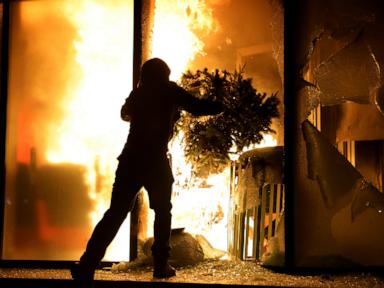
Student protesters in Albania have turned a months-long anti-government movement into a street-level confrontation with Prime Minister Edi Rama's administration, clashing with riot police outside the Prime Minister's Office and the Education Ministry over tuition costs, state corruption, and controversial land developments. Standard wire reports treat the eruption of student anger as a sudden spike in street violence. That framing misses the structural mechanics driving young people into tear gas and water cannons across Tirana, Shkodër, and Elbasan.
For more than a decade, Albania's political theater has operated on a predictable cycle. Opposition parties stage rallies, accuse the ruling Socialists of state capture, and draw modest crowds that rarely alter power equations on their own. Students entering the fray in the autumn of 2026 changed the chemistry because their grievances sit at the intersection of immediate household economics and long-term exit prospects. When young people feel locked out of affordable higher education and fair wages at home, street confrontation stops looking like partisan theater and starts looking like self-defense.
Why Street Clashes Escalated Beyond Routine Protests
Riot police deployed tear gas and water cannons as demonstrators hurled bricks, set barricades ablaze, and damaged buildings linked to state institutions and commercial banks. Authorities reported more than 160 arrests and over a hundred injured officers during October's sharpest escalations, while protesters and civil groups alleged excessive force, including against minors. By mid-November 2026, demonstrations stretched past the 170-day mark of the broader anti-government mobilization that began in late May following months of party-led protests.
Surface coverage often reduces these clashes to a binary of angry youth versus heavy-handed policing. In practice, two forces collided simultaneously. First, the broader movement—which evolved after May 2026 into the citizen-led Flamingo Revolution—had already tested the state's tolerance for dissent. Second, students brought a sharper, more volatile urgency to demonstrations that had otherwise risked settling into repetitive weekly routines.
Heavy policing did not simply contain the unrest. It gave demonstrators a tangible target on the spot. When water cannons and mass arrests meet rock-throwing and arson near ministries, moderation loses ground on both sides, and middle-ground bystanders frequently step back even if they sympathize with the underlying complaints.
The Economics Behind Campus Anger
Students did not pour onto Tirana's boulevards over an abstract constitutional debate. They marched over tuition fees, underfunded public universities, and a job market where youth unemployment runs roughly double the overall national rate. In a country where more than a fifth of the population faces poverty and wages trail Western European benchmarks, paying steep university costs for uncertain domestic returns feels like a bad contract.
Consider a hypothetical example of a second-year engineering student in Tirana. Suppose her family already stretches its monthly budget to cover rent, utilities, and exam fees while watching relatives work abroad for higher pay. When she sees luxury tower construction and high-profile coastal resort projects dominating headlines alongside tight public budgets, her frustration becomes personal rather than theoretical.
Albania has seen student mobilization before, notably during the 2018–2019 campus protests that forced fee rollbacks and cabinet changes. Yet those earlier gains did not permanently resolve complaints about campus quality, governance, or economic opportunity. Veterans of Balkan political reporting know how quickly temporary concessions fade when the underlying economic ladder still feels tilted toward insiders.
| Pressure Point | What Protesters Emphasize | What Officials Argue | Practical Friction |
|---|---|---|---|
| Higher Education | High fees and weak state investment | Ongoing reforms and broader fiscal constraints | Families bear immediate out-of-pocket costs |
| Public Corruption | Tenders, scandals, and concentrated power | Institutional progress and rule-of-law work | High public skepticism toward state accountability |
| Land and Investment | Luxury projects and ecological trade-offs | Foreign capital, tourism, and modernization | Clash between visible wealth and local living standards |
| Public Order | Alleged police abuse and strict protest fines | Maintaining law, safety, and civic calm | Arrests and harsh penalties inflame grievances |
High-Profile Projects and the Corruption Narrative
Anger over campus costs fused quickly with outrage over public corruption and high-profile development plans. Demonstrators and opposition voices have pointed to corruption investigations involving senior officials, including former or embattled cabinet figures such as Deputy Prime Minister Belinda Balluku, as proof of systemic rot. At the same time, planned resort developments tied to figures close to U.S. President Donald Trump—including projects drawing scrutiny over protected coastal or island environments—became potent symbols of backroom deals and unequal rules.
From a purely macroeconomic angle, attracting foreign investment into tourism and real estate can bring capital, jobs, and international visibility to a small economy. Politically, however, optics matter as much as balance sheets. When citizens perceive that well-connected developers and political insiders move effortlessly while ordinary residents struggle with inflation, municipal failures, or court battles, every crane and ribbon-cutting reads as another symptom of state capture.
A protest movement rarely turns into a prolonged crisis over a single grievance alone; it catches fire when daily hardship and high-level scandal confirm the exact same suspicion.
The Opposition Trap and the Street Dilemma
A crucial overlook in superficial coverage is the complicated relationship between student organizers and established opposition politicians. Figures like Sali Berisha and the Democratic Party have sought to harness anti-government momentum, frame elections and budgets as illegitimate, and push for early polls or a transitional arrangement. Many students and civic activists, however, guard their independence carefully because they distrust entrenched political elites across the aisle as much as the ruling party.
That independence is a double-edged sword. It shields student demonstrators from being dismissed purely as partisan foot soldiers, yet it also complicates negotiations when authorities demand clear interlocutors or concrete policy demands. Meanwhile, the government has pushed back with firm rhetoric—accusing protesters of creating a climate of terror or aligning with extremist currents—while introducing tougher penalties, including steep fines for demonstrators caught up in violent protests, and drawing sharp pushback from rights advocates and international observers.
European Union representatives in Tirana have walked a familiar diplomatic line, condemning violence and urging proportionate police conduct alongside peaceful assembly. External statements rarely settle street standoffs in the Balkans. What happens next depends on whether Tirana responds solely with crowd control and legal penalties or addresses the pocketbook and governance pressures driving young people into the streets. Watch the upcoming late-November demonstrations around Albania's Independence and Liberation holidays to see whether student mobilization widens into sustained civic pressure or fractures under arrests, fines, and political fatigue.


