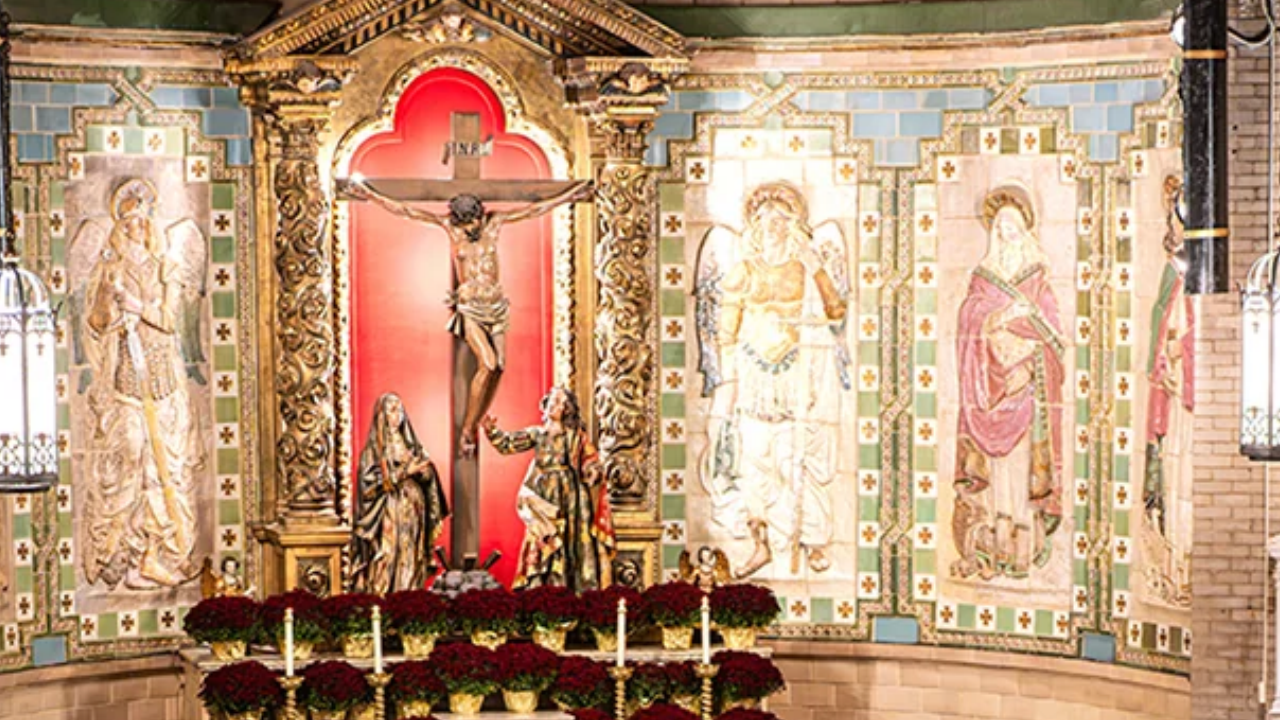
The first phase of a $7.7 million restoration project has finally stopped the chronic roof leaks threatening a historic basilica, forcing visitors to navigate strictly limited hours while scaffolding remains in place. Water intrusion is the silent executioner of historic masonry. For years, rainwater seeped through aging roof membranes and compromised flashing, saturating the structural timbers and threatening interior plasterwork with irreversible rot and mold. By completing this initial exterior stabilization, preservation crews have bought the building time, though the trade-off for tourists and worshippers is heavily restricted public access as the site transitions toward interior conservation.
Most people look at a multi-million-dollar price tag on a church roof and assume someone is gold-plating the gutters. They aren't. Historic preservation operates under an entirely different set of economic rules than modern commercial construction, and when a monumental structure starts taking on water, the financial bleeding accelerates exponentially.
The Hidden Physics of Water Intrusion
Water does not simply drip straight down. Once moisture breaches the outer envelope of a massive stone or brick structure, capillary action pulls it laterally through porous mortar joints, behind decorative stonework, and deep into wooden roof trusses.
In colder months, that trapped moisture freezes. Water expands by roughly nine percent when it turns to ice, acting like thousands of microscopic hydraulic jacks inside the masonry. Over decades, this freeze-thaw cycle shears the faces off historic stone, crumbles lime mortar into dust, and rusts hidden iron tie-rods from the inside out. By the time a brown stain actually appears on an interior ceiling, the structural damage behind the wall has usually been compounding for years.
Stopping the leaks required more than patching holes. A true building envelope stabilization means stripping failing materials back to sound substrate, installing modern breathable vapor barriers, rebuilding custom flashing around complex architectural geometries, and matching historic roofing materials—often slate, copper, or specialized clay tile—that can last another century. Every custom copper valley and hand-split slate tile requires specialized tradespeople who bill at master-craftsman rates.
Why $7.7 Million Barely Scratches the Surface
To an outsider, $7.7 million sounds like enough money to build a brand-new complex from scratch. In the world of monumental restoration, it barely covers the scaffolding and the roof.
Consider the logistics of working on a basilica. You cannot simply lean an extension ladder against a hundred-foot nave wall or rest heavy equipment on fragile historic roofs. Engineers must design freestanding, load-bearing steel scaffolding systems engineered to withstand high winds without anchoring into delicate historic facades. Erecting, inspecting, and eventually dismantling that scaffolding alone routinely consumes twenty to thirty percent of a phase-one budget before a single slate tile is laid.
Then there is the regulatory reality. Historic landmarks are governed by strict preservation standards, often modeled on the Secretary of the Interior’s Standards for the Treatment of Historic Properties. These rules prohibit quick, cheap modern fixes. You cannot smear synthetic elastomeric caulk over failing lime mortar; modern Portland cement is harder than historic brick and will literally crush the surrounding masonry as the building expands and contracts in the summer heat. Crews must analyze the original mortar in a lab, replicate its exact mineral composition and breathability, and apply it by hand.
The Cost Breakdown of Phase One
| Expense Category | Operational Reality | Budget Impact |
|---|---|---|
| Access and Containment | Engineered exterior scaffolding, weatherproofing shrink-wrap, and pedestrian protection tunnels. | High fixed upfront cost regardless of repair scope. |
| Envelope Stabilization | Slate or tile replacement, custom copper flashing, gutter reconstruction, and structural timber sistering. | Core expenditure required to achieve a watertight seal. |
| Masonry Repointing | Grinding out failed cement patches and hand-tucking custom-blended lime mortar. | Labor-intensive; billed by the square foot at artisan rates. |
| Architectural Engineering | Structural assessments, moisture mapping, and preservation compliance documentation. | Typically 10% to 15% of total construction costs. |
The Visitor Bottleneck and the Economics of Access
Shutting down a major landmark entirely is financial suicide for the institutions that maintain them. Most historic basilicas rely heavily on visitor donations, gift shop revenue, and regular liturgical attendance to fund daily operations and pay down capital debt. Closing the doors for two years kills that cash flow and breaks the habit of community engagement.
Yet keeping an active construction site open to the public is an insurance nightmare. Falling debris, exposed lead paint, silica dust from masonry grinding, and narrow egress routes create severe liability risks. The compromise—limited visiting hours—is an operational tightrope.
By restricting public access to narrow windows, site managers can group heavy, dust-producing, or overhead work into uninterrupted blocks during closed hours. Contractors work faster when they aren't constantly pausing to let tour groups pass underneath a hoist. Faster work lowers general conditions costs—the daily burn rate of site trailers, security, and equipment rentals—which directly stretches the $7.7 million budget further. For visitors, it means checking schedules rigorously before traveling, expecting obstructed sightlines, and accepting that parts of the sanctuary will remain wrapped in protective plastic.
What Phase One Actually Fixes and What It Doesn't
A watertight roof is a victory, not a finish line. Sealing the exterior stops new damage, but it simultaneously changes the internal microclimate of the building.
For years, leaky roofs inadvertently ventilated the structure, allowing drafts to circulate through attics and wall cavities. Once contractors seal the envelope tight, trapped moisture already inside the thick masonry walls has nowhere to go except inward. During the months immediately following a major roof restoration, buildings often experience a temporary spike in interior efflorescence—white, powdery salt deposits pushed to the surface of plaster and stone as decades of absorbed water finally evaporate.
This is precisely why preservationists divide massive projects into phased campaigns. You never restore delicate interior frescoes, gilded altars, or historic pipe organs while the roof is still leaking, and you rarely start interior plaster conservation the week the roof is finished. The building needs time to dry out and reach hygrothermal equilibrium.
- Emergency Stabilization: Stopping active water intrusion, securing loose masonry, and shoring up compromised structural beams.
- Drying and Monitoring: Tracking internal humidity levels and wall moisture content across seasonal shifts to ensure the envelope is performing.
- Interior Conservation: Repairing water-damaged plaster, cleaning soot and mineral deposits from stonework, and restoring decorative finishes.
- Systems Modernization: Upgrading hidden electrical wiring, fire suppression, and climate control systems without tearing up newly restored surfaces.
The Looming Funding Cliff for Historic Landmarks
The completion of a $7.7 million first phase usually triggers a dangerous psychological trap among donors and the general public. People see the exterior scaffolding come down, hear that the leaks are fixed, and assume the crisis is over. Fundraising momentum stalls just as the institution needs to raise millions more for phase two.
Across North America and Europe, historic religious and civic buildings are hitting a synchronized maintenance wall. Many monumental structures built or heavily renovated in the late nineteenth and early twentieth centuries are reaching the end of their 100-year material lifespans at the exact same moment. Deferred maintenance—putting off routine gutter cleaning or minor slate repairs during tight budget years—turns $50,000 maintenance items into $8 million capital emergencies.
If the governing body behind this basilica fails to convert the relief of a dry roof into sustained capital pledges for the interior work, those damp plaster walls will simply sit in limbo, stable but scarred, while inflation drives up the cost of phase two by five to eight percent every single year they wait. Anyone planning a visit over the coming months should verify the updated schedule directly through the basilica's official channels before making the trip, and expect to contribute toward the next phase of scaffolding if they want to see the interior fully restored.