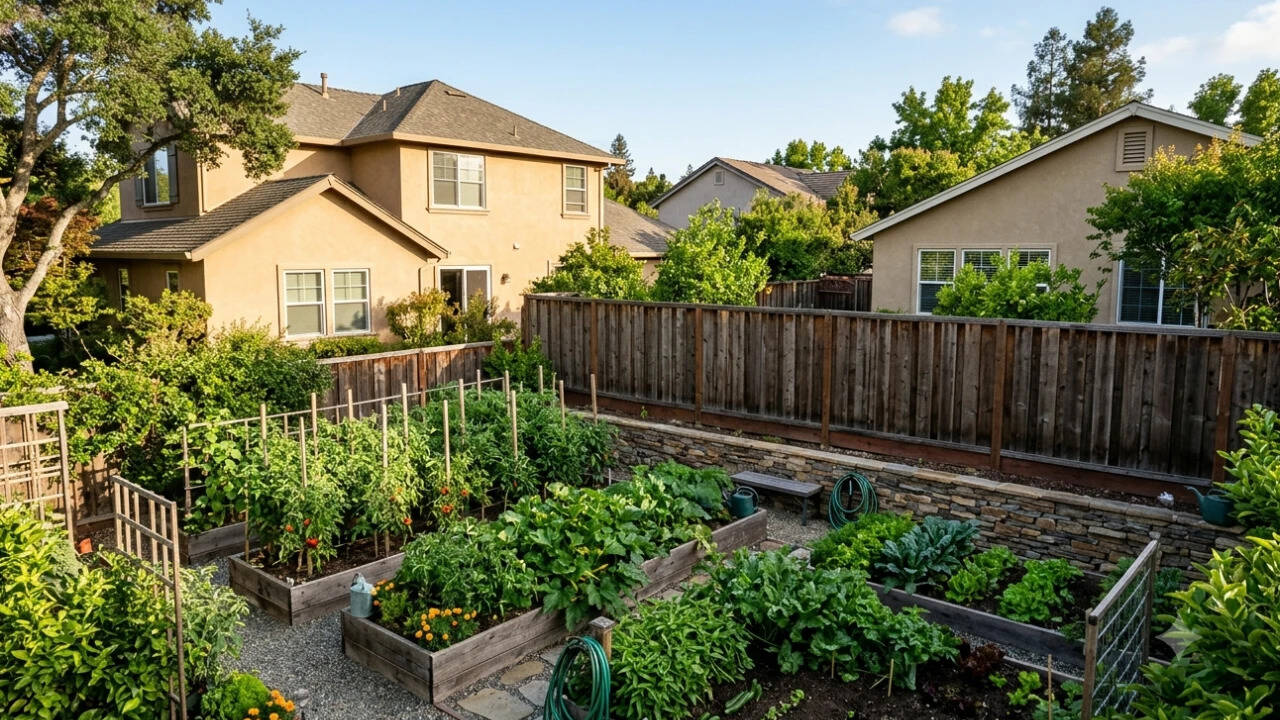
Informal handshake agreements over residential real estate create latent structural liabilities that detonate decades after the original parties exit the transaction. When a California property dispute involving a 1955 exchange of $250 and babysitting services reaches modern litigation, the core failure is not neighborly hostility, but the collision between unrecorded equitable claims and strict statutory title requirements.
Standard media coverage treats multi-decade garden and boundary disputes as human-interest anomalies driven by stubborn personalities. In reality, these conflicts follow predictable legal and economic trajectories. Whenever real property rights are transferred or modified without formal deed recordation, the asset accumulates title friction. Over a 70-year horizon, property appreciation, generational turnover, and shifting land-use norms transform minor informal accommodations into high-stakes litigation.
The Structural Anatomy of the 1955 Transaction
To understand why a 1955 arrangement collapses in a modern courtroom, the original transaction must be deconstructed into its constituent legal and economic mechanisms. At the time of the agreement, two neighboring households executed a hybrid barter-and-cash exchange: $250 in currency combined with ongoing childcare labor in return for the use or control of a garden parcel.
This structure introduces three distinct points of failure into the chain of title:
- The Statute of Frauds Deficit: Under California Civil Code Section 1624, any agreement for the sale of real property, or for an interest therein—including easements or long-term leases exceeding one year—is invalid unless memorialized in a written instrument signed by the party to be charged. Oral agreements backed by cash and services fail this baseline statutory threshold.
- Consideration Valuation Ambiguity: Combining a fixed nominal sum ($250) with an unquantified service metric (babysitting) creates an indeterminate price mechanism. Without an itemized ledger or a stated fair-market-value benchmark, subsequent title holders cannot distinguish between a permanent purchase, a finite lease, or a revocable license.
- Unrecorded Encumbrance: Because the transaction bypassed county recorder offices, constructive notice was never established. Subsequent purchasers, heirs, or lenders examining the public record see a clean parcel boundary that contradicts the physical reality on the ground.
In 1955, the transaction costs of hiring a surveyor, drafting a formal grant deed, and recording a lot-line adjustment likely exceeded the perceived value of the garden strip. The parties optimized for short-term convenience, effectively externalizing the legal costs onto future property owners.
The Economics of Latent Title Friction
Real estate operates on multi-decade capital cycles, whereas informal agreements rely on interpersonal memory. The divergence between these two timelines creates an asymmetric risk profile that worsens every year the defect remains unaddressed.
In 1955, $250 represented roughly $2,800 to $3,000 in modern purchasing power—a modest sum for a suburban residential lot segment in post-war California. Over the subsequent seven decades, California residential land values experienced compounding appreciation driven by zoning constraints, Proposition 13 tax structures, and urban infill demand. A sliver of land that functioned as an inexpensive vegetable patch in the mid-twentieth century now commands substantial square-footage valuations, directly impacting loan-to-value ratios, setback compliance, and resale marketability.
The second driver of friction is the principal-agent shift across generations. The original neighbors possessed shared context, mutual trust, and direct personal incentives to maintain harmony. When the properties pass to heirs or third-party buyers, those social constraints vanish. The new owner acquires the asset strictly through its legal description, viewing any unrecorded encroachment not as a honored historical pact, but as an uncompensated diminution of their capital asset.
Doctrinal Battlegrounds in California Property Law
When an unrecorded 1955 garden arrangement enters a California Superior Court, the litigation abandons the emotional narrative of babysitting favors and compresses into four rigid legal doctrines. Each doctrine carries distinct evidentiary burdens that determine whether the historical user retains the land or faces immediate ejectment.
Adverse Possession
To convert a 1955 occupancy into fee simple title via adverse possession under California Code of Civil Procedure Section 325, the claimant must prove continuous, open, notorious, and hostile possession for five consecutive years. However, California law imposes a severe statutory filter: the claimant must have paid all state, county, and municipal taxes levied and assessed upon the disputed parcel during that five-year window. Because county tax assessors bill based on recorded parcel maps, an informal garden user almost never pays property taxes on the encroaching strip, rendering adverse possession claims mathematically and legally nonviable in the vast majority of residential boundary cases.
Prescriptive Easement
When tax payment requirements block fee simple ownership, litigants pivot to prescriptive easements. A prescriptive easement grants the right to use the land rather than own it outright, requiring five years of open, notorious, continuous, and hostile use without the tax-payment prerequisite. The fatal vulnerability here is the element of hostility (adversity). If the 1955 $250 payment and babysitting arrangement constituted permission from the original owner, the use was permissive, not hostile. Under California property law, permissive use can never ripen into a prescriptive right, regardless of whether it lasts seventy years.
Equitable Easement
If neither adverse possession nor prescription applies, courts evaluate the doctrine of equitable easements. This requires balancing relative hardships: the encroacher must prove their use was innocent (not willful or negligent), the true owner will suffer no irreparable injury, and the hardship to the encroacher from removing the garden would be greatly disproportionate to the hardship caused to the owner by its continuance. A 1955 reliance interest backed by decades of physical maintenance creates a strong equitable argument, though judges remain reluctant to grant permanent property rights over simple landscaping features compared to permanent structural foundations.
Agreed Boundary Doctrine
Historically, California courts applied the agreed boundary doctrine when neighbors, uncertain of the true boundary line, agreed to a physical marker and acquiesced to it for a long period. Modern California Supreme Court precedent has sharply restricted this doctrine. Courts now refuse to apply it when accurate legal descriptions and modern land surveys can definitively establish the true line, treating old fences or garden borders as mere convenience barriers rather than binding title transfers.
The Evidentiary Decay Curve
Litigating a 1955 transaction in the 2020s exposes the parties to severe evidentiary degradation. Legal systems require verifiable proof, yet informal household arrangements generate almost zero durable documentation.
- Witness Attrition: Individuals who were adults capable of contracting in 1955 are either deceased or nonagenarians facing cognitive and memory challenges. Hearsay rules strictly limit the admissibility of second-hand family stories regarding what grandparents promised seventy years prior.
- Documentary Absence: Bank records, canceled checks for $250, and informal receipts rarely survive seven decades of estate cleanouts. Without a contemporaneous writing satisfying the Statute of Frauds, claimants must rely on circumstantial physical evidence—such as mature tree growth, historical aerial photography, or legacy irrigation lines—to prove the timeline of occupation.
- Ambiguity of Intent: Even if a plaintiff proves that $250 and babysitting changed hands in 1955, the defense can reframe the consideration as rent for a revocable license. A license is a personal privilege that terminates automatically upon the death of either party or the sale of the underlying land. Distinguishing a permanent equitable transfer from a terminable license without a written contract forces judges to reconstruct intent from fragmentary clues.
Operational Protocol for Resolving Legacy Encroachments
Property owners, estate executors, and real estate practitioners encountering unrecorded historical boundary arrangements must execute a structured remediation sequence before initiating or defending litigation. Going straight to court destroys equity through legal fees that routinely exceed the underlying land value.
Step 1: Commission a Boundary Survey and Title Overlay
Before engaging in settlement negotiations or filing quiet title actions, retain a licensed land surveyor to perform an ALTA/NSPS or boundary survey. Map the exact square footage of the disputed garden area against the recorded grant deeds and assessor parcel maps. Quantify the exact spatial footprint and verify whether the encroachment violates municipal zoning setbacks or impacts utility easements.
Step 2: Audit the Chain of Title and Tax Records
Extract the complete chain of title back to at least 1950 through a title company plant search. Inspect historical deeds for any mention of appurtenant easements, lot-line adjustments, or personal covenants. Simultaneously pull historical county tax assessment rolls to confirm whether any separate tax assessment was ever issued for the disputed strip, eliminating speculative adverse possession arguments early.
Step 3: Categorize the Legal Posture
Evaluate the historical evidence against the permissive-versus-hostile binary. If family records or surviving witnesses confirm the 1955 deal was a mutual agreement involving cash and services, frame the relationship as a revocable license or an equitable reliance claim, rather than a hostile takeover. Aligning the factual record with the correct legal doctrine prevents wasted discovery costs on inapplicable theories.
Step 4: Structure a Recorded Instrument
Never resolve a legacy boundary dispute with a new informal understanding. Convert the settlement into one of three binding, recorded instruments:
- Lot-Line Adjustment (LLA): If the parcel dimensions allow and municipal planning codes permit, permanently transfer the garden square footage to the occupant's parcel in exchange for a fair-market-value buyout, updating both legal descriptions with the county recorder.
- Recorded License Agreement: If the record owner wishes to retain full fee simple title without triggering a costly municipal lot-line adjustment, execute a formal, recorded license agreement. Grant the current neighbor lifetime personal use of the garden for a nominal annual fee, explicitly stipulating that the right terminates automatically upon transfer of either property and waives all future prescriptive or equitable claims.
- Appurtenant Easement with Maintenance Covenants: Where permanent access or garden use is negotiated, draft a narrow easement defining exact boundaries, permitted plantings, water-runoff liability, and property tax allocation, binding all future successors in interest.
Strategic Allocation of Legal Capital
The primary failure in residential boundary litigation is allowing sunk-cost psychology to override asset valuation. Quiet title litigation in California involving historical fact-finding, expert surveyor testimony, and appellate risk routinely consumes $75,000 to $150,000 per side. When a contested garden strip carries a marginal land value of $30,000, litigating through trial guarantees a net capital loss for both parties regardless of the verdict.
Property owners confronting a 1955-era boundary defect must treat the dispute strictly as a balance-sheet encumbrance. The optimal play is to isolate the statutory vulnerability—specifically the absence of a recorded writing—and deploy a portion of the projected litigation budget directly into a buyout or a recorded personal license. Converting an ambiguous seventy-year oral history into a clean, recorded title instrument protects resale liquidity, satisfies title insurance underwriters, and permanently eliminates generational dispute risk.