Global summits usually produce a lot of boring handshakes and empty promises. You know the drill. Politicians stand behind podiums, read scripted speeches about mutual cooperation, and everyone forgets the whole thing by the next morning.
But something different happened at India Innovates 2026.
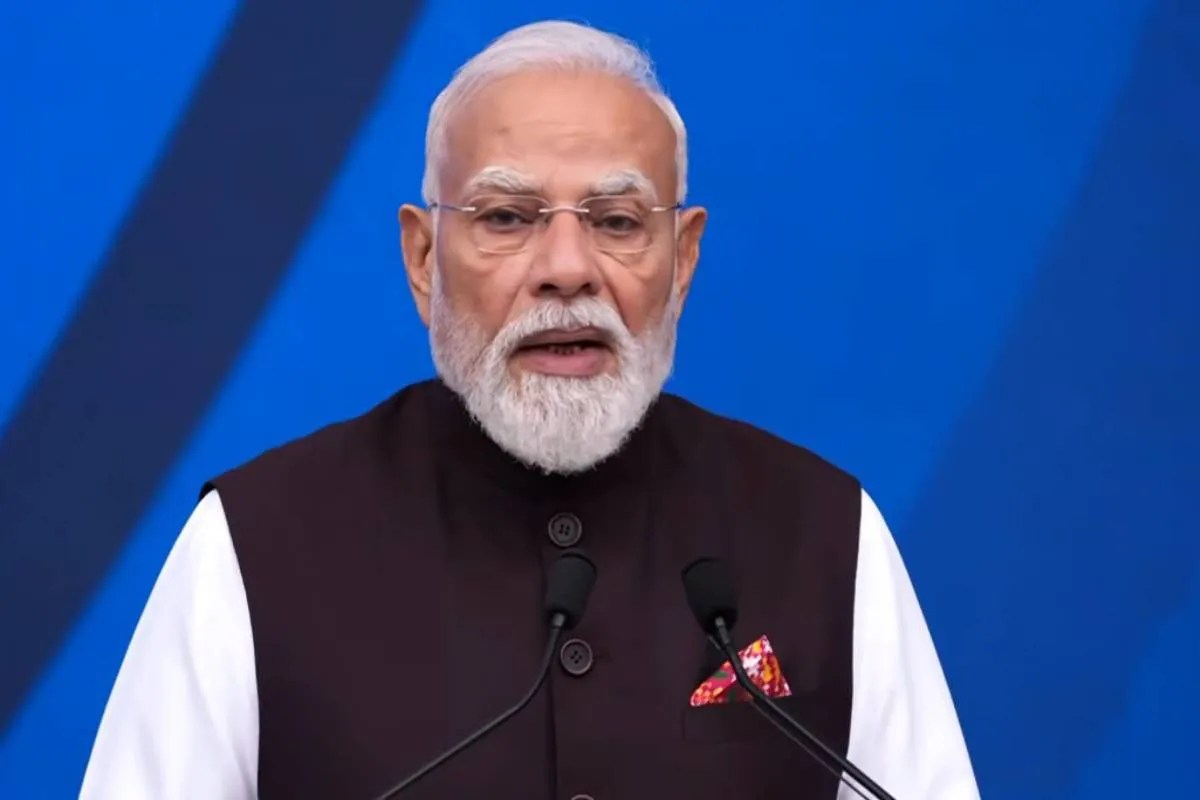
When Indian Prime Minister Narendra Modi and French President Emmanuel Macron took the stage, they didn't just recycle old diplomatic talking points. They laid out a specific, shared vision for the future of technology and environmental policy. Modi made it clear that India and France share an identical thought process. Macron backed this up by stating flatly that the two nations are ideal partners to tackle artificial intelligence and climate change.
This isn't just standard political theater. It's a strategic alignment that will change how technology is regulated and deployed across the globe.
The Shared Logic Behind New Delhi and Paris
Why France? Why India?
On the surface, they seem like an odd couple. One is a European nation with a mature economy and a heavy emphasis on strict regulation. The other is a South Asian powerhouse with a massive tech workforce and a burning desire for rapid growth.
They match because both countries refuse to accept a bipolar digital world controlled entirely by US tech giants and Chinese state-backed monopolies.
India and France want digital sovereignty. They want to build systems where data privacy coexists with innovation. When Modi speaks about a shared thought process, he's talking about creating a third way in tech governance. This approach respects individual rights without killing entrepreneurship.
AI Development Without the Silicon Valley Monopoly
Everyone is tired of the current AI narrative. A handful of companies in California decide the rules, train models on their own biased data, and expect the rest of the world to just fall in line.
India and France are actively resisting this trend.
During India Innovates 2026, the discussions centered on open-source AI models and localized computing infrastructure. France has been quietly building Europe's strongest AI ecosystem in Paris, thanks to startups like Mistral AI. India brings unparalleled scale, a massive pool of developers, and the IndiaAI Mission, which is backed by a major government budget.
- Data Diversity: Western AI models struggle with non-English languages and cultural contexts. India offers a linguistic playground that can make AI truly global.
- Sovereign Infrastructure: Both nations are investing heavily in public supercomputing fields so startups don't have to rely entirely on big tech cloud providers.
- Ethical Frameworks: They are working on guardrails that prevent deepfakes and misinformation without censoring open research.
It's about control. By pooling resources, India and France are ensuring they aren't just consumers of AI. They want to be the architects.
Climate Tech is the New Battleground
You can't talk about the future without talking about climate change. The India Innovates summit highlighted how these two nations are tying digital tech directly to green initiatives.
We've already seen them pull off the International Solar Alliance. That wasn't a fluke. Now, they are scaling up that cooperation by integrating AI into smart grids and agricultural monitoring.
Think about farming. India has millions of smallholder farmers vulnerable to erratic monsoons. France has advanced satellite imaging and agricultural tech algorithms. By combining French AI diagnostics with Indian ground data, they are creating predictive tools that tell farmers exactly when to plant, irrigate, and harvest. This saves water and increases crop yields.
They are also looking at the massive energy footprint of AI itself. Data centers consume a shocking amount of electricity. Part of the bilateral talks focused on building green data centers powered entirely by solar and nuclear energy. If you want to run the AI of tomorrow, you can't use the coal power of yesterday.
What This Means for Tech Workers and Businesses
If you're an engineer, a startup founder, or an investor, you need to pay attention to this corridor. This partnership isn't restricted to government labs. It translates to fast-tracked visas for tech talent, joint research grants, and smoother regulatory pathways for cross-border businesses.
Stop looking exclusively toward Silicon Valley for inspiration or funding. The alliance between New Delhi and Paris is creating a massive market that prioritizes sovereign tech. Expect more collaborative incubators and joint ventures in cybersecurity, quantum computing, and green energy over the next twelve months.
Keep an eye on the joint funding calls that will emerge from this summit. Align your business goals with sovereign AI and green infrastructure. That's where the capital is moving.