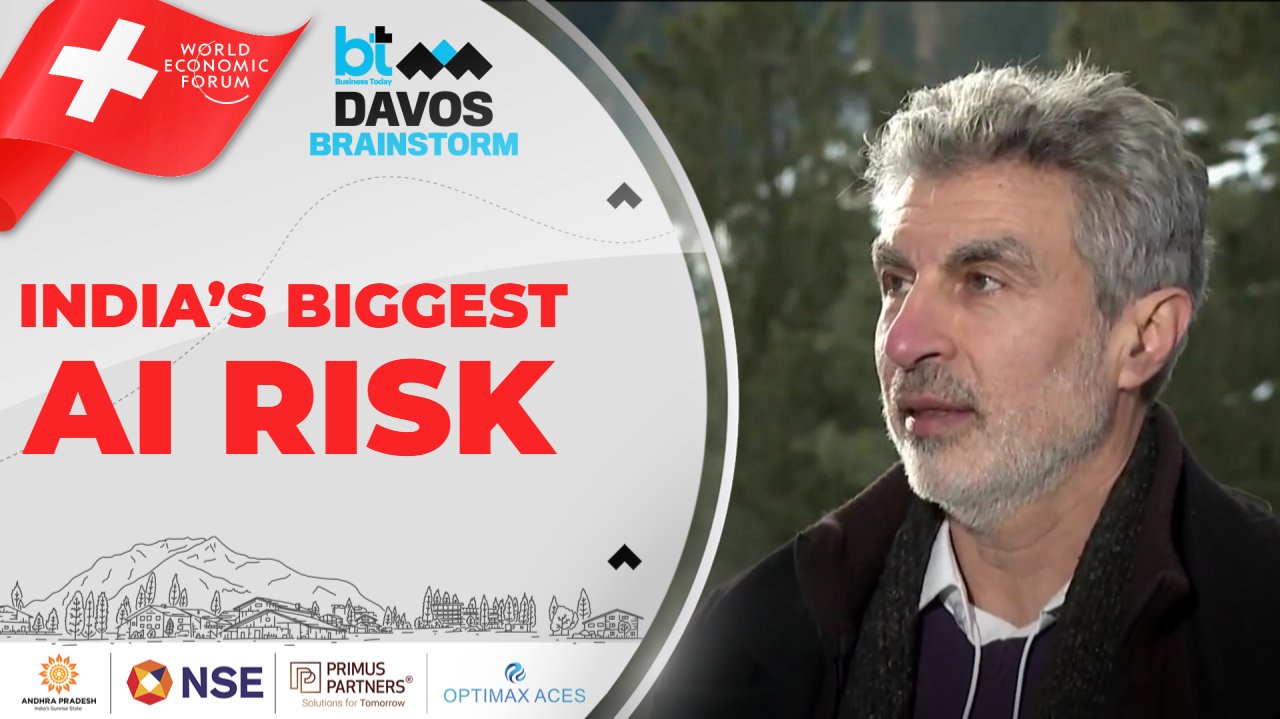
The world is looking at India all wrong. Most people think Davos is just a mountain retreat where billionaires swap business cards and talk about GDP growth. While the 2026 World Economic Forum (WEF) certainly has its share of suits and handshakes, the real story coming out of the Indian pavilion isn't just about money. It’s about a massive, high-stakes bet on human capital. India isn’t just showing up to ask for investment; it’s positioning itself as the primary architect for how a billion people survive and thrive in a century defined by health crises and climate shifts.
If you’ve been following the headlines, you’ve seen the phrase "India at Davos 2026" tied to digital transformation. But let’s be real. Technology is just the plumbing. The actual water flowing through those pipes is a new model for public health that the West hasn't quite figured out yet. While Europe and the U.S. struggle with aging populations and skyrocketing care costs, India is trying to prove that you can scale high-quality medical access to the masses without breaking the bank. For a different look, check out: this related article.
The Digital Health Stack is the Real Star
The conversation in the Swiss Alps this year centers on the Unified Health Interface (UHI). Think of it like UPI—the system that made digital payments in India more advanced than in most developed nations—but for your medical records. Most global health systems are silos. Your doctor in one city can’t see what a specialist in another city did without a mountain of paperwork. India is basically telling the Davos crowd that those days are over.
This isn't some theoretical project. We’re talking about real-time data flow that allows a farmer in rural Bihar to get a tele-consultation from a top-tier surgeon in Bengaluru. At Davos, Indian leaders are making the case that this "Digital Health Stack" is a global export. They’re essentially pitching a "Health-as-a-Service" model to other developing nations. It’s a bold move. It moves India from being a pharmacy for the world to being the IT department for global wellness. Related analysis on this matter has been shared by The Guardian.
Why the Pharma Shift Changes Everything
For decades, India was known as the "pharmacy of the world" because it churned out cheap generics. That was great, but it’s an old play. The 2026 Davos discussions show a pivot toward high-end innovation and biologics. The Indian delegation isn't just talking about making pills anymore; they’re talking about drug discovery and genomic research.
Critics often say India spends too little on R&D. They’re not entirely wrong. But the shift we're seeing now is a move toward "value-based" healthcare. Instead of just selling a product, Indian firms are looking at integrated care. This means combining wearable tech, AI-driven diagnostics, and localized manufacturing. When you look at the numbers, the Indian medical devices market is projected to hit $50 billion by 2030. Davos 2026 is where the groundwork for that surge is being laid.
Climate and Health Are No Longer Separate
You can’t talk about health in 2026 without talking about the heat. India is on the front lines of climate change, and the leadership knows it. One of the most interesting, though often ignored, angles at Davos is the focus on "Climate-Resilient Health Systems." This isn't just corporate jargon. It’s about building hospitals that can run on solar microgrids during a blackout and developing vaccines for heat-borne diseases that are moving into new territories.
India's push for the International Solar Alliance has evolved. It’s now bleeding into the health sector. There's a realization that a healthy population is impossible if the environment is collapsing. This year, the Indian pavilion is showcasing how green energy can power cold-chain logistics for vaccines in tropical climates. It’s a practical solution to a problem that many Western countries treat as a distant threat.
The Mental Health Elephant in the Room
One thing the 2026 Davos crowd didn't expect was India's focus on mental wellness. Traditionally, this was a taboo topic in Indian policy. Not anymore. The government and private sector are now highlighting "Life" (Lifestyle for Environment) and traditional practices like Yoga and Ayurveda, but with a modern, evidence-based twist.
They’re trying to de-stigmatize mental health by integrating it into primary care. It’s a smart move. By using AI chatbots for initial mental health screenings, India is reaching people who would never step foot in a psychiatrist’s office. This tech-first approach to a deeply human problem is drawing a lot of interest from global tech giants looking for "test-bed" environments.
What Actually Happens When the Snow Melts
Davos is a bubble. It's easy to get caught up in the optimism of a high-altitude panel. But the real test for India is what happens when the delegation returns to Delhi. The "Healthy Future" talked about at the WEF requires massive infrastructure spending that goes beyond digital apps. We need more beds, more nurses, and more specialized doctors in Tier 2 and Tier 3 cities.
The 2026 strategy relies heavily on Public-Private Partnerships (PPP). The government provides the digital rails, and the private sector provides the services. It’s a delicate balance. If the private sector focuses only on the top 10% of the population, the Davos vision fails. But if they can find a way to make low-margin, high-volume healthcare profitable, they’ll change the world.
Stop Watching the GDP and Start Watching the Life Expectancy
If you want to know if India's Davos 2026 trip was a success, don't just look at the investment MOUs. Those are often inflated anyway. Instead, watch the health outcomes over the next three years. Watch the infant mortality rates. Watch the speed at which a digital health ID becomes as common as an Aadhaar card.
India is betting that a healthy workforce is the only way to avoid the "middle-income trap." They’re right. A sick population can't sustain 7% or 8% growth for two decades. The shift from "treating disease" to "managing wellness" is the most significant takeaway from this year's summit.
To get ahead of this trend, keep an eye on these specific areas:
- Health-Tech Startups: Look for companies integrating with the UHI (Unified Health Interface).
- Medical Tourism: India is positioning itself as a hub for complex surgeries at a fraction of Western costs.
- Biotech Clusters: Watch for new special economic zones dedicated to genomics and mRNA research.
The 2026 summit isn't a victory lap. It’s a pitch for a new global standard. India is saying that the future of healthcare isn't just expensive hospitals in London or New York, but scalable, digital, and preventive care born in the streets of Mumbai and the clinics of rural India.