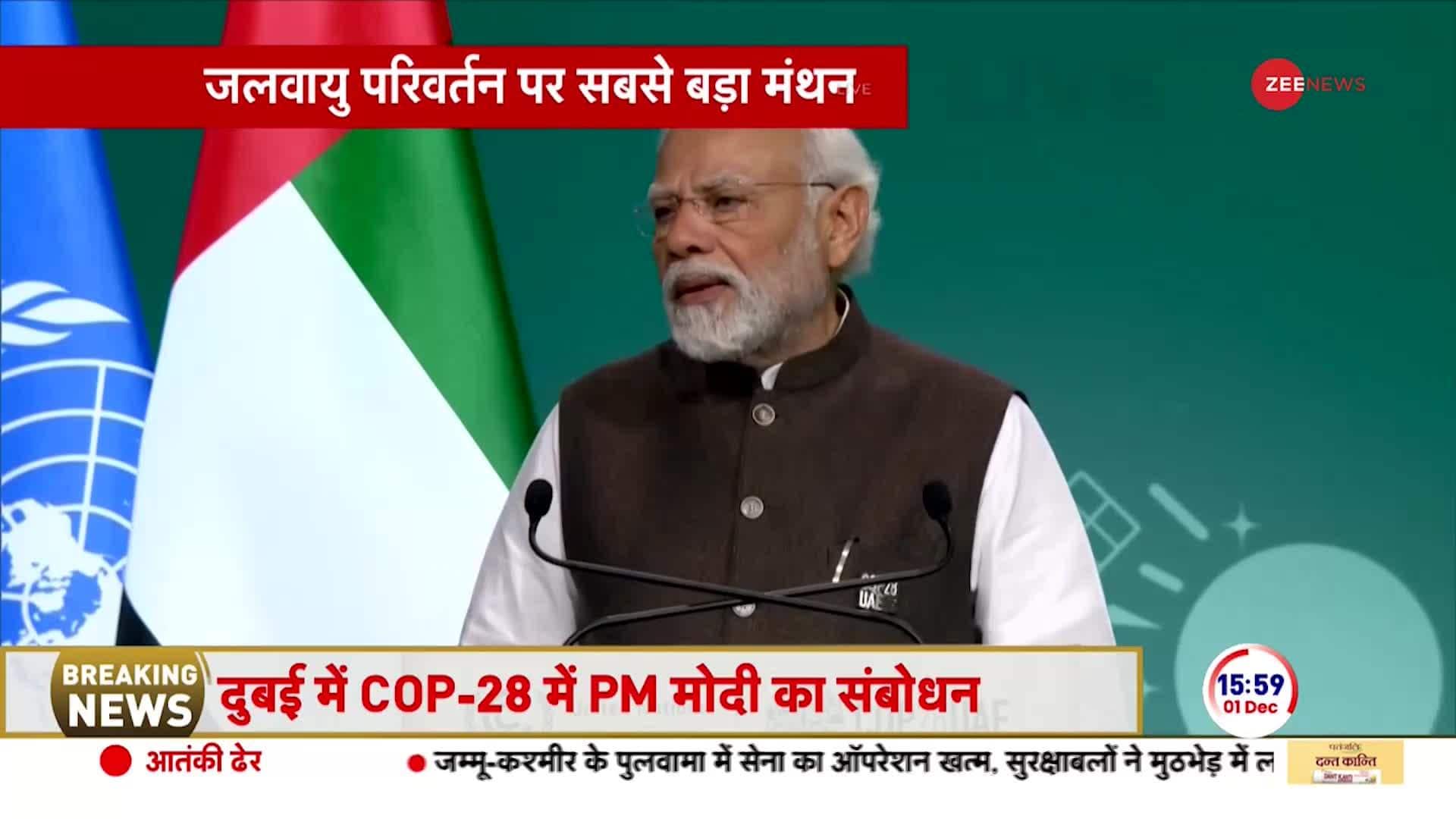
The mainstream media is mourning a ghost. When reports surfaced that India might step back from its bid to host the COP33 summit in 2028, the predictable chorus of "lost leadership" and "diplomatic retreat" began. They are wrong. They are looking at the scoreboard of a game that no longer matters.
Hosting a COP (Conference of the Parties) has become the equivalent of buying a gold-plated treadmill: it’s expensive, it looks great in photos, and it gets you absolutely nowhere. If New Delhi is indeed pivoting away from the 2028 circus, it isn't a sign of weakness. It is a sign of maturity. It is an admission that the era of "climate diplomacy as performance art" is dead.
India is choosing the engine room over the gala dinner.
The COP Industrial Complex is Broken
The "lazy consensus" suggests that hosting these summits grants a nation "moral authority." Ask the UAE or Egypt how much moral authority they cashed in after their respective turns at the podium. These events have ballooned into bloated, 70,000-person trade fairs where the ratio of private jets to actual policy breakthroughs is an international embarrassment.
By withdrawing, India avoids the "Host's Curse." When you host, your domestic energy policy is put under a microscope by activists who don't understand the physics of a developing grid. You spend billions on logistics, security, and temporary structures to facilitate two weeks of circular arguments.
I have watched emerging economies burn through diplomatic capital trying to please a Western-led agenda at these summits, only to be lectured about their coal usage by countries that outsourced their manufacturing emissions to Asia decades ago. India doesn't need to host a party to prove it's an adult at the table. It already owns the table.
The Math of Real Power
Let’s look at the actual variables. Global climate leadership in the 2020s is not defined by who holds the gavel; it is defined by who controls the supply chain.
$$C_{leadership} = \int (Technology \times Scale) dt$$
India is currently executing a massive internal pivot. Between the National Green Hydrogen Mission and the aggressive expansion of the International Solar Alliance, the focus has shifted from "talking about targets" to "building the hardware."
When you host a COP, your best bureaucrats and diplomats spend three years worrying about hotel room allotments and the phrasing of non-binding communiqués. That is a massive brain drain. By stepping back, India keeps its technical talent focused on the only thing that actually reduces carbon: deployment at scale.
Dismantling the "Global South Champion" Myth
The pundits claim India is abandoning its role as the voice of the Global South. This is a fundamental misunderstanding of how power works in 2026.
The Global South doesn't need another "Delhi Declaration" full of flowery prose about climate justice. It needs cheap solar modules, reliable battery storage, and a blueprint for industrialization that doesn't rely on the whims of World Bank financing.
If India spends its energy perfecting the production of $600 electric three-wheelers or driving down the cost of electrolyzers, it does more for the Global South than a thousand COP summits ever could. Real leadership is exported in shipping containers, not in PDF press releases.
The Financial Reality of the "Host's Tax"
The cost of hosting a modern COP is estimated to be north of $200 million. In a world of tightening fiscal space, that is $200 million that isn't going into grid-scale storage or cooling infrastructure for heat-stressed cities.
Imagine a scenario where a developing nation chooses to spend its "summit budget" on a sovereign wealth fund for indigenous clean-tech startups instead. The ROI on a startup ecosystem is exponential; the ROI on a two-week summit is a brief spike in local hotel occupancy and a lot of recycled plastic badges.
Why the "Pundit Class" is Terrified
The reason this move causes such friction in the "expert" community is that it threatens the ecosystem of professional climate travelers. There is a whole class of consultants, NGOs, and career diplomats whose livelihoods depend on the annual COP cycle. To them, India's withdrawal feels like an existential threat. If a major power decides the summit isn't worth the hassle, the whole house of cards starts to wobble.
They will tell you India is "isolating" itself. This is nonsense.
- Is India stopping its solar rollout? No.
- Is it withdrawing from the Paris Agreement? No.
- Is it stopping its bilateral energy deals with Europe or the US? No.
It is simply opting out of the theater.
The Nuance of the Strategic Pivot
We must address the uncomfortable truth: India’s energy transition is messy. It is still the world's second-largest consumer of coal. By hosting COP33, India would have been forced into a defensive crouch, spending two weeks explaining why it can't "phase out" coal as fast as a post-industrial European nation with a shrinking population.
By not hosting, India maintains its strategic autonomy. It can continue to grow its economy at 7% while scaling renewables at its own pace, without the artificial pressure of a "home-court" deadline. This isn't "climate denial"; it’s "climate realism."
Stop Asking if India is a Leader
The question "Is India retreating from climate leadership?" is the wrong question. It assumes leadership is a status conferred by an international body.
The real question is: "Can any nation achieve net-zero without India's manufacturing capacity?"
The answer is a resounding no. India’s power comes from its 1.4 billion consumers and its burgeoning role as a "plus-one" to China in global manufacturing. Whether the 2028 summit happens in New Delhi, Sydney, or a cruise ship in the Mediterranean is irrelevant to the physics of the atmosphere.
If you want to see where the world is going, don't look at who is holding the microphone at the next plenary session. Look at who is building the factories. India is choosing to be the factory, not the spokesperson.
The COP era is bloated, performative, and increasingly disconnected from the engineering challenges of decarbonization. By walking away from the host's chair, India is the first major power to admit that the emperor has no clothes—and that the emperor's clothes were probably made in a coal-powered textile mill anyway.
The smartest move in a rigged game is to stop playing and start building your own. India just stopped playing.
Build the grid. Forget the gala.



