Most foreign policy analysts laugh when someone suggests New Delhi could broker peace between Washington, Moscow, and Beijing. They point to border clashes in the Himalayas or India's growing defense ties with the Pentagon and assume the whole idea is dead on arrival.
They're missing the bigger picture.
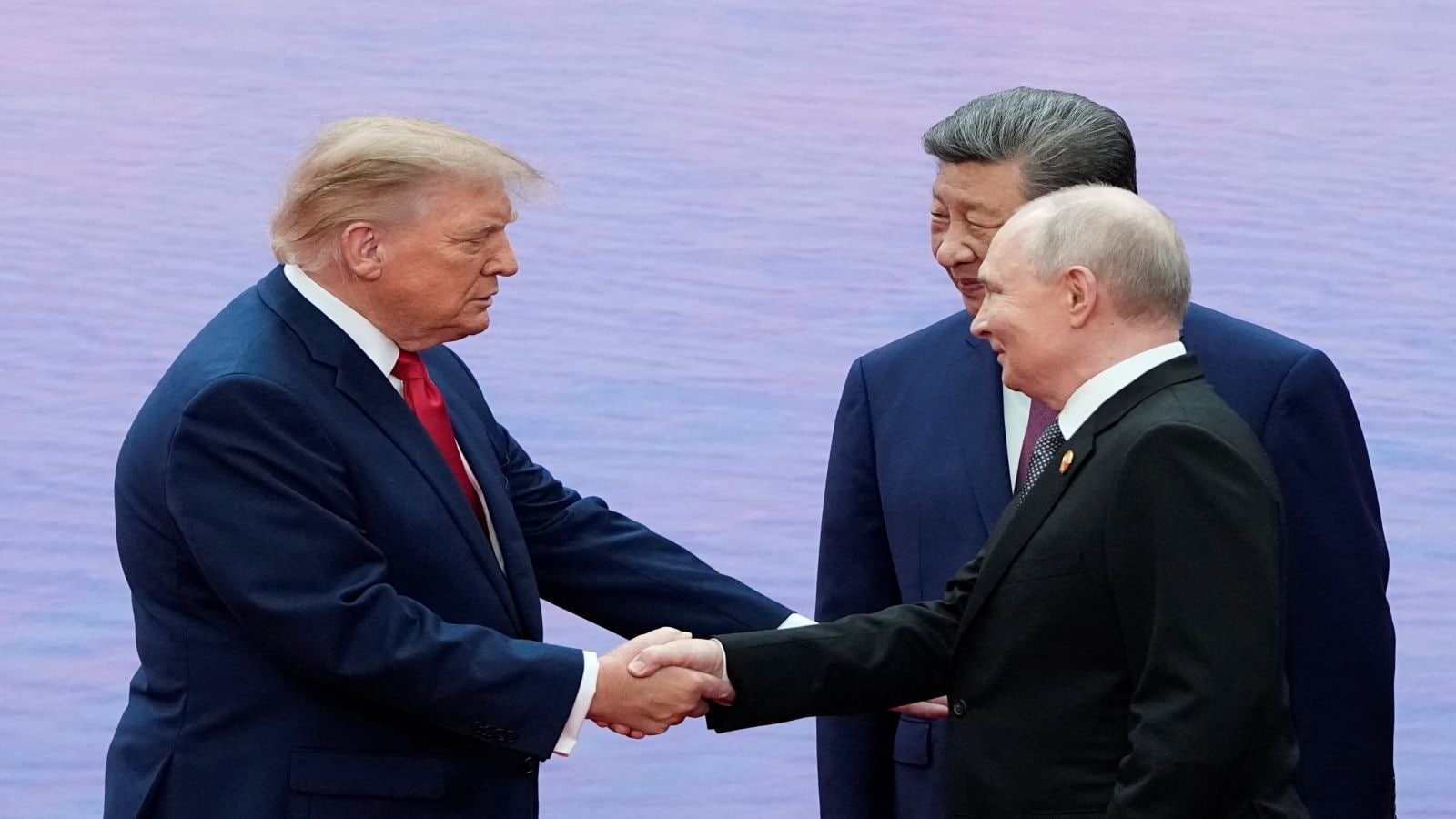
Stephen Henriques, a researcher at Yale University, recently argued that India sits in a rare diplomatic sweet spot that makes it a credible mediator for high-stakes talks involving Donald Trump, Vladimir Putin, and Xi Jinping. Honestly, when you look at the actual mechanics of global diplomacy right now, his argument holds way more water than conventional Washington thinking wants to admit.
Nobody else on the planet has functional, high-level working relationships with all three leaders at the exact same time. Europe has burned its bridges with Moscow and is deeply skeptical of Beijing. Gulf states like Saudi Arabia and the UAE have money and access, sure, but they lack the geopolitical weight and sheer demographic scale to sit at the table as an equal power rather than just a venue host.
India isn't just offering a conference room. It's offering strategic legitimacy.
What Makes India the Only Viable Bridge Between Trump Putin and Xi
To understand why New Delhi matters here, you have to look at the personal and institutional dynamics connecting Narendra Modi to each of these three men. Diplomacy at this level isn't conducted through sterile policy papers. It's personal, transactional, and rooted in leverage.
Start with Washington. Donald Trump's return to the White House reshaped American foreign policy around bilateral deals, tariffs, and personal rapport. Trump doesn't care much for multilateral hand-wringing, and he frequently clashes with traditional European allies over defense spending and trade deficits. Yet his relationship with Modi has remained remarkably durable. Both leaders favor strongman nationalism, both view China's economic dominance with suspicion, and both understand transactional politics. When Trump talks about ending conflicts quickly through direct negotiation, New Delhi listens without lecturing him on international norms.
Then look at Moscow. While Western capitals cut off diplomatic channels and slapped historic sanctions on Russia following the invasion of Ukraine, India refused to join the embargo. New Delhi bought discounted Russian crude oil by the millions of barrels, saving its own economy billions while keeping a vital financial lifeline open for the Kremlin. Western commentators called it opportunistic. In reality, it preserved something priceless—trust. Vladimir Putin knows Modi won't ambush him on behalf of NATO. During Modi's visits to Russia and their conversations on the sidelines of international summits, the Indian Prime Minister has repeatedly told Putin directly that "today's era is not an era of war." Putin took that criticism publicly without flinching because it came from a friend, not an adversary.
Beijing is the trickiest piece of the puzzle, no question. The 2020 Galwan Valley clash froze Sino-Indian relations for years, leaving tens of thousands of troops stationed along the Line of Actual Control in freezing conditions. For a long time, it looked like India and China were locked into permanent hostility.
Things shifted. Recent disengagement agreements along disputed border points in eastern Ladakh, followed by direct meetings between Modi and Xi Jinping at gatherings like the BRICS summit in Kazan, proved that both sides want to lower the temperature. Xi faces severe domestic economic headwinds—a sluggish property sector, youth unemployment, and mounting Western tariffs. He can't afford a two-front confrontation with both Washington and New Delhi. India and China share a massive bilateral trade volume exceeding $100 billion annually, largely tilted in China's favor, which gives both capitals a pragmatic reason to talk rather than fight.
Why Traditional Western Mediators Have Completely Failed
If you've watched international diplomacy over the last few years, you've seen a glaring vacuum. The institutions built after World War II to prevent great-power conflict are basically paralyzed.
The United Nations Security Council can't pass a meaningful resolution on any major crisis because the United States, Russia, and China hold veto power and use it to block one another out of reflex. Switzerland, the classic neutral ground for Cold War summits, abandoned its strict neutrality in the eyes of Moscow when it adopted European Union sanctions against Russia. The Kremlin explicitly stated that Bern is no longer an acceptable venue for peace talks.
Turkey tried to play the middleman role early in the Ukraine war, brokering the Black Sea Grain Initiative, and deserves credit for that effort. Still, Ankara is a NATO member, which limits how far Moscow will ever trust Turkish mediation on core security questions.
India carries none of that baggage. It isn't a treaty ally of the United States. It isn't a vassal of Russia. And it isn't intimidated by China.
Indian External Affairs Minister S. Jaishankar has spent years articulating a doctrine called multi-alignment. Unlike old-school Cold War non-alignment, which was mostly about staying out of trouble and avoiding picking sides, multi-alignment is aggressive and proactive. It means India engages deeply with rival blocs simultaneously—participating in the Quad alongside the US, Japan, and Australia on Monday, and sitting down with Russia and China in BRICS or the Shanghai Cooperation Organisation on Tuesday.
Most Western pundits view this balancing act as fence-sitting or moral cowardice. That's a massive misreading. By refusing to lock itself into any single camp, New Delhi built the exact diplomatic infrastructure required to carry messages between leaders who won't pick up the phone to call each other directly.
The Real Obstacles That Could Sink an Indian Led Initiative
Let's not get carried away, though. Recognizing India's unique position doesn't mean a Trump-Putin-Xi summit in New Delhi is guaranteed to happen next month. Several hard realities stand in the way, and ignoring them would be naive.
First, distrust between New Delhi and Beijing runs deep. Border disengagement in a couple of friction points doesn't erase decades of territorial disputes over Arunachal Pradesh and Aksai Chin. India's military planners still view China as their primary long-term security threat. Meanwhile, Beijing watches India's deepening semiconductor, defense, and intelligence cooperation with Washington with intense suspicion. Xi Jinping might question whether India is truly an honest broker or just a softer front for American containment strategy.
Second, Donald Trump's unpredictability cuts both ways. While Trump likes Modi personally, he has also publicly called India a "tariff king" and threatened reciprocal tariffs on Indian exports. If a trade war erupts between Washington and New Delhi over steel, pharmaceuticals, or agricultural market access, India's diplomatic bandwidth gets consumed by defending its own economic interests rather than mediating global disputes.
Third, the core agendas of Trump, Putin, and Xi don't easily overlap. What would they actually be negotiating?
- Putin wants sanctions relief, recognition of territorial gains in Ukraine, and permanent guarantees against NATO expansion.
- Xi wants an end to American tech export controls on advanced semiconductors, tariff reductions, and room to maneuver regarding Taiwan and the South China Sea.
- Trump wants quick, visible wins—ending the war in Ukraine to stop spending American taxpayer money, securing massive purchase agreements for US energy and agricultural goods, and preventing a closer military alliance between Moscow and Beijing.
Trying to bundle these competing demands into a single three-way negotiation is extraordinarily complex. Even a skilled diplomat will struggle if the underlying goals are zero-sum.
How India Would Actually Structure Backchannel Talks
If New Delhi moves forward with the kind of mediation Stephen Henriques points toward, it won't start with a flashy televised summit at Hyderabad House. That's not how Indian diplomacy operates.
Instead, it begins quietly through seasoned bureaucrats and National Security Advisor Ajit Doval. Doval has spent years cultivating direct backchannels with his counterparts in Washington, Moscow, and Beijing. He can fly to St. Petersburg or Beijing without triggering the kind of media frenzy that surrounds an American Secretary of State.
The realistic playbook looks something like this:
- Sequential bilateral groundwork. India hosts separate high-level visits or uses multilateral gatherings—like G20 or BRICS meetings—to test red lines privately. Modi floats trial balloons with Putin on Ukraine ceasefire terms, then relays the unvarnished feedback to Trump's team without ideological filtering.
- Economic off-ramps over grand ideological treaties. India understands that neither Putin nor Xi will sign anything that looks like capitulation. Any framework New Delhi proposes will focus on incremental steps—energy transit guarantees, grain and fertilizer corridors, cyber non-interference pacts, or localized de-escalation zones.
- Framing around Global South stability. This is India's superpower in diplomacy. Whenever Washington, Moscow, or Beijing clash, developing nations pay the price through inflation, food shortages, and disrupted supply chains. By framing mediation as a rescue mission for the Global South, India gives all three leaders a face-saving reason to compromise. They aren't backing down to each other—they're responding to the demands of the developing world.
Why You Should Pay Attention to New Delhi Right Now
If you're watching global markets, energy prices, or geopolitical risk, stop looking exclusively at Brussels, London, or even Washington for the next major diplomatic breakthrough. The center of gravity has shifted.
India's rise as a potential mediator isn't an accident of geography. It's the result of a deliberate, decade-long foreign policy bet that alienated plenty of commentators in Western think tanks while quietly building trust in every major capital that matters. Whether Yale's Stephen Henriques is proven right by a historic three-way summit or simply through quiet backchannel deals that prevent worse crises, one thing is obvious.
When Trump, Putin, and Xi finally decide they need a go-between they can actually talk to, New Delhi is the only phone number on all three desks.
Keep a close eye on upcoming multilateral calendars—especially BRICS summits, G20 ministerial meetings, and unannounced trips by India's National Security Advisor to Moscow and Beijing. Those quiet itinerary updates will tell you far more about the future of global stability than any press briefing out of Washington.