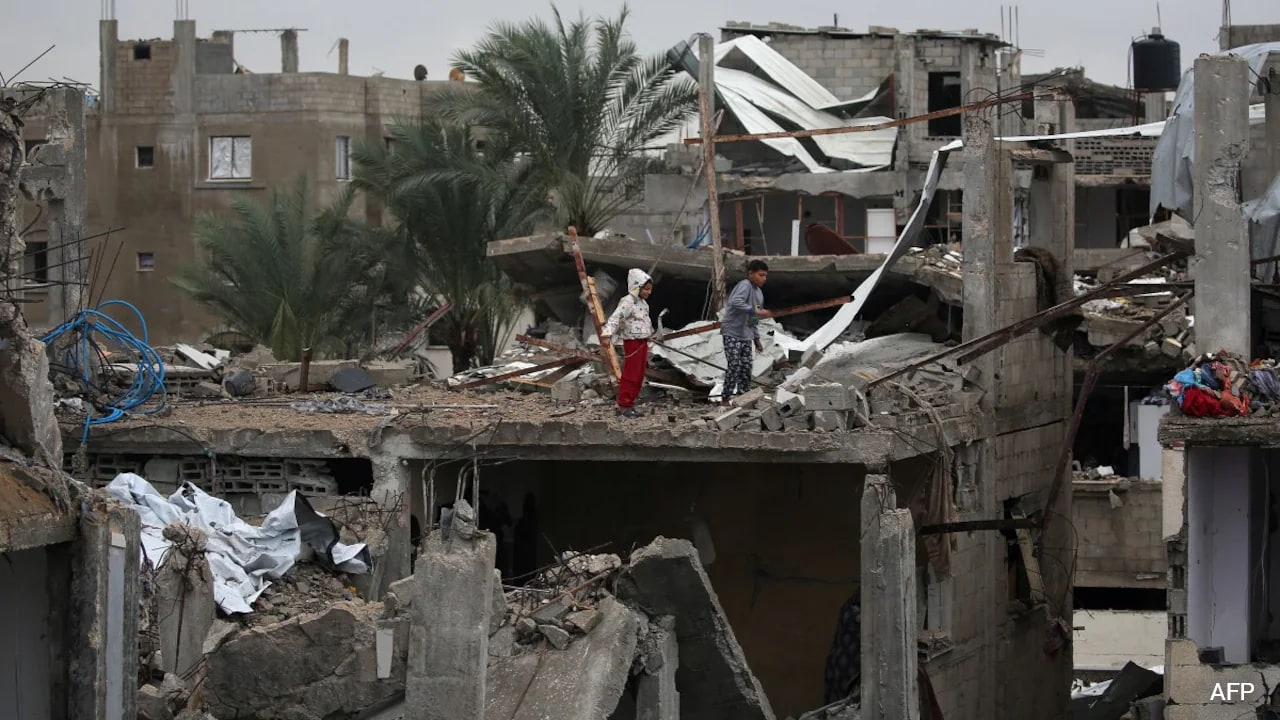
Simultaneous Israeli airstrikes targeted four residential buildings across Gaza City early Thursday, killing at least 11 Palestinians and wounding dozens of others. This coordinated bombardment, which decimated homes in the Labad and Al-Israa buildings, serves as a lethal reminder that the ceasefire enacted on October 10, 2025, exists purely on paper. While international diplomats point to the nominal truce as a diplomatic success, local health officials confirm that nearly 1,000 Palestinians have been killed by military operations since the agreement began. The latest attacks demonstrate a stark reality: the conflict has not ended, it has merely shifted into a war of attrition disguised as a truce.
The mechanics of this current phase of conflict rely heavily on precision drone strikes and midnight aerial bombardments. In the northwestern sector of Gaza City, an strike hitting an apartment on Intelligence Street wiped out five members of the same family, including three children. Moments later, an apartment in the Tel al-Hawa neighborhood was leveled, killing a husband and wife. The Israeli military maintains that these actions are surgical counter-terrorism operations designed to prevent the reconstitution of armed factions. However, the geographic spread of the strikes, reaching from dense refugee camps to designated safe zones like Al-Mawasi, tells a different story.
What the public misses in standard news bulletins is the systematic dismantling of Gaza's remaining civic infrastructure under the guise of security.
The Strategy Behind the Silent Attrition
The global community looks at a ceasefire and expects a cessation of hostilities. Military strategists look at a ceasefire and see a change in rules of engagement. Since late 2025, the Israeli Defense Forces have shifted from sweeping ground maneuvers to high-frequency, low-footprint precision strikes. This shift allows the military to maintain absolute operational control while avoiding the international backlash triggered by massive, division-scale ground incursions.
By targeting individual apartments, police vehicles, and civilian gatherings, the military slowly drains the enclave's remaining administrative capacity. The United Nations Human Rights Office recently noted a pattern of targeting municipal police officers, traffic controllers, and public servants. Stripping a society of its civil servants creates a vacuum. Without local law enforcement or civil defense teams to clear rubble and maintain order, societal collapse accelerates from within.
Gaza Attrition Metrics (Post-Oct 2025 Ceasefire)
+------------------------+------------------------+
| Metric                 | Recorded Toll          |
+------------------------+------------------------+
| Fatalities Under Truce | 947                    |
| Total Injured          | 2,935                  |
| Civil Servants Killed  | 53+                    |
+------------------------+------------------------+
This data, gathered by the Gaza Health Ministry and independent UN monitors, underscores the fallacy of the current peace framework. A war of attrition does not require tanks on every street corner. It requires only the constant, unpredictable threat of death from above to keep a population entirely destabilized.
The Fragmented Frontlines
The Thursday strikes hit four distinct neighborhoods simultaneously: Sheikh Radwan, Tel al-Hawa, Al-Daraj, and the Al-Shati refugee camp. This was not a localized response to an immediate threat. It was a synchronized demonstration of intelligence-driven aerial capacity. In Al-Shati, the strike on the Mhanna family home triggered a massive fire that spread rapidly through the densely packed, makeshift shelters.
"Some of the bodies arrived dismembered, while others were severely burned," reported an Al-Shifa Hospital medical correspondent, detailing the influx of casualties arriving after midnight.
The tactical choice to strike after midnight maximizes civilian casualties within residential spaces while minimizing the risk to operating aircraft. It also ensures that the local civil defense units, already starved of fuel and equipment, are forced to operate in complete darkness. Rescue operations become nearly impossible. Trapped survivors frequently bleed to death under tons of concrete before heavy machinery can reach them.
The Myth of Safe Zones
For the 1.9 million displaced Palestinians inside the strip, geography offers no protection. Following the Gaza City bombings, subsequent strikes hit the displacement tents in Al-Mawasi, an area explicitly designated by military authorities as a safe zone. One person was killed and 16 others were injured as shrapnel ripped through canvas shelters.
The targeting of safe zones reveals the fundamental flaw in the humanitarian corridors established by international oversight bodies. When a sanctuary becomes a target, the psychological impact is total. It eliminates any sense of predictability, forcing a displaced population into a state of permanent hyper-vigilance. The military logic dictates that if an adversary embeds within a civilian population, no zone is truly off-limits. The humanitarian consequence, however, is the complete erasure of the distinction between combatant and non-combatant.
The Diplomatic Vacuum
International mediation has reached a dead end. Western capitals remain hesitant to condemn these near-daily violations of the October truce because each strike is framed as an isolated counter-terrorism action rather than a renewal of full-scale war. This legal and diplomatic gray area allows the status quo to persist indefinitely.
The primary flaw in the 2025 ceasefire agreement was the absence of a robust enforcement mechanism. Without international observers on the ground or binding economic penalties for treaty violations, the agreement relies entirely on the self-restraint of the combatants. History shows that self-restraint is the first casualty in an existential conflict. The current strategy of silent attrition achieves the political goals of the Israeli leadership without triggering the diplomatic crises of the past. It keeps the conflict domestic, predictable, and manageable on the international stage, while the local population bears the quiet, devastating cost.