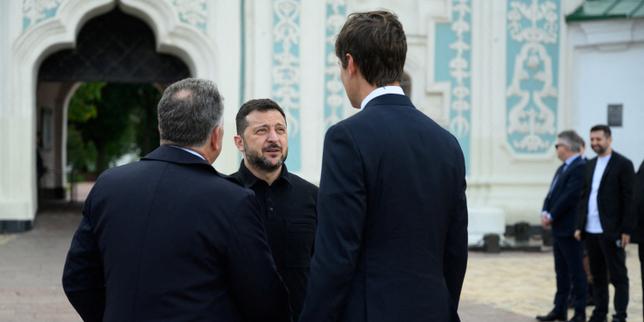
High-level diplomatic arrivals in the Ukrainian capital carry an inherent theatrical weight. Cameras capture handshakes on asphalt, motorcades slice through security cordons, and communiques speak of frank exchanges regarding the trajectory of the ongoing conflict. Yet beneath the veneer of constant motion, structural inertia governs the negotiating rooms. Recent high-profile visits from Washington emissaries to both Moscow and Kiev have generated dense media cycles without producing any foundational shift in the calculus of the belligerents. Understanding why these missions consistently stall requires looking past the public relations choreography to examine the rigid parameters held by all primary actors.
The Mechanics of Diplomatic Stagnation
For years, international journalism has framed diplomatic engagement as a linear progression toward a conference table. This interpretation misreads the current reality. When special envoys shuttle between capitals, they are rarely carrying breakthrough formulas capable of bridging irreconcilable territorial demands. Instead, these missions often serve to manage alliance cohesion, satisfy domestic political audiences, or test the outer limits of an adversary's red lines without offering concessions of substance.
Consider the dynamic of security guarantees. Kiev demands ironclad, multilateral commitments that mirror article-like protections to deter future aggression. Moscow views those exact mechanisms as an existential threat that nullifies the original rationale for its military campaign. Washington, meanwhile, faces internal constraints regarding the extent of long-term military underwriting it can credibly promise without congressional friction or overextending global commitments. When an American delegation arrives in Kiev, it operates within the narrow intersection of these mutually exclusive positions. Movement is procedural, not substantive.
The Cost of Perpetual Impasse
Stalled diplomacy is never truly neutral. While capitals trade proposals that go nowhere, facts on the ground harden. Military logistics dictate political timelines, and the protracted nature of the stalemate drains institutional capacity across Eastern Europe. The absence of a breakthrough forces Ukrainian statecraft into a state of reactive endurance, where every foreign visit is heavily scrutinized for signs of shifting foreign support, even as Western domestic priorities fluctuate under economic strain and competing international crises.
Furthermore, intermittent diplomatic flurry without results breeds fatigue. Public expectations rise with the announcement of high-level talks, only to deflate when official readouts reiterate standard talking points. This cycle erodes trust in formal mediation channels. Populations living under the daily threat of bombardment observe delegations coming and going, yet the fundamental architecture of the war remains untouched.
Structural Realities Beyond the Communiques
To move past superficial analyses of these high-level tours, one must examine the fundamental misalignment of incentives. Moscow perceives time as an ally, calculating that Western political resolve will fracture before its own mobilization capacity exhausts itself. Kiev cannot afford to signal fatigue, making compromise politically perilous for the administration. Washington balances immediate geopolitical containment against the risk of escalation, preferring managed management over high-risk diplomatic gambles that could backfire on the global stage.
Until one of these foundational calculations shifts under the weight of material reality rather than persuasive rhetoric, visits by foreign emissaries will remain diplomatic theater. They mark the motions of engagement in an environment where neither side possesses the incentive or the latitude to yield. The impasse persists because the structural drivers of the war continue to overpower the temporary urgency of any visiting delegation.
For a look at past diplomatic tours and how high-level visits have historically played out on the ground, view this Blinken surprise visit to Kiev report.
http://googleusercontent.com/youtube_content/1