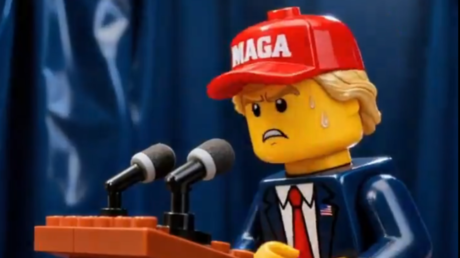
The standard narrative on school boards is a comforting lie. You’ve read the fluff pieces. They frame the board as the "heart of local democracy" or a "vital bridge between parents and classrooms." They tell you that these five to nine elected officials are the masters of the district’s destiny, steering the ship of state through the choppy waters of curriculum and culture wars.
It is total fiction.
Most school boards have less actual power over your child’s education than the vendor providing the cafeteria’s mystery meat. They are not the cockpit of the educational system; they are the paint on the fuselage. While parents scream at microphones about library books and bathroom policies, the real gears of the machine—the state funding formulas, the ironclad collective bargaining agreements, and the massive weight of the administrative state—continue to grind forward, indifferent to who sits in those swivel chairs.
The Board is a Rubber Stamp with a PR Problem
Most people think school boards "run" the schools. I’ve spent a decade watching these meetings from the inside, and I can tell you: they don’t run anything. They oversee the person who runs things.
The primary, and often only, real lever a board has is the hiring and firing of the Superintendent. Once that contract is signed, the board effectively abdicates its power. The Superintendent controls the flow of information. They curate the data the board sees. They frame the "recommendations" that the board is then expected to approve.
If you want to see a masterclass in bureaucratic capture, watch a board meeting. The Superintendent presents a 40-page packet of jargon-heavy "initiatives." The board members, most of whom are well-meaning volunteers with zero background in pedagogical theory or municipal finance, nod along. They vote 7-0. The machine stays in motion.
The controversy you see on the evening news? That’s theater. It’s a pressure valve for community rage. While the public argues over a single book title, the board is quietly approving a $200 million bond measure that will tax the community for thirty years to build a stadium the district doesn't need.
The Fiscal Straightjacket
Let’s talk about the money. The "lazy consensus" suggests that school boards are the ultimate stewards of your tax dollars. In reality, their hands are tied behind their backs with high-tensile wire.
In most states, a massive percentage of a district’s budget is "non-discretionary." This is a polite way of saying the money is already spent before the board even meets.
- Mandated Spending: State and federal laws dictate exactly how much must be spent on specific programs, special education services, and transportation.
- Labor Costs: In many districts, salaries and benefits account for 80% to 85% of the total budget. These are dictated by multi-year contracts that are often negotiated behind closed doors by lawyers and union reps, not the people you voted for.
- Debt Service: Interest on past building projects eats another chunk.
By the time the board gets to the "discretionary" portion of the budget—the part where they could actually innovate or change the direction of the district—they are looking at pennies. They aren't "leading" a $500 million enterprise; they are managing the leftovers.
The Myth of Curriculum Control
Parents often storm board meetings demanding changes to what is taught in the classroom. This is a fundamental misunderstanding of how the American education "landscape" (to use a term I despise) actually works.
Education is a state-level monopoly. State departments of education set the standards. Testing companies like Pearson or McGraw Hill create the assessments that determine if a school is "succeeding." If a board tried to radically deviate from the state-mandated curriculum, the district would lose its accreditation and its funding.
The board doesn't pick the textbooks; a committee of administrators and "specialists" picks the textbooks based on a pre-approved list from the state. The board just signs the check. When you yell at a board member about a social studies unit, you are yelling at the cashier because you don't like the price of milk. They didn't set the price, and they can't change the ingredients.
Why We Keep the Charade Alive
So why do we bother? Why do we have these elections? Why do we have these meetings that drag on until 11:00 PM on Tuesday nights?
Because the alternative is admitting that we have lost local control of our most important institution.
The school board exists as a buffer. It’s a "democratic" layer that protects the professional managerial class from the taxpayers. If the schools are failing, the public can blame the board. They can vote them out. They can feel like they "did something." Meanwhile, the central office staff—the people who actually design the systems—remain tenured, untouched, and anonymous.
It’s a brilliant system for avoiding accountability. The board has the responsibility but no power. The administration has the power but no public-facing responsibility.
The Actionable Pivot: Stop Attending Board Meetings
If you want to actually change your child's education, stop wasting your breath at the public comment podium. You are shouting at a brick wall.
Instead, do the one thing the system isn't prepared for: Exit the monopoly.
The only way to exert real pressure on a captured bureaucracy is to remove the one thing they value: the "Average Daily Attendance" (ADA) funding. Every student who leaves the district for a charter, a private school, or a homeschool collective is a direct hit to the bottom line.
Money is the only language the machine speaks. When the numbers drop, the "recommendations" from the Superintendent suddenly become a lot more flexible.
The Real Power Players
If you insist on staying within the system, you need to ignore the board and focus on these three nodes of power:
- The State Legislature: This is where the standards and the funding formulas are actually written. Your local board member is a foot soldier; your state representative is a general.
- The Teacher’s Union Contract: Don't wait for the board meeting. Find out when the collective bargaining agreement is being negotiated. That is where the rules of the game are set.
- The Bond Rating Agencies: If you want to see a board panic, don't talk about "values." Talk about the district's credit rating. The moment the cost of borrowing money goes up, the bureaucracy starts to sweat.
The Harsh Truth of Modern Education
We are living in the era of the "Administrative State." In 1950, there were roughly 2.3 teachers for every one administrator in American public schools. Today, that ratio has collapsed. We have seen a "bloom" of non-teaching personnel that far outpaces student enrollment growth.
According to research from the Friedman Foundation (now EdChoice), between 1992 and 2014, the number of students grew by 19%, while the number of administrators and non-teaching staff grew by 45%.
Your local school board didn't stop this. They couldn't. They are part of the ecosystem that feeds it. They are the friendly face of a massive, self-perpetuating entity that prioritizes its own survival over the "outcomes" of the children it serves.
Stop looking for "leaders" on the dais. They aren't there. They are just people caught in the same gears as your kids, pretending they have their hands on the wheel.
If you want to fix education, you have to stop pretending the current structure is fixable. You have to stop asking what the school board "does" and start asking why we still allow them to pretend they're doing anything at all.
The board isn't the solution. The board is the distraction.
Burn the map and find a different way home.