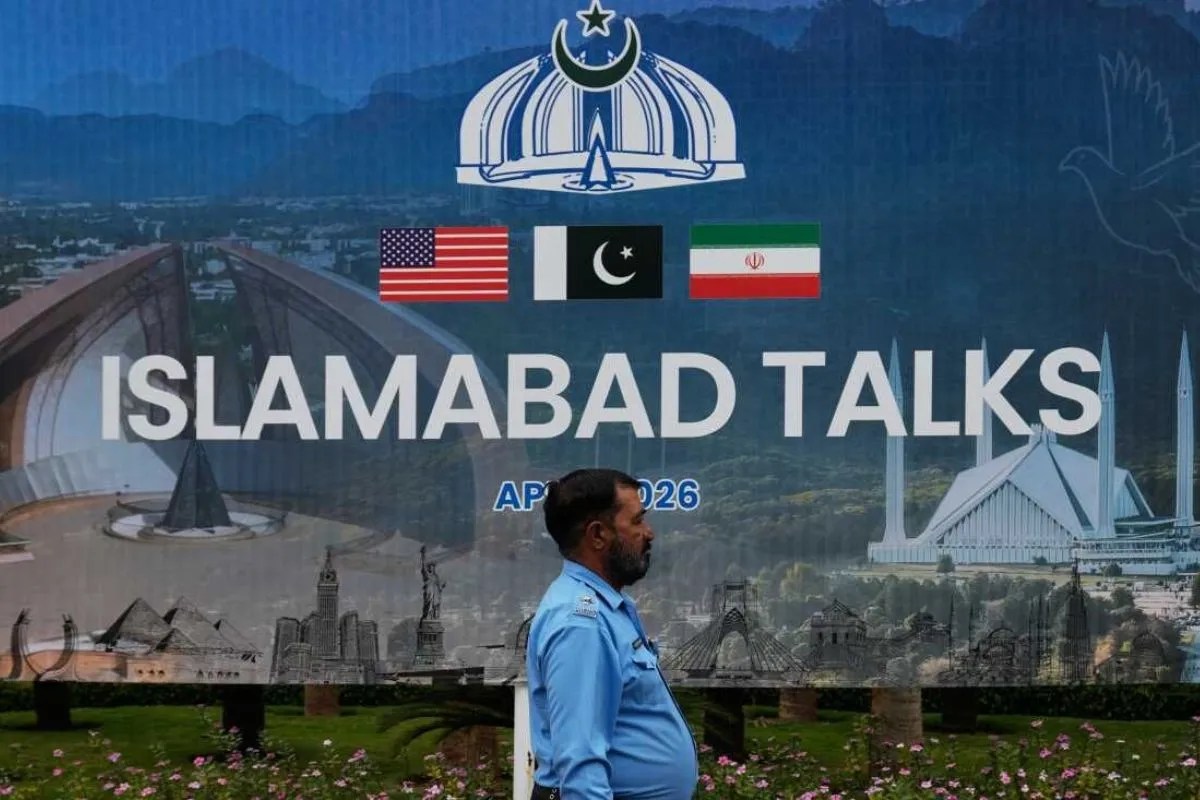
The headlines are running rampant with speculation about American envoys touching down in Pakistan and the conspicuous silence from Tehran. Journalists, desperate for a story of progress, are framing this as a diplomatic stalemate or a missed opportunity for peace. They are wrong. They are not just wrong; they are missing the mechanics of how power is actually projected in the twenty-first century.
When you read that Iran has not sent a representative to meet with an American envoy, do not mistake it for a failure of communication. It is a calculated act of control. The mainstream media treats these events as a high-school dance where the wallflower refused to show up. In reality, this is high-stakes signal intelligence. Every move, every absence, every press release from Islamabad is a message meant to be intercepted, analyzed, and misunderstood by the public while the actual business happens in the dark.
The Mediator Fallacy
The persistent belief that Pakistan acts as a neutral honest broker is the first lie to dismantle. Pakistan is not a neutral mediator. It is a state currently navigating a severe fiscal crisis, tethered to Western financial institutions while sharing a border with an ideological rival that it cannot afford to alienate. To view Pakistan as a bridge is to ignore the reality of their domestic desperation.
When an American envoy visits, it is not to negotiate a peace treaty. It is to demand visibility. Washington needs to know what is happening in the corridors of power in Tehran, and since they have no direct line, they use the only assets available to them: regional players who are already beholden to American financial interests.
Pakistan hosts these visitors because they have to, not because they are uniquely qualified to foster reconciliation. They are a utility, not a participant.
The Silence Of Tehran
Why hasn’t Iran sent a representative? The amateur analyst thinks it is because of anger or stubbornness. That is pure fantasy. Iran understands the game better than anyone. By refusing to show up, they rob the American delegation of a tangible "win."
If Iran were to engage in a formal setting, they would be legitimizing a process dictated by US terms. They would be forced to negotiate from a position where the conversation is structured around American concerns: nuclear non-proliferation, regional proxies, or drone shipments. By staying away, Tehran forces Washington to look desperate. It signals to their domestic audience that they are not bowing to outside pressure. It is a strategic move to preserve their influence without committing to a process that serves their adversary.
When you look at this through the lens of a chess match, Iran is simply refusing to move their pieces on a board set up by the opponent.
Why The Media Misses The Mark
The standard reportage on these events relies on a tired structure: The Meeting, The Absence, The Hope for Resolution. This format is designed for engagement, not accuracy. It frames the situation as a binary choice—peace or conflict—when in reality, the state of affairs is a permanent, managed tension.
I have seen companies and governments burn millions on "peace initiatives" that were never intended to produce peace. They are designed to create the appearance of activity. When a government official goes to a country to "discuss" a situation, they are rarely doing the heavy lifting of diplomacy. They are setting the stage for a narrative. They are ensuring that when the next escalation occurs, they can look at the cameras and say, "We tried."
The media eats this up because it creates a villain and a hero. But in the world of regional security, there are only interests and consequences.
The Anatomy Of Proxy Messaging
Think about how information moves in these environments. It is not done via formal envoys in boardrooms. That is for the news cameras. Real communication between the US and Iran happens through a web of third-party actors—intelligence officers, regional trade partners, and back-channel brokers.
When an envoy is spotted in Islamabad, pay attention to who they meet, not what the press release says. Are they meeting the military leadership? The civilian government? The business elite? Each meeting provides a different set of inputs into the regional security calculation.
If the US envoy meets with the Pakistani military, it is a message to Iran about containment. If they meet with the civilian administration, it is a message about regional stability and debt management. These are granular signals sent to specific ears. Expecting a "peace talk" to emerge from these visits is like looking for a fire in a building that has already been cleared.
Dismantling The People Also Ask Trap
Search engines and news aggregators love to present questions that trap the reader in a faulty premise.
Will Pakistan successfully mediate between the US and Iran? * The Brutal Reality: No. Pakistan lacks the structural weight and the alignment of interests to bridge the divide. The question assumes mediation is a possible outcome. It is not. The conflict is existential for both parties. Mediation is a myth sold to keep regional powers compliant.
🔗 Read more: The Longest Minute in the Situation RoomWhy is Iran refusing to talk?
- The Brutal Reality: Iran is not refusing to "talk." They are refusing to talk on these specific terms. Their refusal is a tactical choice to maintain autonomy. They are not waiting for an invitation; they are waiting for a set of terms that concedes their regional dominance.
What are the consequences of the failed talks?
- The Brutal Reality: There were no "failed talks" because the talks were a theatrical performance from the start. The consequence is not a lack of peace, but a continuation of the status quo: cold-war style competition, proxy skirmishes, and shadow maneuvers.
Tactical Reality Check
If you are trying to understand where this is heading, stop watching the front-page news. Start watching the trade flows, the military deployments near the border, and the movement of energy contracts.
The US is trying to contain an expansionist power that is successfully using the chaos of the Middle East to solidify its grip. Pakistan is just the location where this reality is currently being played out.
The most effective advice for anyone trying to cut through the noise: ignore the "diplomatic efforts" and watch the resource allocation. If a country is not changing its military or economic posture, it is not actually negotiating. It is posturing.
The Hard Truth About Regional Stability
We are living in an era where the old rules of diplomacy have been replaced by a system of managed friction. Both sides have decided that a hot war is too expensive and that total peace is impossible. Therefore, they have settled for a state of perpetual "almost-war."
Every headline about envoys, missed meetings, and diplomatic snubs is just a periodic update to the scoreboard. It is not the game itself.
The next time you see a report about a high-level official traveling to a neighboring state to "solve" a problem between two intractable enemies, ask yourself one question: What is the benefit of this meeting being public? If the goal is truly to solve the problem, you will never hear about it. If you hear about it, it is a signal. And if you are the one reading the signal, you are almost certainly not the intended recipient.
The world is not waiting for a handshake in Islamabad to change the course of regional history. The course has already been set by decades of conflicting interests that no envoy can smooth over with a few hours of conversation and a staged photo op. Stop looking for the resolution. Look for the next point of friction. That is where the truth actually resides.