The question isn't whether the Houthis will join Iran’s war. The question is why anyone thinks they haven’t already surpassed their supposed masters in tactical relevance.
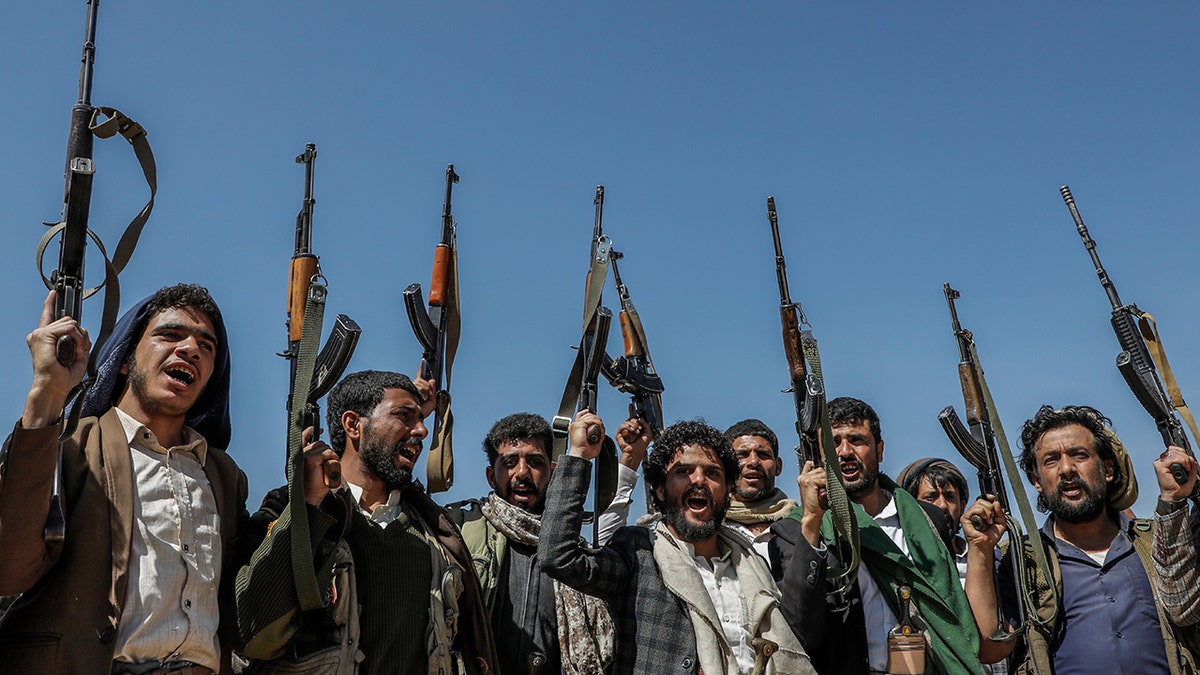
Mainstream analysts are stuck in a 2015 loop. They see Ansar Allah—the Houthi movement—as a remote-controlled proxy, a Middle Eastern "Mini-Me" waiting for orders from Tehran. This view is more than just reductive; it’s a strategic failure. It treats a highly adaptive, battle-hardened domestic insurgency like a corporate subsidiary.
I have spent years tracking the evolution of asymmetrical maritime warfare. I’ve watched defense budgets balloon while $2,000 drones paralyze trillion-dollar trade routes. The "lazy consensus" suggests the Houthis are a secondary actor in a regional drama. In reality, they are the ones rewriting the script of 21st-century conflict while Iran and the West are still arguing over the footnotes.
The Proxy Lie
Stop calling them "Iranian-backed" as if that explains their existence. While Tehran provides the blueprints and the components, the Houthis provide the innovation and the audacity.
Most people ask: "Will Iran order the Houthis to escalate?"
They should be asking: "Can Iran even stop them?"
The Houthis are not a puppet state. They are a startup in the business of chaos. Unlike Hezbollah, which has a state-within-a-state to lose in Lebanon, the Houthis have been forged in a decade of famine and aerial bombardment. You cannot deter a group that has already survived the absolute worst-case scenario. When the U.S. and UK launch "precision strikes" on Sana’a, they aren't hitting high-value infrastructure. They are hitting rubble that has been relocated three times since Tuesday.
Iran uses the Houthis for plausible deniability. The Houthis use Iran for the hardware. But the ideological engine is entirely homegrown. If Iran signed a grand bargain with the West tomorrow, the Houthis would still be firing at Red Sea tankers because their legitimacy at home depends on being the "foremost defenders of Palestine." They aren't joining Iran's war; they are dragging Iran into theirs.
The $2 Million Intercept vs. The $2,000 Drone
The math of modern warfare is broken, and the Houthis are the ones who broke it.
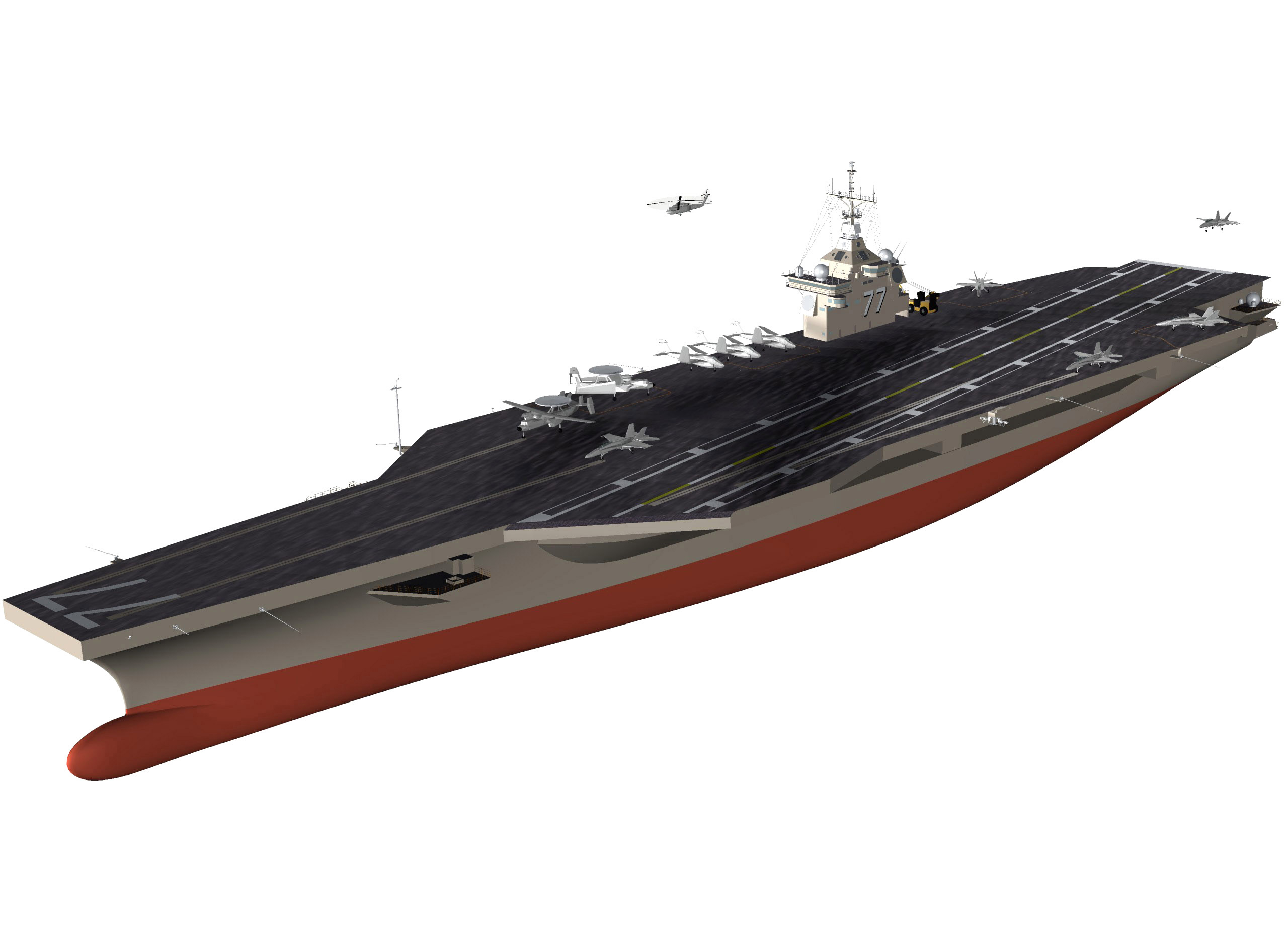
Standard naval doctrine relies on the Aegis Combat System and SM-2 or SM-6 interceptors. These missiles cost between $2 million and $28 million per shot. The Houthis are launching Samad-3 drones and modified Quds cruise missiles that cost less than a used Honda Civic.
When a Destroyer spends $4 million to swat down a swarm of "garbage" drones, the Houthis have already won the economic engagement. They are bleeding the West dry through "cost-imposition." It is the ultimate asymmetrical hack.
- The Myth: Western naval presence will "secure" the Bab el-Mandeb.
- The Reality: No insurance company on earth is going to bet a $200 million cargo ship against a 5% chance of a Houthi hit, regardless of how many destroyers are in the water.
This isn't about sinking ships. It’s about the Threat of Kinetic Friction. By merely existing and possessing the capability to launch, the Houthis have effectively rerouted global trade around the Cape of Good Hope. They’ve added 10 days and millions in fuel costs to the global supply chain without needing a single traditional navy vessel.
Precision is the New Fragility
We are obsessed with "sophisticated" weaponry. We think better sensors and faster processors win wars. The Houthis prove that mass and persistence beat sophistication every time.
They have turned the Red Sea into a laboratory for autonomous attrition. They are using GPS-guided suicide boats (USVs) that sit low in the water, making them nearly invisible to traditional radar designed to track high-flying jets.
I’ve talked to logistics experts who are terrified. Not because they think the Houthis will take over the world, but because the Houthis have exposed how fragile the "Just-in-Time" global economy actually is. One lucky hit on a Suezmax tanker doesn't just block a canal; it spikes global inflation and sends shockwaves through every boardroom in London and New York.
The Houthis didn't learn this from a textbook in Tehran. They learned it by being the target of Western-made bombs for a decade. They are the most experienced practitioners of "survivalist engineering" on the planet.
Dismantling the "Regional Escalation" Narrative
The media loves the "March to World War III" narrative. They want you to believe that a Houthi missile is the first domino in a choreographed Iranian plan.
Imagine a scenario where the Houthis act entirely against Iranian interests. It’s happened before. In 2014, Iran reportedly warned the Houthis not to take Sana’a. They did it anyway.
The "Regional Escalation" fear-mongering ignores the internal Yemeni gravity. The Houthis use the "Great Satan" (USA) and the "Little Satan" (Israel) as convenient foils to silence domestic dissent. When people in northern Yemen are hungry and the economy is collapsed, a war with a foreign superpower is the perfect distraction. It’s a classic "rally 'round the flag" maneuver, executed with ballistic missiles.
The Failure of "Proportional Response"
The West is addicted to the concept of proportional response. We hit a radar site because they fired a missile. It’s a neat, linear logic that works in wargames.
It fails miserably against Ansar Allah.
In their worldview, a Western strike is a badge of honor. It proves they are relevant. It proves they are the "resistance." Every Tomahawk missile we fire into a Yemeni hillside is a recruitment poster for the Houthi movement.
The status quo strategy is to "contain" the threat. But how do you contain a threat that has no fixed assets? They don't have a stock exchange to crash. They don't have a power grid they haven't already learned to live without. They are the ultimate "anti-fragile" entity. The more you stress them, the more they adapt.
The Intelligence Gap
We talk about Houthi capabilities as if we have a clear picture. We don't.
Our intelligence communities are notoriously bad at mapping decentralized, cave-based manufacturing networks. We look for factories; they use garages. We look for supply lines; they use smuggling dhows that look like every other fishing boat in the Gulf of Aden.
The obsession with Iran's "control" over the Houthis blinded the West to the Houthis' own indigenous technical growth. They are now 3D-printing components and repurposing old Soviet-era stocks with frightening efficiency. This isn't "Iranian war"; it's a DIY insurgency that has reached industrial scale.
The Wrong Questions
People ask: "How do we stop the Houthi attacks?"
The answer is: "You don't, not with the current naval toolkit."
The only way to stop the attacks is a political settlement in Yemen that the Houthis feel they won. Anything else is just expensive target practice.
Stop looking at the map of the Middle East as a series of nation-states with clear borders and chains of command. Look at it as a network of non-state actors who have realized that the cost of entry for being a global disruptor has plummeted.
The Houthis haven't "joined" a war. They have fundamentally changed the nature of what war looks like for a superpower. They’ve proven that you don't need a billion-dollar air force to hold the global economy hostage. You just need a few committed engineers, some fiberglass, and the total lack of a fear of death.
The West is playing chess. Iran is playing Go. The Houthis are just flipping the table and stealing the timer.
Throw away your maps. The Red Sea isn't a transit corridor anymore; it's a kill zone where the most expensive military in history is being outmaneuvered by a group that doesn't even have a formal uniform.
Get used to it. This is the new baseline.
The era of uncontested maritime hegemony ended the moment the first $2,000 drone hit the hull of a multi-billion dollar ship, and the world realized the ship couldn't hit back without going broke.