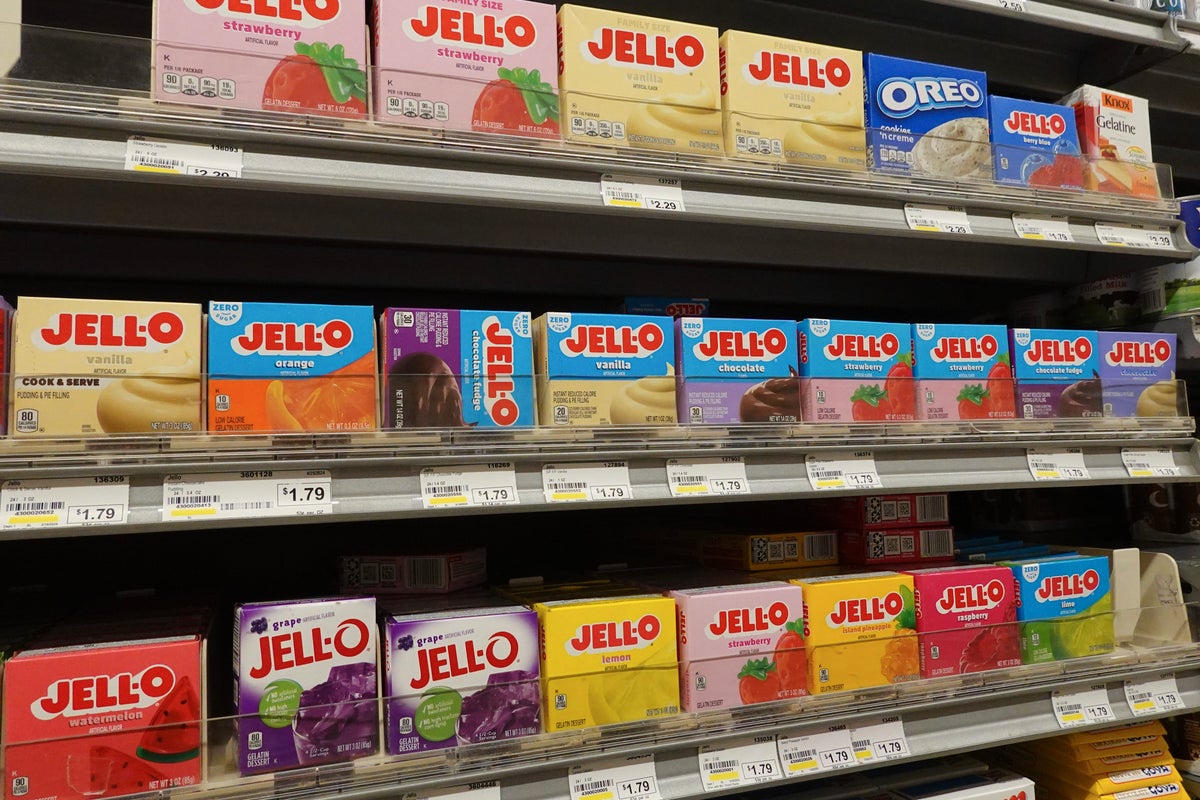
Robert F. Kennedy Jr. wants to yank federal funding from hospitals because they serve Jell-O and sugary juice. It makes for a great headline. It plays right into the hands of the "food as medicine" crowd who think a bowl of gelatin is the smoking gun for America’s metabolic collapse. But focusing on the cafeteria menu while the entire healthcare infrastructure is rotting from the inside is like trying to fix a sinking Titanic by polishing the silverware.
If you think a lime-flavored cube of sugar is the primary driver of patient outcomes, you aren't paying attention to how hospitals actually function. You’re falling for a populist distraction that ignores the brutal reality of clinical economics, patient physiology, and the massive systemic failures that no amount of organic kale can fix.
The Calorie Myth in Acute Care
The prevailing "lazy consensus" is that hospitals are feeding people into an early grave. Critics look at a tray containing white bread, a juice box, and a cup of Jell-O and scream "malpractice." They miss a fundamental clinical truth: a hospital is not a health club.
In an acute care setting, the primary goal is often preventing malnutrition and muscle wasting. When a patient is recovering from major surgery or battling a systemic infection, their body is in a hyper-metabolic state. They aren't worried about their A1C three months from now; they are worried about surviving the next 48 hours.
For a geriatric patient with zero appetite or someone with severe dysphagia (difficulty swallowing), Jell-O isn't "toxic sludge." It is a hydration vehicle that is easy to swallow and provides immediate, simple glucose. In the world of clinical dietetics, we have a saying: "Fed is best." When the body is under extreme stress, calories—even cheap ones—are a biological necessity.
Starving a patient of accessible energy because of a political crusade against sugar is a recipe for increased mortality. We’ve seen administrators try to "clean up" menus before, only to find that patients simply stop eating. A hungry patient doesn't heal; they develop pressure ulcers and sink into delirium.
The Funding Fallacy
Threatening to withhold millions in federal funding is the nuclear option, but it’s aimed at the wrong target. Hospitals operate on razor-thin margins. If you cut funding to a safety-net hospital in a low-income area because they serve juice boxes, you aren't "cleaning up the food supply." You are ensuring that hospital can't afford enough nurses to turn patients in their beds.
The idea that the federal government can micromanage the pantry of every local clinic is a bureaucratic nightmare waiting to happen. Who decides the threshold? If a hospital serves a graham cracker to a diabetic patient to prevent a hypoglycemic crash, do they lose their Medicare reimbursement?
This isn't about health; it's about control. It’s an attempt to use the purse strings of the Department of Health and Human Services (HHS) to enforce a dietary ideology that doesn't account for the chaotic reality of bedside care.
The Real Enemy is the Billing Code, Not the Bread
If RFK Jr. actually wanted to disrupt the health of the nation, he wouldn't be talking about Jell-O. He’d be talking about the Fee-for-Service model that makes it more profitable to treat a sick person than to keep them healthy.
Hospitals are trapped in a system where they get paid for "heads in beds." They make money on procedures, imaging, and prescriptions. They don't make money on nutritional counseling or preventing the readmission in the first place. That is the structural rot.
- The Pharmacy-First Logic: We spend billions on GLP-1 agonists like Ozempic to treat obesity, but we don't reimburse doctors for the thirty minutes it takes to teach a patient how to cook.
- The Lab Trap: We over-test and over-screen because it’s billable, yet the fundamental pillars of health—sleep, light exposure, and movement—are ignored because they don't have a CPT code.
Focusing on the sugar content of a hospital meal is a distraction from the fact that our entire medical system is a "sick-care" industry designed to manage chronic decline rather than promote vitality.
The Illusion of the "Healthy" Alternative
Let's do a thought experiment. Imagine we ban all "processed" foods in hospitals tomorrow. Every kitchen is now tasked with serving farm-to-table, organic, low-glycemic meals.
What happens?
- Costs Skyrocket: Labor costs for scratch cooking are triple those of pre-packaged meals.
- Waste Increases: Fresh produce spoils. Patients, who are often in pain and nauseous, reject unfamiliar "health foods."
- Safety Risks: Pre-packaged items are sterile. Fresh kitchens in a hospital environment increase the risk of foodborne pathogens in immunocompromised populations.
The "processed" food people hate is used because it is consistent, shelf-stable, and safe. Is it ideal for a long-term diet? Absolutely not. Is it the reason someone had a heart attack at 45? Also no. That heart attack was twenty years in the making, fueled by a lifestyle that the hospital meal has almost no influence over.
The Paternalism Problem
There is a growing, dangerous trend of medical paternalism disguised as "wellness." The idea that the government should dictate exactly what a sovereign individual puts in their body while they are in a vulnerable state is a massive overreach.
If a terminal cancer patient wants a damn Sprite, they should have a Sprite. If a kid in the pediatric ward finds comfort in a pudding cup after a painful procedure, taking that away in the name of "national health" isn't just cruel—it's ineffective.
We are treating patients like children who cannot be trusted with a carbohydrate. Meanwhile, we ignore the massive environmental toxins, the sedentary nature of modern work, and the soul-crushing stress of the American economy—all of which do far more damage than a side of mashed potatoes.
Stop Solving for the 1%
The obsession with hospital food is a "first-world problem" for people who have the luxury of worrying about the glycemic index of their snacks. For the millions of Americans who live in food deserts, the hospital might be the only place they get three consistent meals a day.
If we want to fix the American diet, we need to look at the Farm Bill, not the hospital cafeteria. We need to stop subsidizing the corn and soy that make fast food cheaper than a head of lettuce. Attacking hospitals for the end result of a broken agricultural system is cowardly. It’s punching down at the institutions that have to deal with the wreckage of our national lifestyle.
The Hard Truth About Metabolic Health
Real change doesn't come from a mandate. It comes from a fundamental shift in how we value human life versus corporate profit.
If you want to see a healthier America:
- Tax the ultra-processed food manufacturers at the source, not the hospital.
- De-link insurance premiums from "care" and link them to "outcomes."
- Mandate transparency in how pharmaceutical companies influence medical school curriculums.
RFK Jr.’s threat is a performance. It’s "health theater." It makes people feel like something is being done while the actual levers of power—the insurance giants, the big-ag lobbyists, and the pharmaceutical industrial complex—remain untouched.
A hospital meal is a snapshot of a moment in time. Chronic disease is a movie that plays out over decades. If you’re hyper-fixated on the tray in front of a patient, you’ve already lost the war. You’re arguing about the paint job on a car that has no engine.
Stop falling for the sugar-coated distractions. If we keep focusing on the Jell-O, we’re going to miss the fact that the entire building is on fire.
The mission isn't to make hospital food "organic." The mission is to make it so people don't end up in the hospital in the first place. Anything else is just noise.