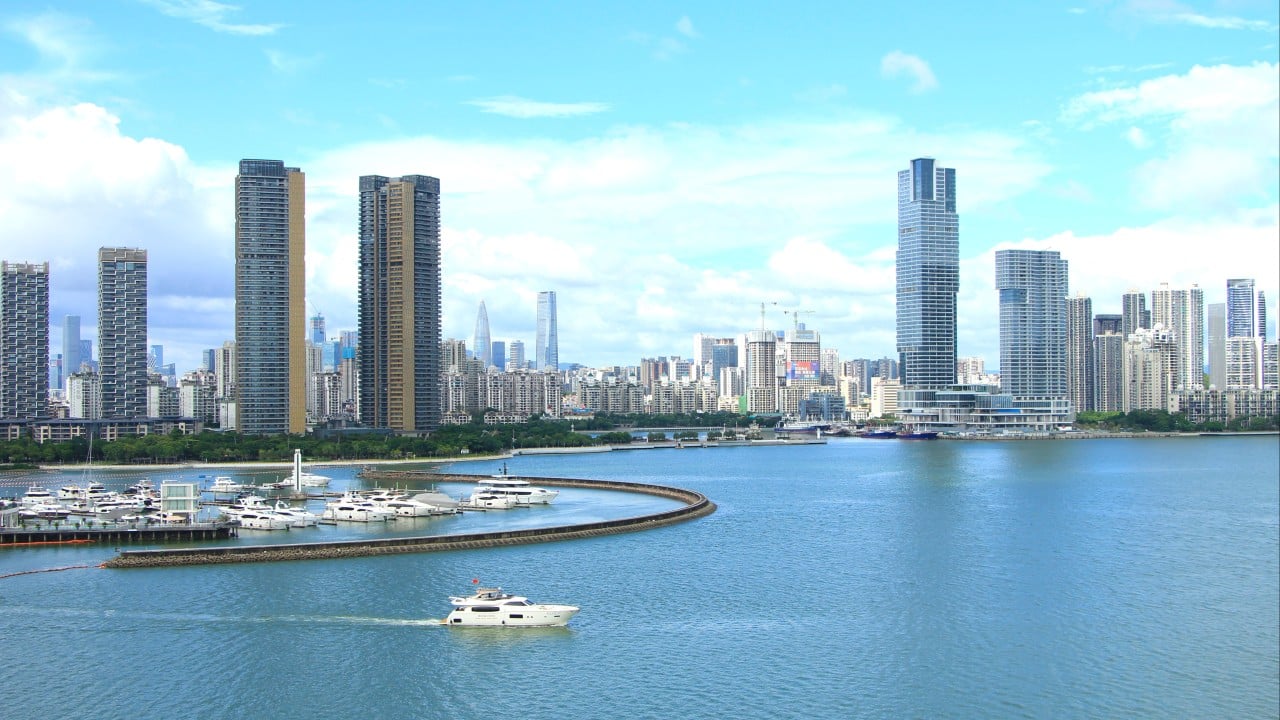
Salt spray hits the windscreen at twenty knots, stinging the eyes and tasting faintly of copper and industrial ambition. Out here, past the crowded concrete of Hong Kong and the neon pulse of Shenzhen, the water looks different. It looks open.
For decades, anyone who loved the sea in southern China faced a quiet frustration. You could build a magnificent vessel—a floating palace of teak, carbon fiber, and polished chrome—right here in the shipyards of Guangdong. You could engineer engines that purred like wild cats and electronics that mapped the ocean floor. But the moment you wanted to take your family out for a weekend anchorage, the machinery of bureaucracy would drop like an anchor.
Permits stalled. Marinas lacked berths. Customs declarations took longer than the actual voyage. The coastline, for all its immense wealth, remained closed to the casual, spontaneous joy of recreational boating.
Then came a shift. Not a loud proclamation, but a quiet, structural rearrangement of priority.
Industry veterans look at the Greater Bay Area today and see something that resembles Monaco in its early days, or Fort Lauderdale before the gold rush. They see an ecosystem.
Consider what happens when you combine nine mainland cities with two special administrative regions, packing eighty-six million people into a geographic zone smaller than some American states. You get a region that manufactures a staggering share of the world's goods. But manufacturing alone does not make a yacht hub. Desire does. Disposable capital does. And above all, infrastructure does.
Step onto the docks of Shenzhen's Dameisha marina on a Tuesday afternoon, and you will meet men like David Chen. (Note: David is a composite character based on interviews with regional yacht brokers and marine service providers). David spent fifteen years building a fortune in semiconductor logistics. Two years ago, he bought his first fifty-foot cruiser.
"When I started, owning a boat here felt like owning a Ferrari in a city with no paved roads," David tells me, wiping a stray droplet of seawater from the teak rail. "You could look at it in the garage. You could polish it. But driving it? Every trip felt like filing taxes."
That friction is precisely what the Greater Bay Area is attempting to engineer out of existence.
The strategy hinges on connectivity. Under recent policy frameworks, governments are slowly untying the knots that bound private vessels to rigid regional restrictions. Proposals for cross-border yacht registration, simplified customs clearance between Hong Kong and mainland ports, and the construction of dozens of new marinas are moving from slide decks to reality.
Think of a marine industry as a nervous system. The hull is the bone. The engine is the muscle. But the marinas, the fuel docks, the certified mechanics, the insurance brokers, and the regulatory green lights—those are the synapses. If one of them misfires, the whole body freezes.
For years, the synapses in southern China were entirely disconnected. A boat registered in Guangzhou could not easily dock in Hong Kong overnight without a mountain of paperwork that required stamps from three different agencies. It was easier to ship a yacht to the Mediterranean than to cruise fifty miles down the coast.
Change is messy. It smells of fiberglass resin and diesel exhaust.
Walk through the shipyards of Zhongshan, and you will hear the rhythmic thwack of mallets and the whine of sanders. Here, local builders who once focused exclusively on commercial ferries or export-only models are turning their attention inward. They are looking at a domestic population of entrepreneurs who have made their money, bought their second homes, and are now asking a simple question: What is next?
The answer, increasingly, is the horizon.
Wealth in China has evolved. A generation ago, status was measured by the sedan parked outside the corporate headquarters or the watch gleaming under a tailored cuff. Today, status has become experiential. It is about wellness, escape, and mobility. The water offers a rare commodity in a hyper-connected world: silence. Once you cut the engines two miles off the Wanshan Archipelago, the ping of WeChat notifications fades into the background hum of the tide.
Yet, building a true global yacht hub requires more than just rich buyers and eager shipbuilders. It requires a culture of the sea.
In places like Newport, Rhode Island, or Cowes in the UK, sailing is woven into the local folklore. Children grow up tying knots before they can ride bicycles. That generational marine literacy takes time to cultivate. In the Greater Bay Area, that culture is being artificially accelerated through sheer economic gravity and state-backed master planning.
Sailing academies are opening along the coast of Zhuhai. International boat shows are drawing global manufacturers who once viewed the Asian market as an afterthought. The supply chain is shrinking. If a captain needs a replacement stabilizer fin, they no longer have to wait three weeks for a part to fly in from Genoa; a machine shop in Dongguan can fabricate a custom prototype in forty-eight hours.
There are skeptics, of course. They point to typhoons that hammer the coast each summer, demanding costly dry-stack storage and fortified breakwaters. They point to lingering tax structures that still make yacht ownership in China significantly more expensive than in neighboring Southeast Asian havens like Phuket or Langkawi. They argue that the bureaucracy, bureaucratic muscle memory being what it is, will always find new ways to slow things down.
They might be right about the hurdles. But they underestimate the momentum.
When an entire region decides it wants to conquer a new frontier, it tends to bulldoze obstacles that look permanent to outsiders. The transformation of the Greater Bay Area into a maritime capital is not merely an economic initiative. It is a psychological reorientation. It is a pivot away from the land, away from the crowded interior, and toward the open sea.
Evening falls quickly over the Pearl River Estuary. The sun dips behind the jagged skyline of Shenzhen, painting the water in bruised shades of violet and gold. David fires up the twin diesels. The deep, resonant rumble vibrates through the deck plates, shaking the coffee cups in their holders.
He pushes the throttles forward. The bow lifts, slicing cleanly through the chop, heading south toward the dark, limitless expanse where the bay meets the South China Sea.