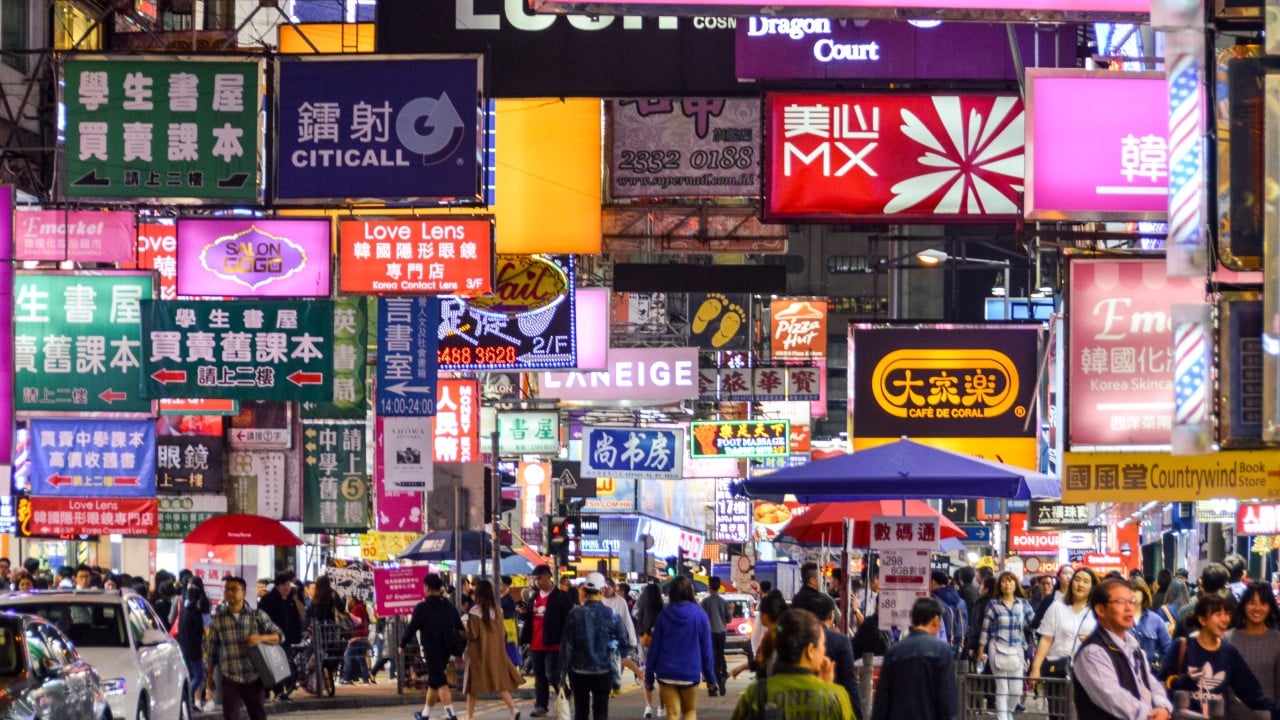
The prevailing narrative among the "Asia hand" commentator class is as tired as it is wrong. They suggest that for Hong Kong to survive as a gateway for mainland Chinese firms, it needs to replicate the Singaporean model: more tax incentives, more family office schemes, and a desperate, hat-in-hand plea for "stability."
This is a death sentence. In related developments, we also covered: The Two Billion Dollar Illusion.
If Hong Kong tries to compete with Singapore on being a "neutral, safe-haven hub," it loses every single time. Singapore has a forty-year head start on neutrality. It is a sovereign state with its own currency, military, and independent foreign policy. Hong Kong is a Special Administrative Region of China. Attempting to mask that reality under a thin veneer of "Singapore-lite" policy doesn't fool the capital markets; it just makes Hong Kong look like it’s suffering from an identity crisis.
Hong Kong’s actual value proposition isn't that it is "just like Singapore, but closer to Shenzhen." Its value is that it is the only place on earth that offers asymmetric risk-taking backed by the Chinese balance sheet. Investopedia has analyzed this fascinating issue in extensive detail.
The Neutrality Trap
Most analysts argue that Hong Kong’s "integration" with the mainland is its biggest weakness. They point to the National Security Law and the erosion of the traditional firewall as reasons why firms are fleeing to the Lion City.
They are looking at the wrong data.
Capital doesn't flee because of "integration." Capital flees because of uncertainty. The mistake Hong Kong made wasn't becoming more like China; it was failing to define exactly how it remains different in a way that actually matters to a CFO. Singapore is a vault. Hong Kong is a trading floor. You don't go to a vault to make 10x returns; you go there to keep what you already have.
When a Chinese tech giant like Alibaba or Tencent looks to expand, they don't need a "neutral" ground. They need a high-liquidity environment where the rules of the game are biased in favor of high-growth, high-volatility Chinese equity. Singapore’s stock exchange (SGX) is a graveyard for retail interest and high-volume trading. The Hang Seng, despite its recent battering, remains a deep pool of capital that Singapore can't touch.
Stop Chasing Family Offices
The current obsession with attracting family offices is a distraction. The media loves to track whether a billionaire moves their back office to Orchard Road or Central.
But family offices are passive. They are "lazy" capital. They seek wealth preservation. If you are a Hong Kong policymaker, chasing the same "safe money" that Singapore targets is a race to the bottom. You will be forced to cut taxes until there is nothing left to fund the infrastructure that makes the city functional.
Hong Kong should be chasing Industrial Capital.
Mainland firms don't need a place to hide their money; they need a place to weaponize it. They need a jurisdiction that allows for aggressive M&A, complex debt restructuring, and IPOs that are too "messy" for the pristine, risk-averse environment of Singapore.
The Liquidity Delusion
The "lazy consensus" says that Singapore is winning the liquidity war.
It isn't.
Look at the Average Daily Turnover (ADT). Even in a "bad" year for Hong Kong, the daily trading volume on the HKEX frequently dwarfs the SGX by a factor of ten or twenty. In 2023, while everyone was mourning Hong Kong’s "downfall," the HKEX was still processing billions in trades while the SGX struggled to remain relevant to global institutional investors outside of REITs and commodities.
Singapore has built a magnificent wealth management center. But a wealth management center is not a financial center. One is a glorified bank; the other is a market. Hong Kong is still the only market in Asia that can handle the massive "exit" requirements of a Tier-1 Chinese unicorn.
If you want to list a $50 billion AI firm, you don't go to Singapore. You won't find the buyers. You go to Hong Kong because the "Southbound" capital from the mainland via the Wealth Management Connect provides a built-in buyer base that Singapore can never replicate without a land border.
The Rule of Law vs. The Rule of Efficiency
Critics argue that the legal system in Hong Kong is no longer a competitive advantage.
I’ve seen companies spend millions on legal opinions trying to decide where to incorporate. The "expert" advice is usually: "Go to Singapore, the judiciary is independent."
This is a surface-level take.
The real advantage of the Hong Kong legal system isn't "independence" in the Western democratic sense—it’s Commercial Predictability. The SAR still operates on Common Law for commercial disputes. For a Chinese firm, this is the ultimate hedge. It allows them to operate with the backing of the Chinese state while settling contracts in a language and framework that global banks understand.
Singapore’s legal system is equally predictable, but it lacks the "back-channel" connectivity to the mainland’s regulatory bodies. When a deal goes sideways in China, a Hong Kong-based legal team has more leverage and more "on-the-ground" connectivity than a team sitting in a Singaporean skyscraper.
The Talent Myth
There is a loud narrative about the "brain drain."
Yes, many mid-level expats moved to Singapore during the pandemic. But look at who is replacing them.
Hong Kong is seeing a massive influx of mainland Chinese talent—the "Top Talent Pass Scheme" has brought in tens of thousands of highly educated professionals. The contrarian view is that this is actually an upgrade.
The old Hong Kong was run by Western expats who understood London and New York but struggled to navigate the nuances of the Greater Bay Area (GBA). The new Hong Kong is being populated by people who grew up in the Chinese tech ecosystem, were educated at Ivy League schools, and now want to build the next generation of Chinese multinationals.
This is not a "decline." It is a specialization.
If you want to build a bridge between the West and the GBA, do you want a British banker who spends his weekends at the Cricket Club, or a Shenzhen-born, Stanford-educated engineer who understands the supply chain of the Pearl River Delta like the back of his hand?
The Arbitrage of the GBA
The "competitor" view is that Hong Kong is being swallowed by the Greater Bay Area.
I argue that Hong Kong should accelerate that swallowing.
The city’s future isn't as a standalone island. It’s as the Command and Control Center for the most powerful manufacturing and tech hub on the planet. Singapore is an island with no hinterland. It has to manufacture its own relevance. Hong Kong has 80 million people and the world's factory floor right across the bridge.
Imagine a scenario where the "border" for goods and data becomes invisible, but the "border" for capital remains firm. Hong Kong becomes the offshore clearinghouse for the GBA’s entire output.
Singapore can offer you a nice view of the harbor and a stable regulatory environment. It cannot offer you direct, high-speed rail access to the R&D labs of Huawei, DJI, and BYD.
The Cost of Staying "Safe"
The downside of my contrarian approach is obvious: it requires Hong Kong to lean into its relationship with Beijing. It requires giving up the ghost of being a "global neutral" city.
But the alternative is worse. By trying to please everyone, Hong Kong pleases no one. Western capital is already skeptical; trying to "woo" them by pretending the last five years didn't happen is a waste of marketing budget.
Hong Kong should stop apologizing for its integration. It should start selling its Access.
"We are the only place on earth where you can trade Chinese risk with English law."
That is a pitch. "We are a bit like Singapore but with better dim sum" is a tragedy.
The Death of the Middleman
The old model of Hong Kong as a "middleman" is dead. The mainland doesn't need a middleman to talk to the world anymore. It needs a Synthesizer.
A synthesizer takes two disparate signals—the closed-loop Chinese economy and the open-loop global financial system—and creates a frequency where they can both exist. This requires a level of aggression and risk-appetite that Singapore simply doesn't possess.
Singapore is the city for the "Safe 4% Return."
Hong Kong must be the city for the "Volatile 40% Growth."
If you are a Chinese firm looking to launch globally, and you choose Singapore because you want to "play it safe," you have already lost the competitive edge that made you successful in the mainland. You go to Singapore to retire. You go to Hong Kong to scale.
The data supports this. Look at the capital raises. Look at the R&D spending within the GBA. Look at the speed of patent filings. The energy is moving North, not South.
Stop looking at the exodus of lifestyle-seekers and start looking at the movement of industrial power.
Hong Kong doesn't need to beat Singapore at its own game. It needs to flip the table and remind the world that in the next century of Chinese expansion, the vault is less important than the engine room.
Buy the volatility. Lean into the integration. Stop trying to be "safe."
The era of the "Gateway" is over; the era of the "Aggregator" has begun.