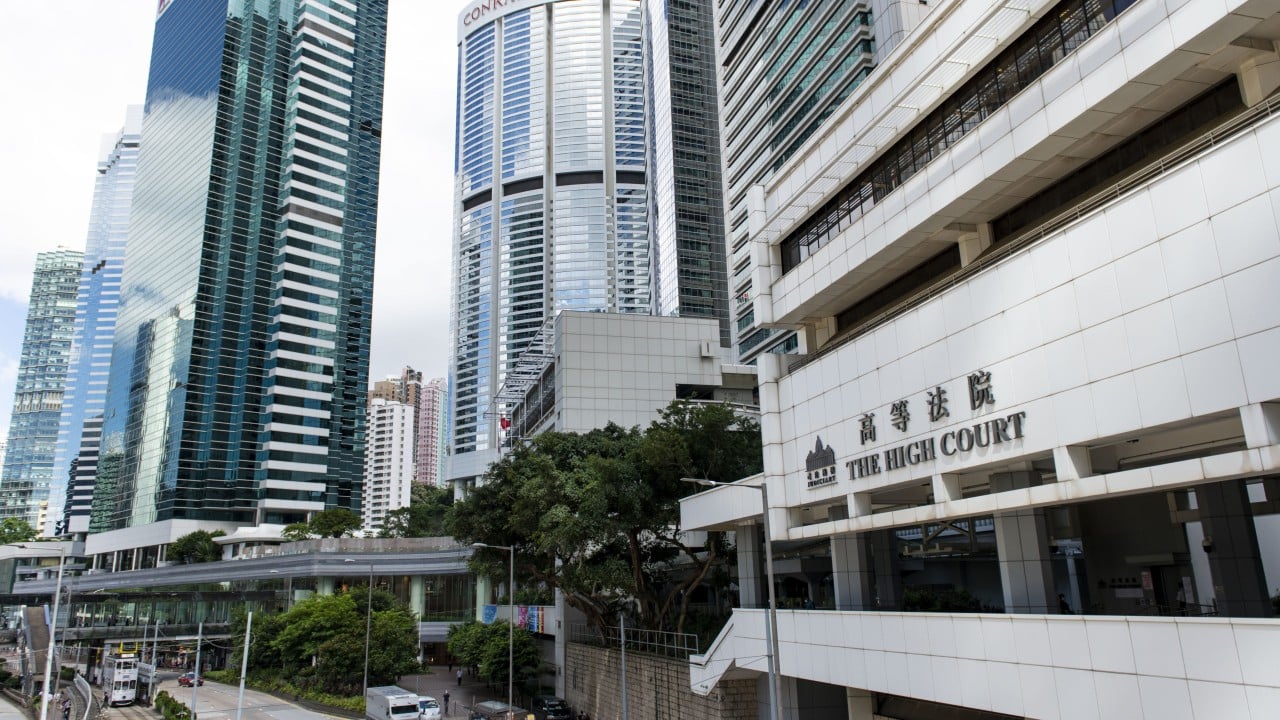
Every major legal reform in Hong Kong follows the exact same predictable script. The government proposes a structural change to modernize a choked, aging judicial system. Within forty-eight hours, the Hong Kong Bar Association issues a press release declaring the plan unworkable, catastrophic for access to justice, and a threat to the daily routines of senior counsel.
They did it with electronic filing. They did it with remote hearings during the pandemic. And now, they are doing it again with the proposed redevelopment and relocation of the High Court to Site 5 of the New Central Harbourfront.
The consensus among the legal establishment—amplified uncritically by local media—is that breaking up the current Queensway High Court building, splitting court functions across Admiralty and Central, or moving operations during a multi-year construction phase is an administrative nightmare. The Bar Association wants you to believe that the physical proximity of their chambers in Central to the existing brutalist concrete block on Queensway is the sole glue holding Hong Kong’s rule of law together.
That argument is nonsense. It is a classic case of institutional inertia disguised as public interest advocacy.
Having spent years watching major infrastructure and commercial litigation play out across Asia-Pacific jurisdictions, I have seen firsthand how incumbent professional guilds weaponize "feasibility" to protect their own real estate convenience. When you strip away the dramatic rhetoric about judicial sanctity, the Bar Association’s opposition to the High Court redevelopment plan boils down to one thing. They do not want to walk an extra seven minutes, and they do not want to disrupt the billable-hour ecosystem they have spent four decades optimizing.
The Myth of the Unified Judicial Fortress
To understand why the Bar’s "unworkable" label fails basic scrutiny, you have to look at the actual physical reality of the current High Court building. Built in the early 1980s, the Queensway complex was designed for a city with a fraction of its current commercial complexity, population, and caseload.
Walk through the corridors on any given Tuesday morning. The lifts are perpetually jammed. Consultation rooms are scarce, forcing barristers and solicitors to negotiate multi-million-dollar settlements in cramped hallways within earshot of opposing counsel and journalists. Security screening bottlenecks spill out toward the entrance. Back-office registries are bursting at the seams with physical files because the transition to paperless litigation remains painfully slow.
The government’s proposal to relocate the High Court to a purpose-built, expanded complex on the Central Harbourfront—while redeveloping the existing Queensway site—is not an arbitrary real estate play. It is an overdue recognition that a global financial center cannot run a 21st-century dispute resolution hub out of a decaying 1980s office block.
Yet, the Bar Association’s primary objection centers on the transitional period and the potential splitting of civil and criminal jurisdictions, or the separation of the Court of Final Appeal from the High Court. They argue that moving between venues will cause scheduling chaos, force counsel to sprint between buildings, and drive up legal costs for clients.
Let us test that premise against reality.
In London, commercial barristers routinely bounce between the Royal Courts of Justice on the Strand, the Rolls Building off Fetter Lane, and the Supreme Court in Parliament Square. In Singapore, the state courts, the Supreme Court, and Maxwell Chambers operate across distinct footprints, and the legal sector manages to function without collapsing into logistical anarchy. Even within Hong Kong right now, practitioners already split their days between the Court of Final Appeal in Central, the High Court in Admiralty, the District Court in Wan Chai, and the West Kowloon Magistrates’ Courts.
The idea that the legal profession will suddenly forget how to manage a calendar because the High Court shifts a few hundred meters north toward Victoria Harbour insults the intelligence of every court clerk in the city.
What the Bar Association Won't Say Out Loud
When a powerful trade group claims a plan is "not workable," you have to ask a simple question. Unworkable for whom?
Certainly not for the litigants. A modern High Court complex on the harbourfront offers larger courtrooms, proper acoustic isolation, dedicated witness waiting areas, and modern digital infrastructure that actually supports hybrid hearings and real-time transcription. For an ordinary citizen navigating a complex civil dispute or a criminal trial, a purpose-built facility with clear sightlines and adequate seating is a massive upgrade over the claustrophobic, labyrinthine floors of Queensway.
Certainly not for the judiciary. Judges in the Court of First Instance and the Court of Appeal currently work in chambers that lack the spatial capacity and technological integration required for mega-trials involving dozens of defendants and thousands of digital exhibits.
The only group genuinely inconvenienced by the move is the senior bar. For forty years, the geographic triangle between Central, Admiralty, and Queensway has functioned as an exclusive private club. Chambers are concentrated in specific towers—Prince’s Building, Alexandra House, Des Voeux Road—precisely because they sit within a five-minute indoor, air-conditioned walk of the Queensway lifts.
Relocating the High Court to Site 5 on the Central Harbourfront breaks that monopoly of convenience. It shifts the center of gravity. Suddenly, the prime real estate advantage held by legacy chambers diminishes, and new walkways, transit links, and logistical habits have to be formed.
I have watched this exact battle play out in corporate restructurings and municipal planning across major financial hubs. Incumbents always frame their personal friction as a systemic crisis. If a partner has to adjust their morning routine, it is framed as a threat to operational efficiency. If a barrister has to take a different footbridge, it is framed as a threat to access to justice.
The Real Cost of Delaying Redevelopment
Let us examine the alternative that the Bar Association implicitly favors—keeping the High Court exactly where it is and attempting piecemeal renovations in place.
Anyone who has ever managed a major capital project knows that renovating an active, high-security, 24-hour operational facility is the single most expensive and disruptive way to build. Imagine a scenario where construction crews are jackhammering concrete slabs directly above a live murder trial or a sensitive commercial injunction hearing. You cannot properly upgrade HVAC systems, core structural columns, fire suppression networks, or high-security prisoner transfer routes while judges are sitting on the bench ten feet away.
In-situ renovation drags a three-year build into an eight-year quagmire. Costs balloon. Dust, noise, and intermittent power or IT outages become daily hazards. Worse, you remain trapped within the exact same cramped footprint, meaning you spend billions of taxpayer dollars only to end up with the same inadequate floor plate you started with.
The government’s strategy—building a fresh, expanded judicial complex on a clean harbourfront site before decommissioning or repurposing the old structure—is basic project management common sense. It isolates construction risk. It allows engineers to design security perimeters, public concourses, and judicial circulation corridors from scratch without compromising active courtrooms.
Answering the Wrong Question About Legal Costs
A frequent talking point raised by critics of the relocation is that splitting court facilities during the transition will inflate legal fees, as clients will have to pay for barristers’ travel time between venues.
This argument completely misunderstands how commercial and criminal litigation is billed in Hong Kong.
Senior barristers do not charge by the step. They charge brief fees for preparation and daily refreshers for court appearances. Whether a barrister walks through Pacific Place to get to Queensway or walks along the Central elevated walkway system to reach the harbourfront, the daily refresher rate remains identical.
If you want to talk about what actually drives up legal costs in Hong Kong, look at the archaic procedural delays caused by inadequate courtroom capacity. When a commercial trial is adjourned for nine months because there are not enough large courtrooms available to accommodate a multi-party hearing, clients bleed millions of dollars in ongoing retainer fees, interim applications, and frozen capital. Expanding courtroom capacity through a new harbourfront complex directly attacks the root cause of litigation inflation. Opposing that expansion to save ten minutes of walking time is completely backwards.
The Legitimate Flaws Nobody Is Discussing
Does this mean the government’s High Court redevelopment blueprint is flawless? Hardly.
If the Hong Kong Bar Association wanted to provide genuinely constructive criticism instead of reflexively slamming the door, they would focus on three very real engineering and operational vulnerabilities in the current proposal.
First, inter-court connectivity. If the Court of Appeal and the Court of First Instance are temporarily split during phased transitions, the Judiciary must establish dedicated, high-frequency shuttle links and unified digital registries so solicitors are not physically shuttling paper bundles across Admiralty and Central. Relying on public footbridges during a typhoon warning or peak rush hour is a genuine operational risk that requires an engineered transport solution.
Second, custodial transport security. Moving high-profile remand prisoners from correctional facilities to a waterfront site introduces entirely different perimeter security challenges compared to the tucked-away vehicular bays of Queensway. Traffic bottlenecks along Connaught Road Central and Lung Wo Road could turn routine prisoner transfers into daily gridlock if dedicated underground access tunnels are not prioritized in the master plan.
Third, acoustic and environmental shielding. Building next to major waterfront arterial roads and public promenades requires aggressive acoustic engineering. A courtroom cannot feel like an aquarium overlooking weekend tourist crowds, nor can the rumble of heavy harbor traffic bleed into sensitive witness testimony.
These are solvable engineering and logistical problems. They require rigorous input from architects, transport planners, and court administrators. They do not justify declaring the entire project dead on arrival.
How Legal Institutions Actually Adapt
History shows that legal professions are remarkably adaptable once the concrete is poured.
When the Court of Final Appeal moved from the former French Mission Building on Battery Path to the historic Legislative Council Building on Jackson Road in 2015, there was no shortage of hand-wringing over the logistics of retrofitting a heritage monument for modern appellate work. Today, nobody suggests moving back.
When the West Kowloon Law Courts Building opened in 2016, consolidating multiple magistracies and tribunals into a modern twin-tower complex, practitioners complained bitterly about the commute away from Hong Kong Island. Within two years, it became the undisputed gold standard for high-volume court administration in the territory, handling massive multi-defendant trials that would have physically broken the older courts.
The pattern is unmistakable. Before a move, the legal establishment predicts institutional collapse. After the move, they quietly enjoy the upgraded facilities and never mention their prior objections again.
Stop Letting Incumbents Veto Infrastructure
Hong Kong’s position as a premier international legal and dispute resolution hub is not guaranteed by historical sentiment. It competes directly every single day with Singapore’s Maxwell Chambers, the Dubai International Financial Centre Courts, and London’s commercial courts.
Those rival jurisdictions are pouring massive capital into purpose-built legal precincts designed around seamless digital evidence presentation, expansive mediation suites, and effortless public access. They are not asking senior lawyers whether a new courthouse disrupts their favorite lunch spots. They are building for the next fifty years of global commerce.
If Hong Kong allows an entrenched professional association to veto critical judicial infrastructure because the transition phase is inconvenient, the city deserves to lose market share. You cannot claim to be a world-class legal center while insisting on operating out of a crumbling, overcrowded 1980s building simply because the elevators are close to your office.
The government should listen to legitimate technical feedback on transport links, custodial security, and transitional scheduling. Then, it should ignore the territorial complaints of the Bar, break ground on the harbourfront, and build the court system Hong Kong actually needs.