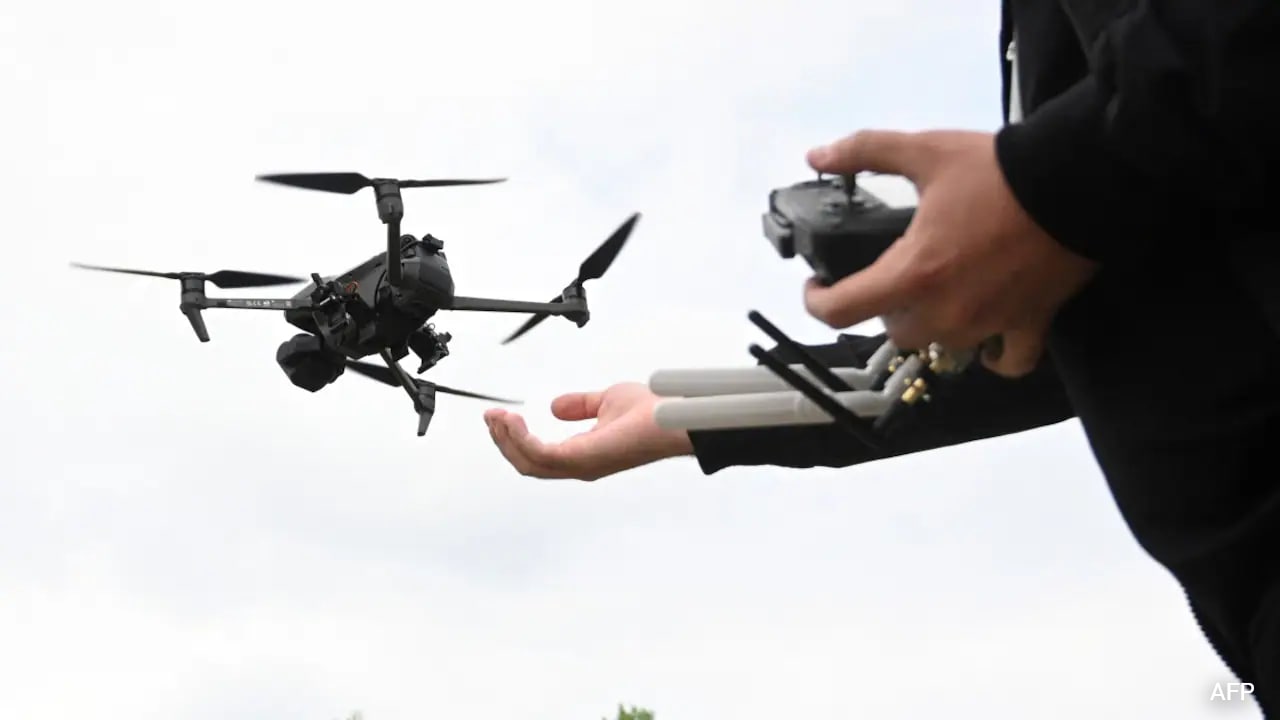
Honduras is changing its entire strategy against transnational cartels, and the solution isn't coming from Washington. President Nasry Asfura shocked regional analysts by flying to Kyiv to meet with Ukrainian President Volodymyr Zelenskyy. The main takeaway from this historic meeting was a clear security shift. We now see Honduras planning to buy Ukrainian drones to fight drug trade operations across its heavily compromised borders.
This isn't just about adding new equipment to a military inventory. It represents a fundamental realignment in how Central American nations view modern security threats. For decades, Latin American governments relied on American hardware and surveillance platforms to intercept narcotics. Now, they are looking at the brutal testing grounds of Eastern Europe to find tools that can outmatch highly sophisticated criminal syndicates.
The Reality Behind the Honduran Plan to Buy Ukrainian Drones to Fight Drug Trade
To understand why this deal matters, you have to look at the sheer scale of the security crisis in Honduras. The country has long served as a massive transit highway for South American cocaine heading toward the United States. Criminal organizations like MS-13 and Barrio 18 don't just run local street corners anymore. They operate with massive financial resources, advanced communications, and sometimes superior firepower than local police units.
When Nasry Asfura took office in January 2026, he inherited a country with a homicide rate hovering around 24 per 100,000 inhabitants. That's nearly four times the global average. Cartels have moved beyond simple smuggling. They now manage massive coca plantations and processing laboratories deep within remote, inaccessible mountainous regions. Traditional border patrols can't keep up with this kind of distributed criminal infrastructure.
During his talks in Kyiv, Asfura made it clear that monitoring these blind spots is a matter of national survival. Ukraine has spent years rapidly developing unmanned aerial systems under the pressure of full-scale warfare. They didn't just build expensive, delicate military assets. They perfected cheap, highly effective, and easily mass-produced aerial tools that can bypass traditional electronic defenses. That's exactly what Honduras needs to monitor remote jungle borders.
Why Kyiv Became a Modern Security Hub
Ukraine is one of the strongest nations globally when it comes to low-cost tactical tech. The war against Russia turned Ukrainian garages and small tech startups into high-output military production facilities. They have optimized first-person view units, long-range reconnaissance platforms, and thermal tracking systems to a level that Western defense contractors can't match at a reasonable price point.
Zelenskyy explicitly pointed to this hard-earned capability during his joint press appearance with Asfura. The Ukrainian president knows his country needs to build diplomatic and economic alliances outside of Western Europe. Offering defense technology to Latin American nations gives Ukraine a new footprint in the global south while creating vital revenue streams for its domestic defense industries.
For Honduras, buying from Ukraine makes immense practical sense. Buying hardware from traditional Western defense giants involves navigating mountains of bureaucratic red tape, human rights vetting processes, and massive price tags. Ukrainian manufacturers build tools meant for immediate deployment in punishing conditions. They are designed to be repaired in the field by regular technicians, not specialized engineers.
The Problem With Yesterday's Surveillance Tools
If you look at the recent history of security tech in Central America, it's riddled with corruption and failure. Former Honduran President Juan Orlando Hernández spent millions on advanced digital surveillance systems, ostensibly to fight cartels. Instead, prosecutors later showed he used those exact systems to protect his own massive drug trafficking network before his extradition to the United States.
The old way involved heavy, expensive helicopters and fixed-wing aircraft that cartels could spot from miles away. By the time a military chopper spun up its rotors and flew out to a suspected jungle airstrip, the smugglers had already cleared the area. Cheap aerial systems change the math completely. They can linger silently over a target for hours, streaming real-time thermal video directly to tactical units on the ground without alerting the criminals below.
Cartels Are Already Adapting to Unmanned Warfare
This Honduran initiative isn't happening in a vacuum. The cartels themselves are already deeply aware of how effective these systems are. Security intelligence reports from early 2026 revealed that Mexican and Colombian criminal groups have actually tried to infiltrate volunteers into Ukraine's International Legion. Their goal wasn't geopolitical ideology. They wanted their operatives to receive structured training in drone manufacturing, thermal avoidance, and electronic warfare resistance directly from active combat zones.
Since criminal syndicates are actively trying to steal these tactics, governments have to move faster. Honduras using these tools is a direct reaction to an asymmetric threat that has already evolved. If the cartels are learning how to use weaponized aerial systems for strikes and surveillance, the state cannot rely on old-school border checkpoints and manual foot patrols.
Mapping the Operational Challenges
It sounds great on paper. You buy a fleet of battle-tested aerial platforms, deploy them to the border, and watch the drug trade collapse. Honestly, it's never that simple. The Honduran military faces massive logistical hurdles before these tools can make a dent in organized crime.
First, there's the issue of training. Flying a reconnaissance platform in a dense, humid tropical rainforest is completely different from operating over the flat, open plains of Eastern Europe. The canopy cover in regions like Gracias a Dios offers deep natural concealment for illegal airstrips and processing labs. Local operators will need to master specialized sensor payloads, like specialized foliage-penetrating radar and high-end thermal imaging, to spot targets through dense jungle growth.
Second, the maintenance pipeline will be a constant headache. Keeping a steady supply of spare parts, specialized batteries, and software updates moving from Kyiv to Tegucigalpa requires a highly organized supply chain. If a unit crashes in a remote swamp, the military can't just wait six months for a replacement part to arrive from a war zone.
Practical Next Steps for the Regional Strategy
If the Honduran government wants this unconventional partnership to actually succeed, they need to look beyond the initial purchase agreement. Buying hardware is the easy part. Building a working operational framework is where most projects fail.
- Establish Domestic Assembly Lines: Instead of just importing finished units, Honduras should negotiate for local assembly rights. This builds domestic technical expertise and ensures a constant supply of frames and basic components.
- Create a Dedicated Air Intelligence Unit: These systems shouldn't be handed over to standard infantry battalions. The government needs to build a centralized, tech-focused intelligence wing that analyzes aerial data feeds in real-time alongside regional allies.
- Focus on Dual-Use Applications: Asfura mentioned using these systems for agriculture and disaster response. Mixing civilian and military applications helps justify the steep budget costs to a skeptical public.
- Coordinate With Neighboring States: Drug corridors don't care about borders. If Honduras cleans up its side of the frontier, cartels will just shift into El Salvador or Guatemala. Shared intelligence platforms are mandatory.
This deal shows that the old lines of international defense cooperation are gone. A small Central American nation buying frontline tactical hardware from a nation in the middle of a massive European land war would have sounded absurd five years ago. Today, it's just the reality of a world where tactical innovation moves faster than traditional diplomacy.