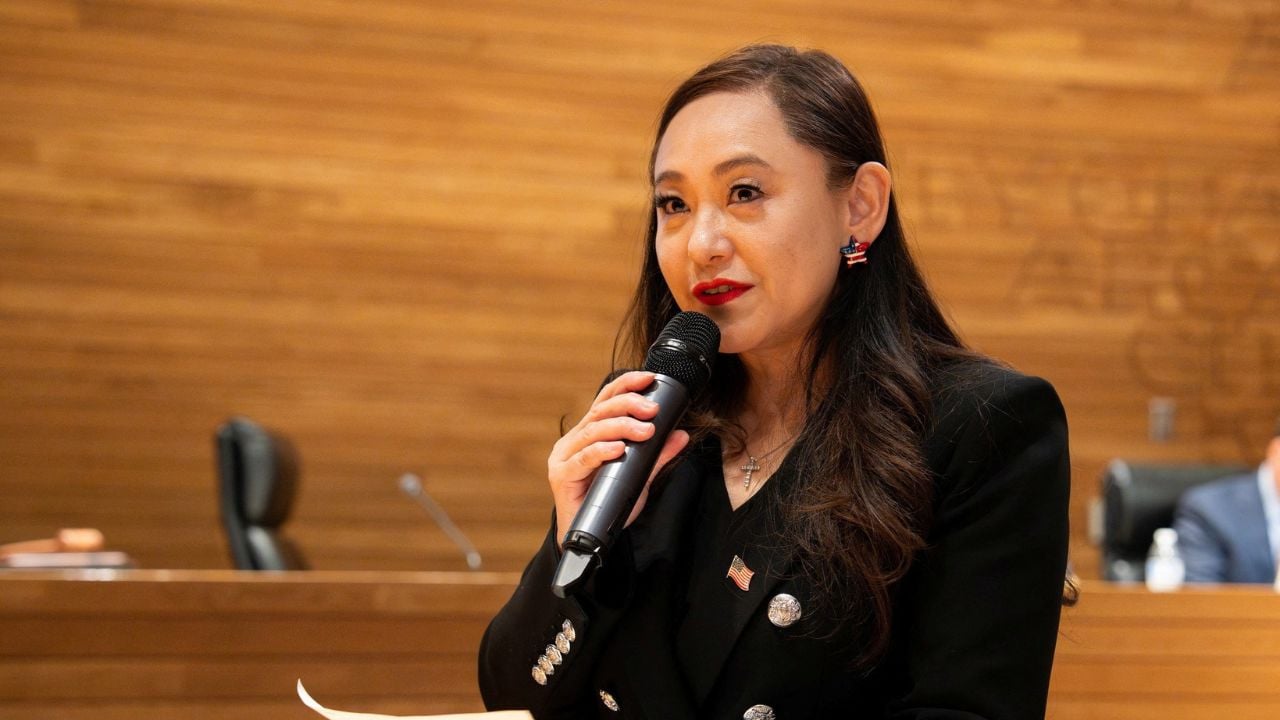
The federal case against former City of Industry Mayor Sabas Trujillo serves as a stark reminder that international espionage rarely looks like a high-stakes thriller. It looks like local government. In a plea deal that has rattled the San Gabriel Valley, Trujillo admitted to acting as an unregistered agent for the Chinese government, specifically working to steer American public opinion in favor of Beijing’s interests. This was not a sophisticated hack of the Pentagon. It was the quiet, systematic exploitation of a small-town politician whose proximity to power—no matter how localized—offered a back door into the American political consciousness.
While national headlines focus on global trade wars and naval maneuvers in the South Pacific, the real battle for influence is happening in city council chambers and community centers. Trujillo’s descent from local leader to a pawn for the Chinese Communist Party (CCP) illustrates a vulnerability in the American political system that many federal agencies are only now beginning to take seriously. Local officials hold the keys to land use, business permits, and community trust. When those keys are handed to a foreign power, the breach of security is total.
The Architecture of the Compromise
The mechanics of Trujillo’s cooperation with Chinese intelligence officers reveal a playbook designed to bypass traditional diplomatic channels. This was a classic "soft power" operation. Starting around 2018, Trujillo began receiving directions from individuals he knew were linked to the Chinese government. The goal was simple: use the credibility of a sitting American mayor to validate CCP narratives.
These directives were not about stealing classified blueprints. Instead, they focused on narrative control. Trujillo was tasked with writing articles, giving interviews, and making public statements that mirrored Beijing’s talking points on sensitive issues, including the treatment of ethnic minorities in China and the legitimacy of the country's territorial claims. By using a Latino mayor from a California industrial hub as the mouthpiece, the CCP sought to give their propaganda a veneer of grassroots American authenticity.
This strategy relies on the fact that local officials are rarely vetted with the same intensity as federal employees. There is no security clearance required to run for city council. There is no counter-intelligence briefing for a mayor. This creates a massive blind spot where foreign agents can build relationships, offer "investments" or "cultural exchanges," and eventually begin dictating policy or rhetoric.
Why Small Cities Matter to Beijing
One might wonder why a superpower would bother with the City of Industry, a town with more businesses than residents. The answer lies in the American political structure. Every local official is a potential bridge to a State Senator, a Member of Congress, or a future Governor. Influence is a ladder. By securing a foothold at the municipal level, foreign intelligence services create a network of "friends" who can be called upon as they rise through the political ranks.
Furthermore, California’s San Gabriel Valley is a hub of international commerce. It is a gateway for billions of dollars in trade and a focal point for the Chinese diaspora in the United States. For Beijing, controlling the narrative in these communities is essential for maintaining internal stability and suppressing dissent abroad. When a local mayor echoes the party line, it signals to the community that the CCP’s reach is long and its influence is sanctioned by American leaders.
The Financial Hook
The federal investigation highlighted that the relationship wasn't just ideological; it was transactional. Trujillo received thousands of dollars in travel expenses and other perks. While these sums might seem small on a global scale, they are often enough to sway a local politician whose campaign war chest or personal finances are modest.
The danger here is the normalization of the "consultancy" model. Many former and current officials believe they can walk the line between legitimate business development and foreign advocacy. They convince themselves that bringing Chinese investment to their district justifies a few favorable quotes in a state-run newspaper. But as the Trujillo case proves, the Department of Justice sees no gray area. Under the Foreign Agents Registration Act (FARA), if you take direction from a foreign power to influence American policy or opinion, you must register. Failure to do so is a felony.
The Blind Spots in Municipal Oversight
The Trujillo case exposes a systemic failure in how the United States protects its domestic political infrastructure. Currently, there is almost zero federal oversight regarding the interactions between local municipal leaders and foreign entities. City managers and mayors routinely meet with foreign delegations, sign "Sister City" agreements, and accept sponsored trips abroad without any requirement to report these contacts to the FBI or the State Department.
This lack of transparency is a gift to intelligence services. They operate in the shadows of local bureaucracy, where the stakes feel lower and the scrutiny is minimal. A city council member might think a free trip to Shanghai is just a perk of the job. In reality, it is often the first step in a "cultivation" process that ends in a federal indictment.
Breaking the Silence on Grassroots Espionage
For decades, the American public has been conditioned to think of foreign interference as a digital problem—bot farms on social media or hacked email servers. The Trujillo plea deal forces a shift in that perspective. It shows that the most effective form of interference is human. It is the person you voted for. It is the official who cuts the ribbon at the new shopping center.
The federal government is finally signaling that the honeymoon phase for these "consulting" arrangements is over. The prosecution of Trujillo is a shot across the bow for local officials nationwide. It suggests that the FBI is no longer just looking at the top of the pyramid; they are looking at the base.
A Precarious Future for Local Governance
The fallout from this case will likely result in a chilling effect on legitimate international business in Southern California. That is a necessary cost of security. When the line between a trade representative and a propaganda agent is blurred, the entire system of international cooperation becomes suspect.
Local governments now face a choice. They can continue to operate with a "business as usual" mindset, ignoring the geopolitical implications of their international ties, or they can implement rigorous transparency standards. This would mean mandatory reporting of all foreign-funded travel, a public database of all meetings with foreign government representatives, and ethics training that specifically covers foreign influence operations.
The reality is that Sabas Trujillo is likely not an outlier. He is simply the one who got caught. The techniques used to compromise him are being deployed in cities across the country, targeting officials who believe they are too small to be noticed. Beijing knows better. They understand that a thousand small cracks can eventually break the strongest foundation.
The plea deal entered in the Central District of California isn't just about one man's fall from grace. It is a map of a battlefield that most Americans didn't know existed. The conviction of a mayor for acting as a foreign agent sounds like an anomaly, but in the current climate of global competition, it may soon become a recurring headline. The vulnerability of the local official is no longer a theoretical risk; it is a documented fact of modern political life.
Vigilance in Washington D.C. means nothing if the gates are being opened in the suburbs of Los Angeles.