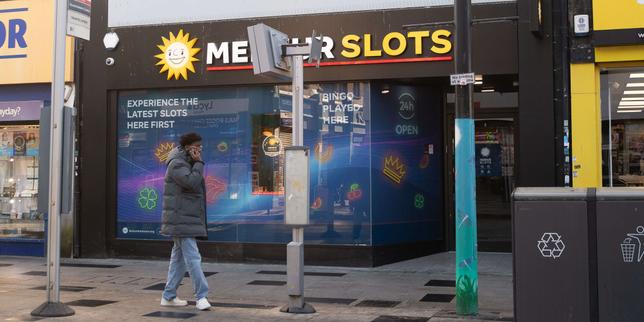
The neon sign flashes outside the former fruit shop, sandwiched between a bakery and a shuttered chemist. It is 3:00 AM in a rainy British suburb. Inside, the air smells faintly of industrial carpet cleaner and cheap coffee. There are no windows. Time does not exist here. There is only the rhythmic, hypnotic chime of a slot machine and the dull thud of a button being pressed every two seconds.
Meet Thomas. He is a hypothetical composite of the dozens of people I have spoken with while investigating the changing face of British gambling, but his reality is painfully concrete. Thomas is fifty-four, a night-shift logistics worker, and he is currently staring at a digital roulette wheel spinning on a high-definition screen. He does not look like a high roller in a James Bond film. He looks exhausted. He is down eighty pounds tonight, money meant for the electricity bill.
This is not Las Vegas. This is a 24-hour adult gaming centre, or what communities across the United Kingdom are increasingly calling a "minicasino." They are quietly reshaping the British high street, converting vacant retail units into micro-hubs of round-the-clock wagering.
While traditional casinos require identification checks, dress codes, and a trip to a dedicated entertainment district, minicasinos have brought high-intensity gambling to the doorstep of everyday life. They sit next to the supermarkets where people buy their milk. They occupy the spaces where children used to buy shoes.
The growth is staggering. Over the past few years, while traditional retail crumbled under the weight of economic pressures, applications for adult gaming centres surged. Local councils often find their hands tied by the liberal framing of the 2005 Gambling Act, leaving them legally powerless to reject new licenses unless they can prove a direct link to crime.
But the real problem lies elsewhere. It sits in the psychology of convenience.
Human beings are hardwired to seek the path of least resistance. Behavioral psychologists often talk about friction—the small obstacles that prevent us from acting on our worst impulses. A traditional casino introduces friction. You must travel there, perhaps pay for parking, and walk past security guards. Minicasinos eliminate friction entirely. They are a frictionless trap.
Consider what happens when an individual struggling with a gambling compulsion tries to reform. They delete the apps from their phone. They ask their bank to block gambling transactions. They walk down the high street to buy groceries, feeling a sense of control for the first time in months. Then, they pass a bright storefront offering a free hot drink and a chance to sit in a warm, plush chair. The friction is gone. The temptation is immediate, physical, and localized.
The machines inside these venues are not the mechanical one-armed bandits of the past. They are highly sophisticated computers running complex algorithms designed to maximize "time on device."
Every sound effect is tuned to a specific musical chord that triggers dopamine release. Every near-miss—where the winning symbol sits just millimeter above the payline—is programmed to make the brain register a loss as a simulated win. The machine tells the subconscious that victory is just one more spin away.
This constant neurological stimulation creates a state known to researchers as the "machine zone." It is a trance-like condition where the player loses awareness of their body, their financial reality, and the passage of time. In the machine zone, winning is almost a distraction because it interrupts the rhythm of the play. The goal shifts from winning money to simply staying in the zone.
Public health data suggests that the presence of these venues correlates heavily with areas of economic deprivation. A walk through any post-industrial town in the North of England or the outer boroughs of London confirms the pattern. Where poverty rates are high, the concentration of minicasinos rises.
It is a predatory geography. The industry argues that these venues provide employment, pay local taxes, and offer a safe, regulated environment for entertainment. They point out that the vast majority of people who gamble do so responsibly, viewing it as a harmless leisure activity.
That argument feels incredibly hollow when you sit in one of these venues at dawn.
The people occupying the stools are rarely smiling. They are not laughing with friends. They are isolated individuals, locked in a private battle against a mathematical certainty. The house always wins. It is a mathematical law, as immutable as gravity, yet the machines are engineered to make you believe you can defy it.
The human cost ripples outward in ways that statistics fail to capture. It is measured in broken marriages, hidden credit card statements, and the quiet, corrosive shame that prevents people from asking for help. Gambling addiction has one of the highest links to suicide of any behavioral compulsion, yet it remains largely invisible because there are no physical symptoms. No tracks on the arms. No smell of alcohol on the breath. Just a sudden, catastrophic collapse of a life.
Change is agonizingly slow. While there are ongoing discussions in Parliament about tighter regulations, stake limits, and mandatory local consultations, the signs continue to multiply. Every month, another independent shop closes, and another set of blacked-out windows goes up, illuminated only by the promise of a jackpot.
Thomas finally stands up from the machine. His pockets are empty. He steps out into the cold grey morning light as the town begins to wake up. People are rushing to work, clutching travel mugs, worrying about the commute. Thomas walks past them, invisible in his despair, while behind him, the machine chimes softly, waiting for the next person looking for a place to hide.