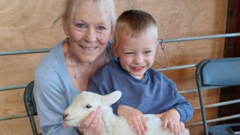
The spring tradition of visiting open farms has hit a biological wall. While families flock to the countryside for a tactile connection with nature, a surge in zoonotic infections is exposing a dangerous gap between agricultural reality and public perception. Dozens of people are currently suffering the consequences of a simple cuddle, proving that the distance between a cute lamb and a critical care ward is much shorter than most parents realize.
This is not a freak occurrence. It is the predictable result of mixing high-density animal environments with an immunologically naive public. We have spent decades romanticizing the farm gate while ignoring the microscopic ecosystem that lives behind it. When health officials urge the public to keep their hands off the livestock, they aren't being killjoys. They are trying to prevent a public health collapse driven by pathogens that don't care about your Instagram feed.
The Biology of the Petting Zoo Outbreak
The primary culprit in these seasonal spikes is often Cryptosporidium, a parasite that makes a mockery of standard hygiene. Unlike common bacteria that might succumb to a quick wipe, "Crypto" is encased in a hardy outer shell. It survives for weeks in the environment and laughs at alcohol-based hand sanitizers. If a child touches a lamb’s fleece—which is frequently contaminated with microscopic traces of feces—and then touches their mouth, the cycle of infection is complete.
The symptoms are brutal. We are talking about watery diarrhea, stomach cramps, and dehydration that can last for two weeks or more. For a healthy adult, it’s a miserable fortnight. For a toddler or an immunocompromised grandparent, it is a medical emergency. The sheer scale of the current outbreak suggests that the infectious load in certain environments has reached a tipping point where casual contact is no longer safe.
Why Hand Gel Fails
Most parents rely on a pump of sanitizer as a universal shield. This is a mistake. Alcohol-based gels are highly effective against many viruses and bacteria, but they are useless against the thick-walled oocysts of Cryptosporidium or the rugged spores of certain farm-based threats.
The only real defense is vigorous scrubbing with soap and running water. The mechanical action of washing is what physically removes the parasites from the skin. When farms provide a bucket of wipes instead of a plumbed sink with hot water, they are providing a false sense of security that actively contributes to the spread of disease.
The Economic Pressure on Open Farms
To understand why these outbreaks keep happening, you have to look at the ledger. Modern farming is a low-margin, high-stress industry. For many small-scale sheep farmers, "agri-tourism" isn't a hobby; it is the only thing keeping the bank from foreclosing. They need the foot traffic. They need the entry fees and the sales from the farm shop.
This creates a conflict of interest. A farmer knows that a "No Cuddling" sign might deter visitors. They are caught between the necessity of keeping the public safe and the desperate need to make the farm look inviting. Some operators take shortcuts on biosecurity because the cost of installing industrial-grade handwashing stations and hiring extra staff to monitor animal-human interaction eats into their already thin profits.
The Myth of the Clean Farm
There is a persistent belief that if an animal looks healthy and the barn smells "clean," the risk is low. This is a dangerous fallacy. Young lambs are the primary shedding engines for Cryptosporidium and E. coli O157. An animal can be a perfectly healthy carrier, showing no signs of distress while pumping out millions of infectious units into its bedding and onto its coat.
The Zero-Contact Reality
We have reached a stage where the traditional "hands-on" farm experience needs a total overhaul. The industry has long relied on the "Common Sense" defense, suggesting that if people just washed their hands, everything would be fine. But common sense is a poor barrier against a toddler’s instinct to put their fingers in their mouth.
The shift must move toward visual engagement. Viewing galleries, elevated walkways, and structured demonstrations offer the educational value of farming without the direct biological exchange. It feels less intimate, certainly. But it also results in fewer hospitalizations.
Liability and the Future of Rural Tourism
Insurance companies are watching these outbreaks with increasing scrutiny. The cost of defending a class-action lawsuit from dozens of infected families is enough to bankrupt a multi-generational farm. We are likely approaching an era where "petting" is phased out entirely by underwriters rather than by health officials. If you cannot insure the risk of a child contracting a life-altering kidney condition from E. coli, you cannot let that child touch the sheep.
A Necessary Disconnect
The countryside is a workplace and a biological habitat, not a theme park. The current outbreak serves as a sharp reminder that animals are not toys, and their environment is not a sterilized playground. If we want to support local agriculture and teach the next generation where their food comes from, we have to accept that some boundaries are non-negotiable.
The next time you see a "Do Not Touch" sign at a farm, recognize it for what it is: a warning that the animal in front of you lives in a world of bacteria that your body is not equipped to handle. Respect the fence. It’s the only thing standing between a family day out and a week in a hospital ward.
Keep your hands in your pockets and teach your children to appreciate the animal from a distance of three feet.