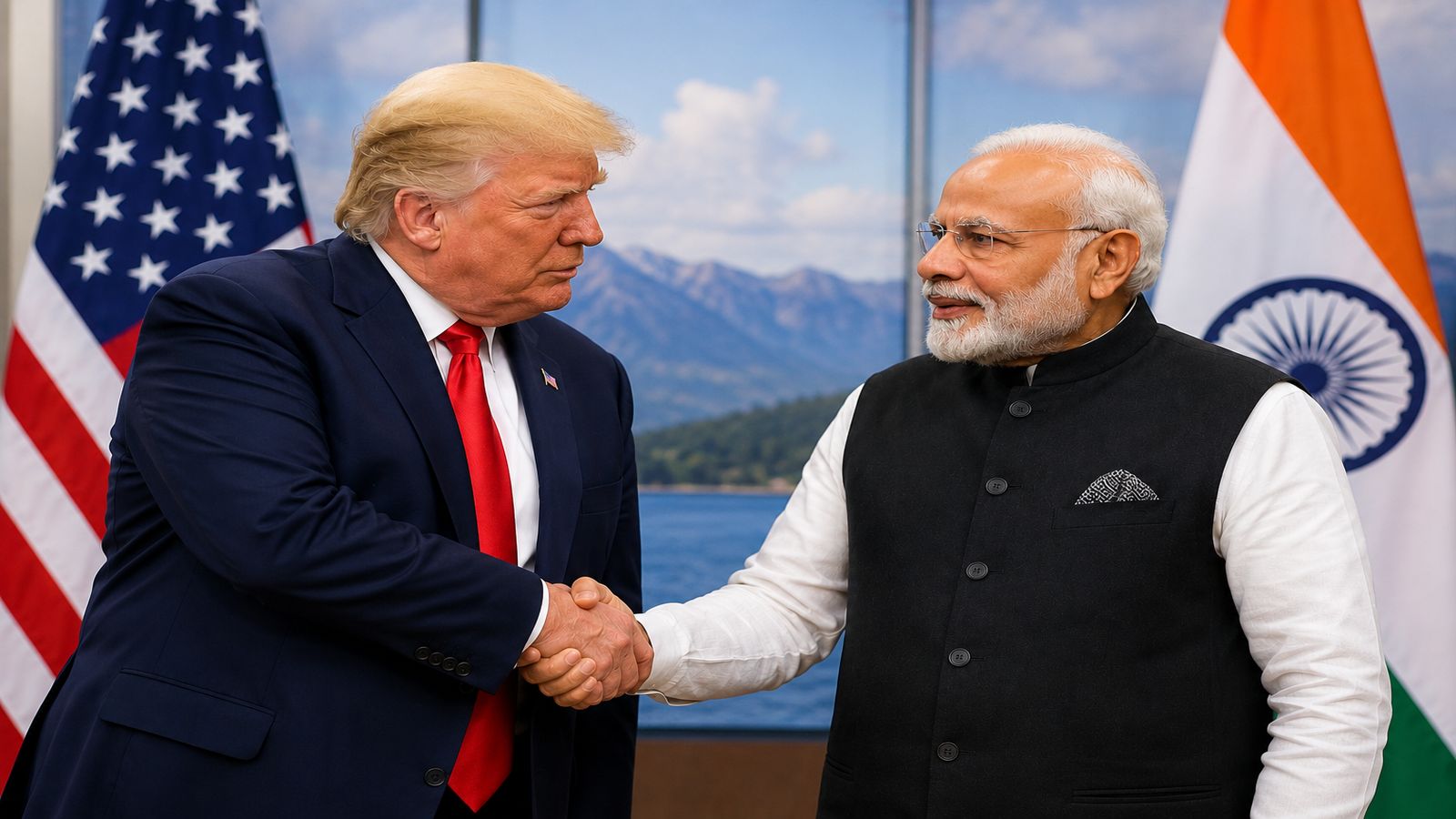
The official diplomatic narrative surrounding Washington and New Delhi is currently spotless. Speaking from the White House, US Secretary of State Marco Rubio declared that bilateral relations are going fantastic while dangling the prospect of a high-profile visit by President Donald Trump early next year. This public display of unity points to a deep, calculated push by both administrations to finalize a long-delayed bilateral trade agreement. Yet behind the optimistic rhetoric of being on the last inches of a deal lies a complex web of legal standoffs, tariff disputes, and deep strategic calculation that public announcements routinely gloss over.
A presidential trip is never just a social call. It is the ultimate diplomatic currency, saved for moments when major agreements require a final push or when geopolitical shifts demand a public show of force. The Trump administration wants to use this momentum to lock down economic concessions in Asia, while New Delhi seeks to cement its position as a primary counterweight to regional adversaries without sacrificing its domestic economic protection.
The Friction Over Reciprocal Tariffs
Money remains the core battlefield. While Rubio pointed to substantial progress following recent high-level meetings, the mechanics of the actual deal show significant structural hurdles. The framework for an interim trade deal was signed back in February, and negotiators initially expected a final signature by May. That deadline came and went without a breakthrough.
The delays are structural. The primary roadblock stems from ongoing legal challenges to the American reciprocal tariff system, combined with active Section 301 investigations into Indian exports. Washington wants deep access to India's massive domestic consumer market, particularly for agricultural goods and manufacturing inputs. New Delhi, fiercely protective of its domestic industries and agricultural voting blocs, has resisted wholesale tariff reductions.
The legal reality is stubborn. US Trade Representative Jamieson Greer recently wrapped up intense two-day talks in New Delhi without setting a new hard deadline, a clear sign that the final inches Rubio referenced are the most difficult to clear.
Energy and Supply Chains Define the Real Alliance
Geopolitics forces cooperation even when trade talks stall. Beyond the tariff dispute, the real glue holding the relationship together is energy security and industrial supply chains. India occupies a unique position in global energy infrastructure. It is one of the few nations with the industrial capacity to refine heavy crude at a massive scale, making it an indispensable player as the West attempts to realign global oil flows.
Washington views this refining capacity as a stabilizing tool for global markets. For New Delhi, securing steady American energy exports reduces its reliance on volatile Middle Eastern markets and complicates its controversial balancing act with Russian energy imports.
The Technological Imperative
Cooperation is expanding rapidly into heavy industrial technology. The two nations have quietly established deep roundtables focusing on artificial intelligence, semiconductor manufacturing, and critical mineral supply chains. These are not academic exercises. They are direct efforts to build a secure technology supply chain that excludes hostile actors from the manufacturing pipeline.
The Personal Diplomacy Factor
Personal ties drive the current momentum. The relationship between President Trump and Prime Minister Narendra Modi has historically bypassed traditional bureaucratic friction, relying instead on high-stakes personal rapport. This top-down diplomatic style can break bureaucratic logjams quickly, but it also creates unpredictability for long-term policy planners who prefer institutional stability.
Rubio noted that this personal connection is vital for modern diplomacy. It allows both leaders to project strength domestically while horse-trading on sensitive issues like defense manufacturing and intellectual property rights behind closed doors.
The Quad and Regional Security
Defense commitments provide a permanent foundation beneath the shifting trade landscape. Regardless of how the tariff negotiations conclude, the maritime security alignment through the Quad remains non-negotiable for both capitals. Joint naval exercises in the Indo-Pacific and expanded intelligence sharing continue to accelerate, independent of the fiscal disputes handled by trade representatives.
Washington needs a militarily capable partner anchored in South Asia. New Delhi requires access to advanced American defense technology and surveillance data to monitor its long, contested northern borders and vital Indian Ocean shipping lanes.
The upcoming months will test whether personal rapport can override institutional economic protectionism. Rubio plans to travel to India before December to lay the groundwork for the presidential visit, a trip that will serve as the true barometer for whether the trade deal can actually cross the finish line or if the administration will have to settle for another high-profile rally without a signed treaty.