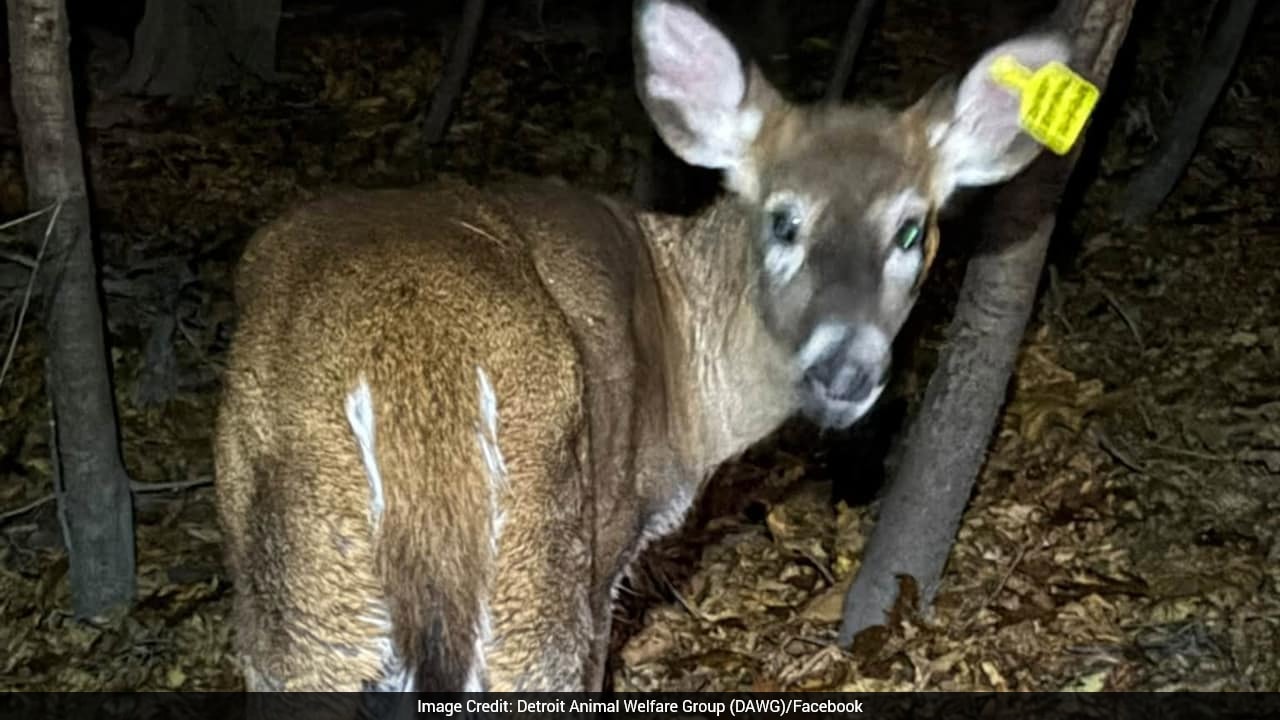
Every November, viral videos show wildlife officers pulling carved Halloween pumpkins off the heads of trapped deer across North America. While the internet treats these rescues as lighthearted seasonal bloopers, the reality behind a deer surviving ten days with a rotting gourd wedged over its skull reveals a grim collision between suburban habits and animal biology. A white-tailed deer caught in a plastic trick-or-treat bucket or a hollowed-out pumpkin faces imminent death from dehydration, starvation, and capture myopathy long before anyone calls a conservation officer.
The mechanics of the trap are brutally simple. Homeowners carve wide openings into large pumpkins or leave out rigid plastic candy pails, then place them on porches or dump them at the edge of the woods once October ends. A hungry deer pushes its narrow muzzle inside to reach the remaining seeds and pulp. Because a deer's skull widens sharply behind the eyes and its ears fold backward easily on entry, the animal slides its head in without resistance. Pulling back is another story. The rigid rim catches behind the brow ridge, the cheekbones, or the base of emerging antlers, locking the container in place like a reverse-barb hook.
Why Ten Days Is a Biological Miracle
Surviving ten days without food or water pushes a large mammal to the absolute edge of organ failure. Most wildlife biologists agree that a healthy adult deer can survive roughly a week to ten days without water under cool autumn conditions, though severe stress accelerates fluid loss rapidly.
When a pumpkin or bucket seals over a deer's face, the animal loses access to both moisture and calories at the exact moment its caloric burn spikes. Panic sets in immediately. The deer thrashes against trees, bolts blindly through brush, and burns through its glycogen reserves within hours. Unlike cattle or domestic livestock, wild cervids do not calmly wait for help. Their entire evolutionary survival strategy relies on explosive flight from predators.
Blindness turns that instinct into a death sentence. Without vision, a panicked deer runs straight into barbed-wire fences, parked cars, or deep drainage ditches. Even if the animal avoids fatal trauma during the first forty-eight hours, dehydration begins shutting down its kidneys by day four. By day seven, muscle wasting sets in as the body breaks down protein to keep the heart beating. Reaching the tenth day alive requires a rare combination of cool ambient temperatures, high initial body fat, and sheer luck in avoiding highway traffic.
The Invisible Killer During Wildlife Rescues
Viewers watching a ten-second clip of a game warden yanking a pumpkin off a buck's head rarely see what happens twenty minutes after the camera stops rolling. Wildlife veterinarians and conservation officers dread these calls because the rescue itself can kill the animal.
The threat is called capture myopathy. It is a non-infectious metabolic disease triggered by extreme exertion, fear, and physical restraint. When a trapped deer struggles violently while humans approach, hold it down, or dart it with tranquilizers, its muscles produce massive amounts of lactic acid. The blood pH drops precipitously. Muscle fibers rupture, releasing a protein called myoglobin into the bloodstream, which then clogs the delicate filtering tubules of the kidneys.
A deer can sprint away from a rescue team looking completely fine, only to collapse and die from acute kidney failure or cardiac arrest forty-eight hours later. Experienced wildlife officers know this. That is why professional rescues involve minimizing chase times, covering the animal's eyes immediately once the obstruction is removed, and backing away without lingering for photos. Well-meaning bystanders who corner a trapped deer to film it on their phones drastically increase the odds that the animal will die of shock even after the pumpkin comes off.
Plastic Pails Versus Real Pumpkins
Not all autumn yard waste carries the same level of risk, though both natural gourds and synthetic containers create distinct hazards for foraging animals.
| Container Type | Primary Trap Mechanism | Secondary Hazards |
|---|---|---|
| Carved Real Pumpkins | Hardened, dried rind shrinks inward as it dehydrates, tightening its grip behind the skull. | Mold growth, fermented sugars causing rumen acidosis, and obstructed breathing if pulp blocks the nostrils. |
| Plastic Trick-or-Treat Pails | Flexible polypropylene bends outward during entry, then snaps back behind the jaw and ears. | Wire or plastic handles loop around the neck or lower jaw, causing strangulation or deep lacerations. |
| Bird Feeders and Suet Cages | Narrow wire openings snag antlers during autumn sparring behavior. | Heavy metal cages blind the animal or prevent it from lowering its head to graze. |
Real pumpkins pose a deceptive timeline. Freshly carved on October 31, a thick-walled squash feels soft and easily breakable to human hands. Leave that same pumpkin on a porch in freezing November air for a week, and the rind loses moisture, turning as rigid as cured leather. If a deer forces its head inside before the gourd freezes solid, overnight temperatures can lock the shrinking rind tight around the animal's head.
Plastic buckets are far worse. They do not rot, they do not soften in the rain, and a deer cannot smash them against a tree trunk to break free. A standard plastic jack-o'-lantern pail has a rolled lip that acts like a zip-tie once it slips past a deer's ears.
The Autumn Rut Amplifies the Risk
Timing makes late October and November the worst possible months for unsecured attractants. Across North America, white-tailed and mule deer enter the rut, their annual breeding season, right around Halloween.
During the rut, adult bucks experience a massive surge in testosterone. Their necks swell, their caution evaporates, and they spend nearly every waking hour patrolling territory, chasing does, and sparring with rival males. A rutting buck burns thousands of extra calories a day while barely eating, leaving him desperate for quick, high-energy food sources whenever he pauses to feed.
Pumpkin flesh and seeds offer a dense hit of carbohydrates and fats. A buck driven by breeding hormones ignores human scent on a front porch or backyard compost pile that he would normally avoid in July. Young yearling bucks and fawns, recently separated from their mothers during the autumn dispersal, make even worse decisions. Lacking experience with human yards, juvenile deer investigate anything that smells faintly sweet, sticking their noses into containers far too small for their heads.
Why Backyard Feeding Backfires
Many homeowners leave pumpkins at the edge of their property out of genuine kindness, assuming local wildlife will enjoy a seasonal treat. That impulse misunderstands how a deer's digestive system works.
Deer are ruminants with a four-chambered stomach populated by specialized microbes tailored to digest woody browse, acorns, and fibrous greens. Their gut flora changes slowly across seasons to match available forage. Suddenly dumping a pile of sugary pumpkin pulp or leftover Halloween candy into the woods disrupts that microbial balance.
If a deer gorges on fermentable carbohydrates it is not acclimated to eating, acid-producing bacteria multiply rapidly inside the rumen. The resulting condition, known as rumen acidosis, inflames the stomach lining, causes severe dehydration, and can prove fatal within days. Wildlife agencies across dozens of states explicitly warn residents against dumping pumpkins in forests or parks for this exact reason, alongside the risk of spreading Chronic Wasting Disease by concentrating animals around a single pile of food.
How to Dispose of Halloween Decorations Safely
Preventing a ten-day wildlife ordeal takes less than two minutes of effort before tossing autumn decorations into the yard.
- Smash pumpkins flat. Before putting a carved pumpkin in a compost bin or yard waste pile, stomp on it or slice it into flat strips. Removing the enclosed cavity eliminates any chance of an animal getting its head stuck.
- Store plastic buckets indoors. Bring trick-or-treat pails inside immediately on Halloween night. Never leave empty candy containers on porches, decks, or near trash cans where wind can blow them into wooded areas.
- Cut all handles and loops. If you are throwing away a broken plastic pail, six-pack rings, or string lights, snip every closed loop with scissors so a foraging mammal cannot slip its jaw or antlers through the opening.
- Compost inside closed bins. Keep food scraps and gourd remains inside sealed tumblers rather than open ground piles accessible to neighborhood deer, raccoons, and bears.
If you spot a deer with a pumpkin, bucket, or netting trapped on its head, do not chase it or try to pull the object off yourself. A cornered deer can inflict severe injuries with razor-sharp hooves and antlers, and prolonged pursuit pushes the animal closer to fatal capture myopathy. Keep pets indoors, maintain a wide distance so the animal beds down calmly, and call your state wildlife agency or local animal control with the exact location.


