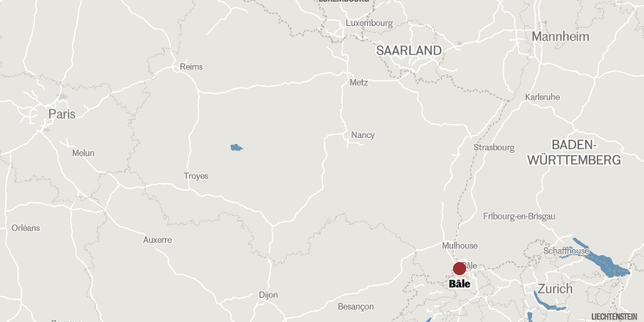
The Rhine River splits the city of Basel, a rushing artery of cold, dark water that has defined the region for centuries. Water is life here. It flows through the ancient fountains in the Münsterplatz, it cools the massive pharmaceutical plants that anchor the local economy, and it hums quietly through the labyrinth of pipes hidden behind the drywall of every modern apartment.
We don’t think about water. We trust it. We turn a silver handle, and it appears, clean and perfectly heated. We walk past a municipal fountain on a sweltering July afternoon, catching a stray drift of cool spray on our faces, and we feel nothing but relief.
Until the water turns against us.
Consider a hypothetical resident of Basel to understand the quiet terror of what has just unfolded. Let's call him Elias. Elias is sixty-eight, retired, with a fondness for long walks along the river and a mild history of smoking. On a Tuesday, he takes a warm shower. On Wednesday, he feels a slight ache in his joints.
Nothing serious.
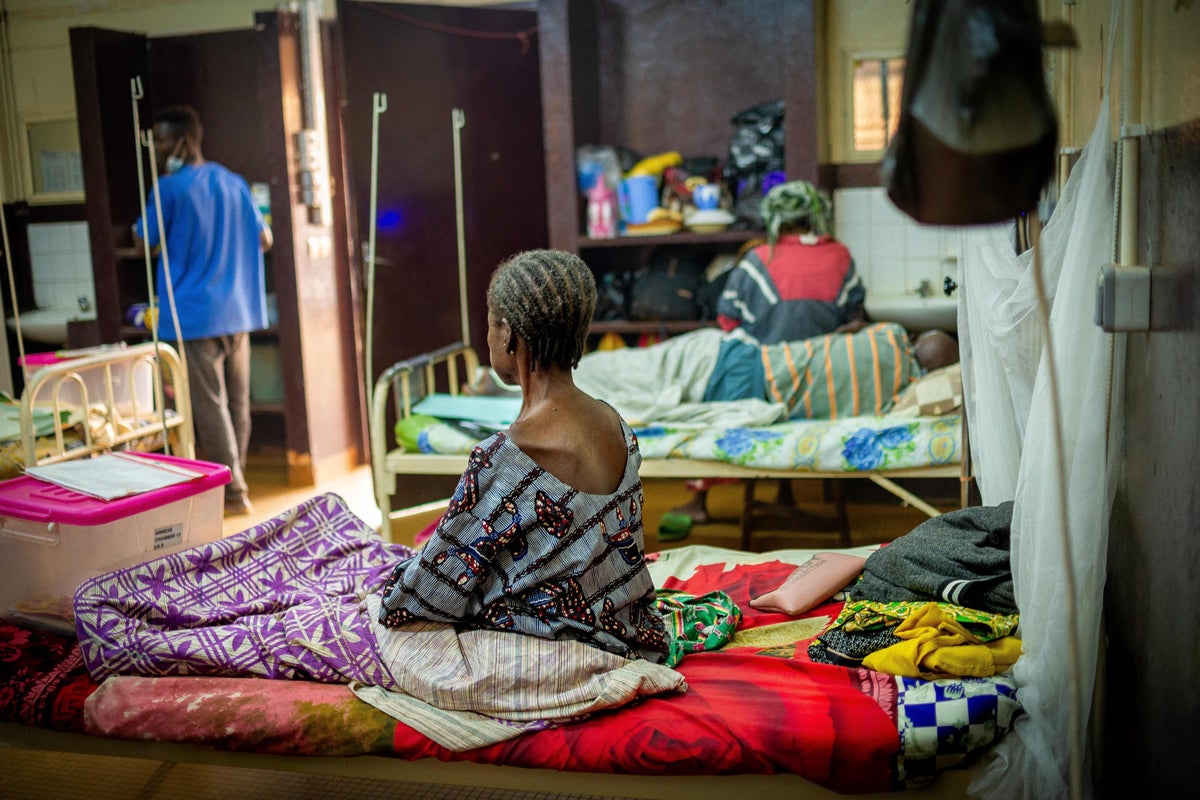
By Friday, Elias is coughing. It is a dry, hacking sound that rattles his chest. His fever spikes. His wife finds him sitting on the edge of the bed, confused, shivering violently despite the summer heat bleeding through the windows. The ambulance arrives with its sirens cutting through the quiet Swiss evening. In the emergency room, the doctors look at his chest X-ray and see a terrifying white fog expanding across the dark expanse of his lungs.
It is severe pneumonia. But antibiotics—the standard, heavy-hitting ones used for typical community-acquired pneumonia—don't seem to touch it. Elias is drowning on dry land.
Elias is a fictional composite, but his suffering is fiercely, tragically real for the victims of the latest outbreak in Switzerland. In a matter of weeks, twenty-six people in Basel were hospitalized with these exact, rapidly deteriorating symptoms.
And one person is dead.
One empty chair at a dinner table. One life abruptly halted, not by a heart attack or a car crash, but by an invisible predator hiding in the most innocuous place imaginable.
They call it Legionnaires’ disease.
The Microscopic Trojan Horse
To understand how twenty-six people in a modern, hyper-clean Swiss city end up fighting for their breath, you have to look at the elegant, terrifying biology of Legionella pneumophila.
This bacterium is not a new enemy. It is ancient. For millions of years, it has lived a quiet, mostly harmless existence in warm, stagnant bodies of fresh water. Out in the wild, Legionella survives by playing a microscopic game of hide-and-seek. It gets swallowed by amoebas, tiny single-celled organisms that graze in the mud. But instead of being digested, the bacterium hijacks the amoeba’s internal machinery, using it as a safe house to multiply, eventually bursting out to infect others.
Then, humans came along.
We built vast, sprawling cities. We constructed massive cooling towers on the roofs of our buildings. We installed intricate plumbing systems, hot tubs, and decorative fountains. We created perfectly heated, stagnant pools of water. We built the ultimate amoeba resort.
And then, we added aerosolization.
Legionella cannot hurt you if you drink it. Your stomach acid will incinerate it on contact. The danger only arises when the water is broken apart into microscopic droplets—a fine mist—and inhaled directly into the deep, vulnerable tissues of the lungs.
When you breathe in an aerosolized droplet containing Legionella, the bacteria travel down your trachea, past your bronchi, and into the tiny air sacs called alveoli. Here, your body’s defense system kicks in. Specialized white blood cells, known as alveolar macrophages, patrol these air sacs. Their job is to swallow and destroy foreign invaders.
The macrophage encounters the Legionella bacterium and engulfs it.
But the bacterium has been practicing for this exact moment for millions of years. To Legionella, your human immune cell looks exactly like an amoeba in a muddy pond. The bacterium deploys a chemical injection system, altering the macrophage from the inside out. The immune cell, meant to be the executioner, becomes the incubator. The bacteria multiply by the thousands until the macrophage bursts open, unleashing a massive infection that floods the lungs with fluid and inflammation.
It is an inside job. A biological betrayal.
The Ghost of Philadelphia
The tragedy in Basel is a modern echo of a mystery that terrified a nation nearly fifty years ago.
In July 1976, thousands of veterans gathered at the Bellevue-Stratford Hotel in Philadelphia to celebrate the bicentennial of the American Legion. It was a festive, crowded affair filled with parades, speeches, and cigar smoke.
Within days of returning home, veterans started dropping dead.
They fell ill with skyrocketing fevers, chills, and a pneumonia so aggressive it baffled the Centers for Disease Control. The media panicked. Was it domestic terrorism? A new, mutated strain of the swine flu? The nation watched in horror as the death toll climbed to twenty-nine, with over two hundred severely ill.
Months of grueling detective work eventually traced the killer not to a bioterrorist, but to the hotel's rooftop cooling tower. The water system had become heavily contaminated with a previously unidentified bacterium. The cooling system was spewing invisible, infected mist down into the streets and through the air conditioning vents, right into the lungs of the unsuspecting veterans.
They named the newly discovered pathogen Legionella, and the illness Legionnaires' disease, in grim honor of the fallen.
Since then, we have learned how to fight it. We developed specific antibiotics. We mandated strict cleaning protocols for industrial water systems. Yet, the outbreaks continue. They happen in luxury hotels in Las Vegas, in hospitals in Paris, and now, in the quiet, orderly streets of Basel.
Why? Because controlling water is an impossible task.
The Anatomy of an Outbreak
When twenty-six cases of a rare, severe pneumonia spike in a specific geographic cluster, public health officials do not walk; they run.
The investigation in Basel is a high-stakes manhunt where the killer is invisible and the crime scenes are everywhere. Epidemiologists must interview every surviving patient, or their terrified families, mapping out their movements over the two weeks prior to the illness.
Where did they walk? Where do they work? Did they visit a spa? Walk past a construction site using misting fans?
They are looking for the intersection. The single point on a map where all twenty-six lives unknowingly crossed paths with a microscopic cloud of death.
Once a potential source is identified—perhaps a cooling tower on top of a downtown office building, or the plumbing system of a large residential complex—the environmental teams move in in hazmat gear. They collect water samples, taking them back to high-security labs to culture the bacteria.
But Legionella grows slowly in the lab. It can take up to ten days to confirm a match between the bacteria in the environment and the bacteria in the lungs of the victims.
Ten days of waiting. Ten days where the mist might still be blowing.
The Invisible Stakes
The outbreak in Basel forces a profoundly uncomfortable realization. We are surrounded by infrastructure that we do not understand, built by people we will never meet, maintained by systems we blindly trust.
When you turn on the shower in a hotel room after a long day of travel, you don't think about the fact that the room might have been vacant for weeks. You don't think about the water sitting stagnant in the pipes behind the wall, slowly warming to the exact temperature at which Legionella thrives. You just want to wash the travel off your skin.
You step into the steam. You take a deep breath.
The people of Basel who fell ill did nothing wrong. They did not engage in high-risk behaviors. They were breathing the air in their city. They were washing their hands. They were living their lives.
The elderly are the most vulnerable, their immune systems naturally slowing down with age. Smokers, whose lung tissues are already compromised, are highly susceptible. But given a high enough dose, this pathogen can fell a healthy, middle-aged adult in a matter of days.
The death of one person in this outbreak is not a statistical anomaly. It is a catastrophic failure of the unseen safety nets we rely on. It is a reminder that the line between a normal Tuesday and a fight for your life in an intensive care unit is agonizingly thin.
We demand technological progress. We want cooler buildings in the summer, spectacular water features in our town squares, and instant hot water in our high-rise apartments. But every time we manipulate the natural environment to suit our comfort, we create new ecological niches. We build new homes for ancient things.
The authorities in Basel will likely find the source. They will shock the water systems with heavy doses of chlorine. They will scrub the cooling towers. The immediate threat will be neutralized, the headlines will fade, and the city will return to its quiet, efficient rhythm. The families of the victims will be left to navigate the quiet wreckage of the aftermath.
But the water will keep flowing.
The pipes will continue to hum behind the plaster. The fountains will spray their mist into the hot summer air. And the next time a sudden, cool breeze carries a fine mist across your face on a sweltering afternoon, you will feel the water settle on your skin. You will feel the dampness on your lips.
You might even stop walking for just a fraction of a second, looking up at the invisible droplets hanging in the light, wondering exactly what is suspended inside them.