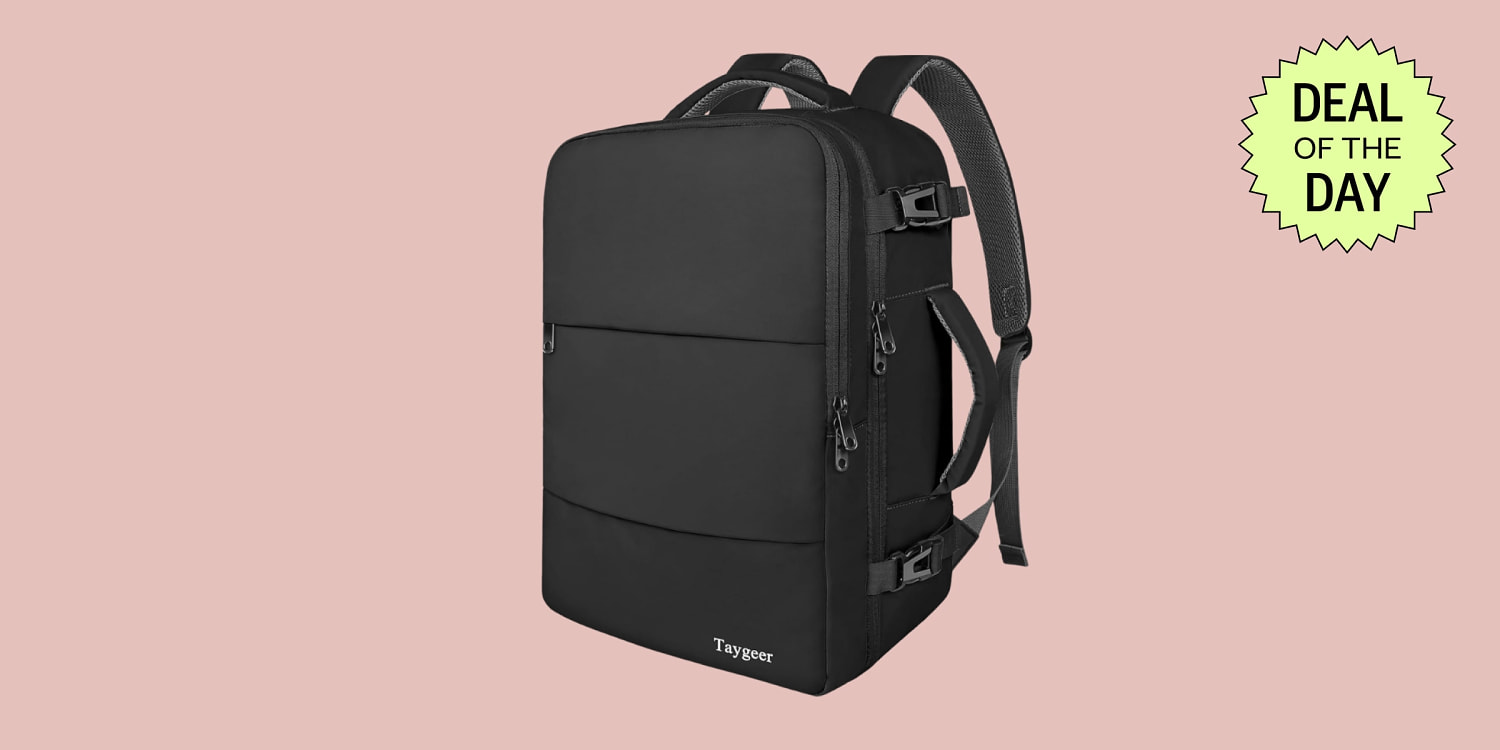
The cycle is predictable. A notification pings, a flash sale is announced, and suddenly a "perfect" work-travel backpack is sitting in your digital cart for 40% off the suggested retail price. For the modern professional who spends more time in airport lounges than in a corner office, the promise of a singular bag that bridges the gap between a boardroom presentation and a cross-continental flight is intoxicating. But behind the slashed price tags and the high-gloss marketing photography lies a gritty reality about the manufacturing of carry-on luggage and the tactical compromises made to hit a specific price point.
The immediate answer to whether these discounted bags are worth your money depends entirely on your frequency of movement. If you fly once a quarter, a mid-range bag at a deep discount is a logistical victory. However, if your lifestyle demands weekly transit, that 40% savings often functions as a down payment on a replacement bag eighteen months from now. The "work-travel" hybrid is one of the most difficult categories of gear to engineer because it demands two diametrically opposed traits: the rigid structure of a professional briefcase and the lightweight, pliable volume of a trekking pack.
The Mathematics of the Markup
To understand why a backpack can be discounted by nearly half and still turn a profit, you have to look at the landed cost of goods. Most consumer-grade travel gear is produced in high-volume factories where the difference between a $200 bag and a $100 bag often comes down to cents on the dollar for specific components.
Zippers are the first casualty of the discount war. A genuine YKK RC-Class zipper, specifically designed for luggage to resist abrasion and bursting, costs significantly more than a generic alternative. When a brand decides to run a massive promotional sale, they have already accounted for these component costs. They aren't losing money; they are clearing inventory of models that likely used lower-grade nylon or generic hardware.
Materials matter. Look closely at the "denier" count of the fabric. High-end ballistic nylon—originally developed for flak jackets—is dense, heavy, and incredibly resistant to the friction of a metal under-seat rail. Cheaper bags use polyester or low-density nylon with a heavy polyurethane coating to give it a "stiff" feel. That coating eventually flakes off, leaving the bag limp and prone to tearing.
The Ergonomic Deception
Marketing copy loves to talk about "breathable mesh" and "contoured straps." In reality, the suspension system of a backpack is where the most significant engineering occurs. Most work-travel bags are designed to look good on a mannequin, but they fail the "three-mile hike" test.
A truly professional travel pack requires a frame sheet—a thin, internal plastic or carbon fiber board that prevents the bag from "barrelling" when stuffed full. Without this, the bag rounds out, pulling the weight away from your center of gravity and placing the entire load on the thin muscles of your neck and tops of your shoulders. When you see a bag at a 40% discount, check the back panel. If it’s soft and easily foldable, it lacks the structural integrity to carry a 16-inch laptop and three days of clothes without causing physical strain.
The Laptop Compartment Fallacy
The "work" part of the work-travel backpack is almost always centered on the laptop sleeve. Manufacturers often brag about "fleece-lined" compartments. This is a distraction. Fleece prevents scratches, but it does absolutely nothing for impact protection.
The gold standard for a professional bag is a "suspended" laptop pocket. This means the sleeve ends two inches before the bottom of the bag. If you drop your bag on a concrete floor, the laptop never hits the ground; it remains suspended in mid-air by the internal stitching. High-volume, discounted bags rarely include this feature because it complicates the sewing pattern and increases production time. Instead, they use a thin layer of open-cell foam at the bottom, which compresses over time and eventually offers zero protection.
Beyond the Pockets
We have been conditioned to believe that more pockets equal better organization. This is a design trap. Every additional zipper and mesh divider adds weight and creates a new failure point. Veteran travelers often prefer a "clamshell" design—a bag that opens flat like a suitcase—with a cavernous main compartment and minimal built-in organizers.
This allows for the use of packing cubes, which are more efficient and modular than any built-in pocket system. A bag that tries to provide a dedicated spot for your passport, your pens, your chargers, and your snacks usually ends up with "dead space"—areas that are too small for anything useful but still take up external volume. The "perfect" bag isn't the one with the most features; it’s the one with the fewest obstacles.
The Sustainability of the Sale
There is an environmental cost to the "buy-and-replace" cycle fueled by these deep discounts. When a bag is sold at a price point that feels too good to be true, it is often treated as a disposable commodity. The professional luggage industry has seen a bifurcation: on one side, brands that offer lifetime warranties and repair services, and on the other, "fast-fashion" gear designed to last just long enough for the return window to close.
The investigative reality is that many of these sales are "manufactured." Certain brands keep their MSRP (Manufacturer's Suggested Retail Price) artificially high year-round just so they can advertise a permanent 40% discount. This creates a false sense of urgency for the consumer. You aren't "saving" $80; you are paying the actual market value for a bag that was never meant to sell for its original price.
Warranty and the Fine Print
Before you pull the trigger on a discounted travel pack, look at the warranty. A "limited" warranty usually covers manufacturing defects for a year. In the world of travel, a manufacturing defect usually reveals itself in the first week. What you actually need is coverage for "wear and tear."
If a buckle snaps in a London taxi or a strap frays in a Tokyo subway, will the company fix it? Most discount-heavy brands don't have a repair infrastructure. They would rather send you a new, cheap bag than pay a local cobbler to fix a seam. This is the hallmark of a product that is an expense, not an investment.
The Tactical Selection Process
If you are determined to take advantage of a sale, you must ignore the star ratings and look at the weight. A bag that weighs less than two pounds empty but claims to be "heavy-duty" is lying to you. Heavy-duty materials have mass.
Check the hardware. Metal D-rings and sliders are non-negotiable for anyone carrying more than ten pounds of gear. Plastic hardware under constant tension will eventually develop micro-fractures and snap at the worst possible moment—usually while you are running to catch a connecting flight.
The obsession with "the perfect bag" is a ghost chase. No single piece of luggage can be everything to everyone. The transition from the airport to the office requires a bag that can "shrink" its profile. Compression straps are essential here; they allow you to cinch down the volume of the bag once you've dropped your clothes off at the hotel, transforming a bulky travel pack into a slim office bag.
True value isn't found in a percentage off a sticker price. It's found in the cost-per-use. A $400 bag that lasts a decade costs $40 a year. A $120 "discounted" bag that falls apart in two years costs $60 a year. The math of the veteran traveler always favors the former.
Stop looking at the discount and start looking at the seams. If the stitching isn't reinforced at the load-bearing points of the shoulder straps, the bag is a ticking time bomb. High-end manufacturers use "bartack" stitching—tight, zig-zag patterns—to ensure the strap won't rip out under load. If you see simple straight lines at the tension points, leave it in the cart. Your gear deserves better than a bargain-bin failure.