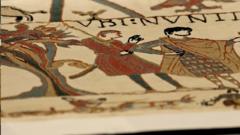
The physical survival of the Bayeux Tapestry is currently hanging by a thread. While tourists view the 70-meter-long embroidery as a static monument to the Norman Conquest of 1066, a tense, behind-the-scenes scientific crisis is unfolding in Normandy. Decades of microclimate exposure, structural stress from outdated display methods, and the compounding chemical degradation of its medieval linen have left the artifact in its most fragile state in a millennium. Moving it or modifying its environment risks irreversible damage.
The Illusion of Permanent Continuity
Step into the darkened room of the Bayeux Tapestry Museum in France, and everything feels eternal. The lighting is low. The air feels crisp and controlled. Visitors whisper in reverence as they follow the sweeping narrative of William the Conqueror and King Harold.
But this calm is artificial. Beneath the glass, the artifact is under immense physical stress.
For decades, the standard approach to textile conservation relied on a philosophy of stabilization through isolation. Put it behind glass, keep the humidity steady, and light it softly. This method kept the public happy, but it masked a deeper structural failure. Linen and wool are organic materials; they breathe, expand, contract, and break down over centuries.
The weight of the textile itself is its own worst enemy. Hung horizontally but slightly inclined across a massive circular display case, the top edges of the linen have borne the brunt of gravity for over forty years. Every vibration from footsteps in the gallery, every microscopic shift in atmospheric pressure, sends ripples of tension through fibers that were spun in the eleventh century.
The Chemistry of Decaying Thread
To understand why a major intervention is now required, you have to look at the chemistry of medieval textiles. The backing fabric is plain-woven linen. The vibrant scenes are embroidered with worsted wool yarns dyed with madder, woad, and weld.
Over nine hundred years, these components have aged at radically different rates.
Linen relies on cellulose chains. As these chains age, they undergo slow acid hydrolysis, a process that breaks the molecular bonds and robs the fabric of its tensile strength. The wool threads, rich in proteins, face a different threat: atmospheric pollutants and historical cleaning attempts. Past generations of caretakers used everything from harsh solvents to damp cloths to clean the surface, inadvertently driving soot and dirt deeper into the weave.
When conservators suit up in full protective gear to inspect the reverse side of the embroidery, they are not just looking for frayed edges. They are scanning for fungal spores, insect damage, and the chemical signatures of past structural adhesives.
The Structural Cost of Historical Relocation
The artifact was never meant to stay in one place, let alone hang in a custom-built crescent gallery for half a century. It spent its early life rolled up in a chest in the Bayeux Cathedral, brought out only for special feasts. It survived the French Revolution, Nazi occupation, and multiple close calls with fire.
Each move exacted a heavy toll.
+------------------+-------------------------+---------------------------------------+
| Era              | Storage / Display Mode  | Principal Damage Vector               |
+------------------+-------------------------+---------------------------------------+
| 11th–18th Century| Rolled in wooden chests | Mechanical friction, localized creasing|
| Late 19th Century| Stretched on a roller   | Extreme tension on the upper border   |
| 1983–Present     | Fixed curved glass case | Creep deformation, static dust charge |
+------------------+-------------------------+---------------------------------------+
This history complicates any modern plan to build a new museum or transport the textile. The physical memory of past handling is locked into the fibers. Bending the linen in a new direction or changing its tension profile can cause ancient micro-fractures in the cellulose to open into full tears.
The Great Political Tug of War
Conservation is rarely just about science. Politics always interferes.
A few years ago, headlines buzzed with the prospect of the artifact traveling across the English Channel for a historic exhibition in the United Kingdom. It was framed as a grand diplomatic gesture, a symbol of cross-border cooperation. Behind closed doors, international textile experts were horrified.
The logistics of moving a fragile 70-meter textile across water are a nightmare. You cannot simply roll it up and put it in a crate. The variation in vibration alone during transit could shake loose fragile wool fragments that have held onto the backing linen by mere friction for centuries.
The Microclimate Trap
Even a journey of a few miles requires transport containers with active climate control. If the internal relative humidity drops by even five percent during transit, the wool threads will contract faster than the linen backing. This creates a shearing effect at the exact points where the embroidery pierces the fabric.
The diplomatic loan eventually stalled, ostensibly due to the artifact's structural fragility revealed by comprehensive digital scanning. The scan showed thousands of microscopic holes, stains, and old repairs holding the piece together like a patchwork quilt. The reality is simple: the object is too weak to travel, and any politician who demands its relocation is gambling with an irreplaceable piece of human history.
Rewriting the Rules of Museum Architecture
The current crisis has forced a radical rethink of how we build spaces for ancient textiles. The traditional museum puts the visitor first, optimizing sightlines and foot traffic flow. The new school of conservation architecture puts the artifact’s structural physics first, forcing the building to adapt to the object.
A new facility must solve the problem of static tension. One proposed method involves flat, horizontal display beds that eliminate gravitational pull on the fabric entirely.
This presents a massive architectural challenge. A flat display requires an enormous room with clear sightlines from above, altering how people interact with the narrative. Visitors would look down onto the conquest of England, viewing it from raised gantries rather than standing face-to-face with the figures.
Controlling the Human Element
Humans are destructive. Every visitor who enters a gallery brings in heat, moisture, shed skin cells, and clothing fibers. Multiply that by hundreds of thousands of people a year, and the air filtration system becomes the most critical piece of equipment in the building.
The air conditioning cannot just be comfortable; it must create a laminar flow that pushes dust and human debris away from the display glass. Static electricity from the glass panels can pull fine dust through minuscule gaps in the casing, depositing a layer of gray grime directly onto the historic wool.
The Dilemma of Modern Restoration
When a conservator looks through a stereomicroscope at a frayed section of King Harold’s armor, they face a profound ethical choice: do you fix it, or do you let it age?
In the nineteenth century, restorers had no qualms about re-embroidering faded sections with bright, contemporary wool. They wanted the narrative to be legible. Today, that approach is considered desecration. Modern intervention is minimal, focusing on stabilization rather than aesthetic beauty.
The Problem with Reversible Fixes
The core tenet of modern conservation is reversibility. Any stitch added today must be easily removable tomorrow without damaging the surrounding original material.
To achieve this, conservators use incredibly fine silk threads and specialized needles that slide between the linen fibers rather than piercing them. But even a stabilizing stitch alters the local tension of the fabric. If you secure a weak spot on the left, the stress simply migrates to the right, finding the next weakest link in the ancient weave.
It is a constant game of structural triage. Conservators map every single stain, patch, and repair line using multi-spectral imaging. This data allows them to track structural degradation in real-time, watching how the fabric shifts under the influence of seasonal climate changes outside the museum walls.
The Future of Digital Preservation
As physical access to the original textile becomes more restricted for its own protection, digital surrogates are stepping in to fill the gap. High-resolution 3D scans allow researchers to examine the twist of individual threads and the tool marks of the needles without ever touching the fabric.
This shift changes the nature of travel and research. A historian in London or Tokyo can analyze the embroidery in greater detail than someone standing in front of the display case in Bayeux. It raises an uncomfortable question for the tourism industry: if the digital version is better for study, and viewing the physical object actively contributes to its decay, how long should the public be allowed inside the room?
The pressure to keep the galleries open is immense. The local economy of Bayeux relies heavily on the steady stream of travelers who arrive via train from Paris every morning. Closing the exhibit for a multi-year stabilization project would devastatingly impact local businesses, creating a direct conflict between economic survival and cultural preservation.
The Unforgiving Path Forward
The survival of this artifact requires a complete abandonment of sentimentality. We must stop viewing it as an indestructible trophy of war and start treating it as a highly unstable chemical system that is actively breaking down.
The upcoming decades will demand tough, unpopular choices. The display must be flatter, the lighting darker, and visitor access significantly restricted. The days of casual, up-close viewing of this ancient masterpiece are drawing to a close, replaced by a strict regime of scientific containment designed to extend its life by a few more centuries.
Every patch of linen, every strand of faded wool, and every stitch holding the narrative together is fighting a losing battle against time. The only variable we can control is how fast we allow that clock to tick.