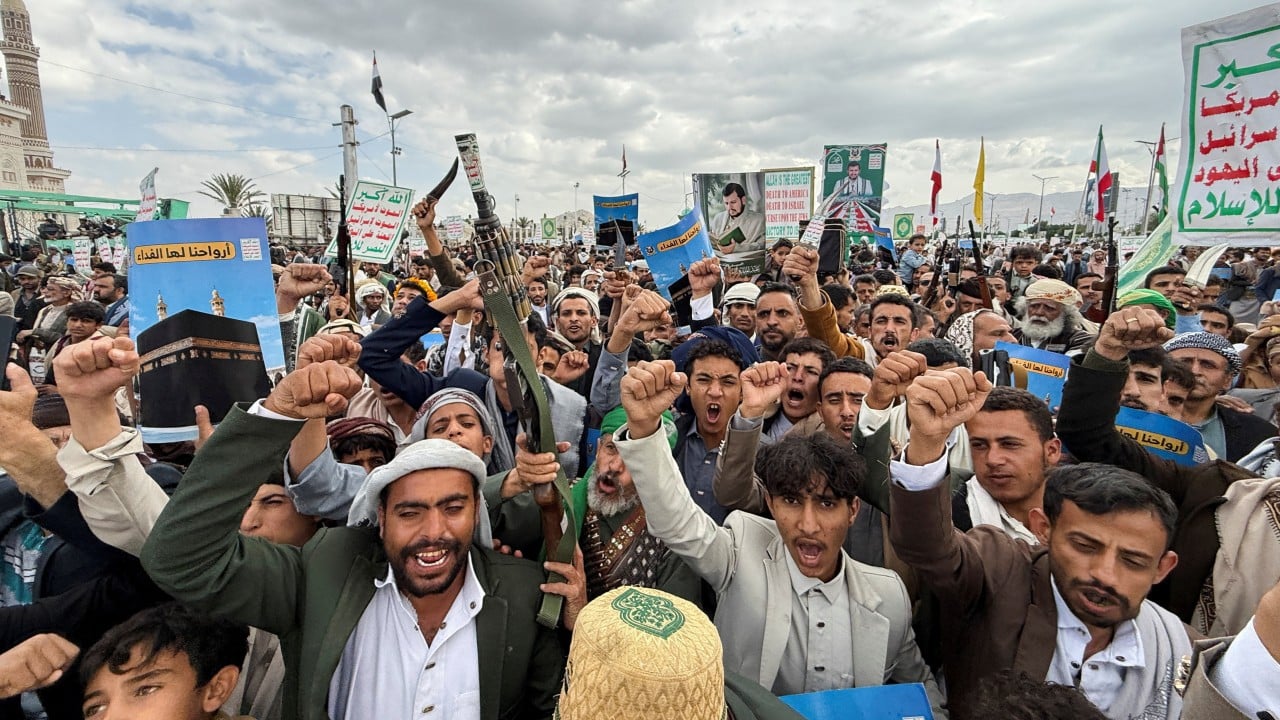
Geopolitics rarely operates in straight lines. When Riyadh tightens its security posture against the Houthi movement in Yemen, foreign policy analysts immediately search for traditional military pacts, overt troop deployments, and public communiqués. Yet the real mechanism of modern statecraft moves through quieter corridors. Pakistan and Saudi Arabia are currently navigating a delicate diplomatic and operational recalibration regarding the conflict in Yemen. Islamabad finds itself balancing severe domestic economic realities against decades of institutional defense ties with the Gulf monarchy.
To understand why Pakistan is moving toward a formalized support role in the Saudi security perimeter around Yemen, one must examine the structural realities of South Asian military diplomacy. Pakistan's armed forces possess specialized counter-insurgency capabilities and technical advisory assets that Riyadh values immensely. However, domestic political sensitivities in Islamabad prevent any direct, large-scale combat deployment into the southern Arabian theater. Instead, the partnership has evolved into an architecture of intelligence sharing, logistical reinforcement, and border security cooperation.
The Economic Leverage Driving Islamabad
Money shapes foreign policy long before the first bullet leaves the barrel. Pakistan's persistent balance of payments crises, foreign reserve shortages, and dependency on international monetary bailouts leave little room for romantic notions of non-alignment. Riyadh has historically acted as Pakistan’s financial shock absorber, rolling over loans, supplying deferred oil facilities, and injecting emergency capital when default loomed on the horizon.
This financial lifeline creates an unspoken quid pro quo. When Saudi security planners express acute concern over Houthi drone and missile technology infiltrating maritime choke points and southern territorial zones, requests for assistance filter down diplomatic channels. Islamabad cannot afford to say no outright, nor can it afford the public blowback of a botched foreign intervention. The compromise is a shadow footprint—training missions, maintenance support for advanced air defense systems, and intelligence analysts embedded in regional command centers.
History offers clear parallels. During previous escalations in the region, Pakistani military missions maintained a defensive posture within the kingdom's borders, explicitly drawing a line against crossing into active offensive engagements inside foreign territory. Yet, modern warfare blurs these lines. When operating complex radar systems or advising on air defense batteries near sensitive infrastructure, the distinction between defense and support begins to dissolve.
The Operational Reality of Houthi Capabilities
The Houthi movement is no longer a localized insurgency operating out of rugged northern mountains. Decades of asymmetric conflict have transformed Ansar Allah into a sophisticated military actor capable of deploying long-range loitering munitions, ballistic missiles, and unmanned surface vessels. This evolution directly threatens critical maritime routes in the Bab el-Mandeb strait and the Red Sea corridor.
For Riyadh, securing the southern flank requires multi-layered defensive depth. Western security guarantees have proven fickle, subject to shifting congressional moods in Washington and changing human rights priorities in European capitals. Saudi leadership has steadily learned that external security partners must be diversified. Pakistan, possessing one of the largest standing armies in the Muslim world with extensive conventional warfare experience, offers a reliable institutional partner that does not lecture its allies on internal governance.
Yet, military analysts often overestimate the ease of interoperability between Pakistani personnel and the heavily Western-equipped Saudi armed forces. While elite units from both nations participate in recurring bilateral exercises such as the Al-Samaah series, integrating command structures under real-time combat stress presents severe friction points. Language barriers, differing tactical doctrines, and distinct bureaucratic cultures mean that Pakistan's role remains largely advisory and technical rather than front-line operational command.
Navigating Domestic Political Minefields in Pakistan
Back in Islamabad and Rawalpindi, the leadership walks a very narrow tightrope. Public opinion in Pakistan remains intensely weary of foreign entanglements, particularly conflicts perceived as sectarian proxy wars in the Middle East. Lawmakers and religious political parties monitor government actions closely, wary of any drift that might drag Pakistani soldiers into the grinding quagmire of the Yemeni civil war.
Parliamentary resolutions from previous years explicitly mandated neutrality in regional conflicts outside the immediate defense of Pakistan's borders. Successive governments have had to honor this legislative baseline while simultaneously managing the indispensable economic relationship with the Saudi state. This contradiction explains the reliance on deniable, low-profile forms of assistance. If a technical advisor or intelligence officer operates quietly inside a command bunker in Tabuk or Riyadh, it rarely makes evening television broadcasts in Lahore or Karachi, keeping domestic political friction at a manageable level.
Furthermore, Pakistan maintains complex diplomatic calculus with Iran. Tehran views the conflict in Yemen through a fundamentally different lens, and Islamabad has historically gone to great lengths to avoid antagonizing its western neighbor. Deepening security cooperation with Riyadh while maintaining a diplomatic equilibrium with Tehran requires supreme diplomatic dexterity. Any overt, aggressive posture against Houthi forces risks inviting retaliatory cyber actions or diplomatic friction that Pakistan's security apparatus prefers to avoid.
The Regional Security Ripple Effect
The alignment between Pakistan and Saudi Arabia regarding Yemen is symptomatic of a broader regional realignment. As traditional security architectures fray, Middle Eastern and South Asian states are stitching together bilateral security arrangements based on transactional necessity rather than ideological alignment.
The primary vector of this cooperation is technological defense integration. With drone warfare and asymmetric naval tactics dominating modern regional conflicts, the demand for specialized technical personnel has skyrocketed. Pakistan's defense industrial base, while struggling with domestic resource constraints, produces specialized training regimens and maintenance protocols that are desperately needed to keep advanced defense shields operational against persistent aerial harassment.
Yet, this arrangement creates an inherent vulnerability for both sides. If a high-value asset is struck, or if a Pakistani advisor is caught in the crossfire of a retaliatory strike, the political fallout could force Islamabad to abruptly scale back its footprint. Riyadh understands this fragility, which keeps the cooperation tightly capped beneath a threshold that would trigger domestic crises in South Asia.
The war in Yemen is far from reaching a definitive political settlement. Even amid fragile ceasefires and ongoing back-channel peace talks, the underlying security architecture of the southern Arabian Peninsula remains brittle. Pakistan will continue to play a crucial, understated support role for Saudi Arabia, driven by financial necessity and institutional military ties, but constrained by the heavy gravity of domestic politics and regional balance-of-power realities. The partnership endures not because of shared romantic ideals, but because neither capital can afford the cost of walking away.


