The humidity in Metro Manila does not merely sit on your skin. It enters your lungs like warm water, thick with the scent of diesel exhaust, salt spray from the bay, and the sweet, charred sugar of banana cue frying on street corners.
Stand along Roxas Boulevard on a late afternoon in November, and you can feel the vibration of a city perpetually idling in first gear. Jeepneys painted in neon chrome rattle past concrete seawalls. Office workers in pressed barongs wipe sweat from their foreheads while waiting for overloaded buses. High above them, mounted on steel poles, banners flutter in the monsoon breeze—crisp, primary-colored, welcoming the President of the United States to the Republic of the Philippines. Discover more on a connected topic: this related article.
To the wire services filing dispatches from air-conditioned hotel press rooms, the event is a clean sequence of logistical milestones. Air Force One touches down at Villamor Air Base. A motorcade sweeps across closed highways. A bilateral summit begins, kicking off a broader diplomatic swing through Asia. The headlines write themselves, flat and predictable, reducing the movement of empires to an itinerary.
They miss the tremor beneath the asphalt. More reporting by BBC News explores related perspectives on the subject.
Because when an American president steps onto Philippine soil—whether during the tense, summit-heavy autumn of 2017 or in the high-stakes diplomatic maneuvers of the mid-2020s—the arrival is never merely ceremonial. It is a physical test of an alliance forged in blood, strained by history, and stretched thin across some of the most contested waters on earth. For the people living along the edges of those waters, diplomatic protocol is not an abstract chessboard. It is the difference between coming home with a full hold of fish or returning with a splintered hull.
The Weight of a Seventy-Year Promise
To understand why the landing of a single silver-and-blue Boeing 747 stops traffic for ten miles, consider a hypothetical fisherman—let us call him Mateo—pushing his wooden outrigger off the coast of Zambales before dawn.
Mateo does not read foreign policy journals. He knows nothing of the technical wording inside the 1951 Mutual Defense Treaty signed between Washington and Manila. Yet his entire livelihood hangs by the thread of Article IV of that document, which declares that an armed attack in the Pacific area on either nation would be dangerous to the peace and safety of the other.
For decades, that sentence functioned like a quiet insurance policy tucked into a drawer. Nobody looked at it because nobody needed to file a claim. Then the reefs began to change shape.
Starting roughly fifteen years ago, dredgers appeared on the horizon of the South China Sea—waters that Manila calls the West Philippine Sea. Sand was pumped onto submerged coral atolls until artificial islands rose from the surf, complete with three-thousand-meter runways, radar domes, and missile shelters. Suddenly, the traditional fishing grounds where Mateo’s grandfather cast his nets were patrolled by white-hulled coast guard cutters the size of naval destroyers, firing high-pressure water cannons at wooden boats.
Imagine living in a house where a neighbor slowly builds a brick wall across your driveway, inch by inch, every single week. When you complain, the neighbor smiles, offers to help pay for your roof repairs, and insists the driveway always belonged to them. Meanwhile, your strongest friend—the one who promised fifty years ago to stand on your porch if trouble ever started—lives ten thousand miles away across an ocean, distracted by a dozen other fires.
That is the emotional arithmetic playing out every time a U.S. president lands in Manila to open an Asian tour.
I remember standing near the gates of Malacañang Palace during a previous presidential visit, watching the faces of the crowd pressed behind the steel barricades. There was no simple, unified emotion on display. You could see pride—the undeniable thrill of a nation of over one hundred million people commanding the undivided attention of the world’s primary superpower. Beside it stood a raw, unmistakable skepticism. Filipinos carry a long memory. They remember the colonial era that followed the 1898 Spanish-American War. They remember the brutal liberation of Manila in 1945, which left their capital the second most devastated Allied city after Warsaw. They remember 1991, when the Philippine Senate voted to close the massive American bases at Subic Bay and Clark, only to watch regional power balances shift dramatically in the vacuum left behind.
History here is not a closed book. It is an open wound that aches whenever the weather turns.
Why the Tour Always Starts Here
Look at a map of the Western Pacific, and the geography explains what speeches try to obscure.
The Philippine archipelago forms a jagged, seven-thousand-island shield running north to south along the Asian littoral. At its northern tip, the Bashi Channel separates Luzon from Taiwan by barely a hundred miles of turbulent sea. To the west lies the South China Sea, through which roughly one-third of all global maritime trade—trillions of dollars in electronics, crude oil, grain, and manufactured goods—must pass every year.
If you are an American president embarking on an Asian tour, starting in Manila is a deliberate signal sent across time zones before a single policy paper is signed.
Washington’s strategic planners refer to this arc of islands as the First Island Chain. Think of it as a natural stone breakwater protecting a harbor. As long as the breakwater holds, the open Pacific remains accessible and secure. If a single major section of that wall crumbles—or decides to switch sides—the ocean behind it becomes an open highway for whoever controls the gap.
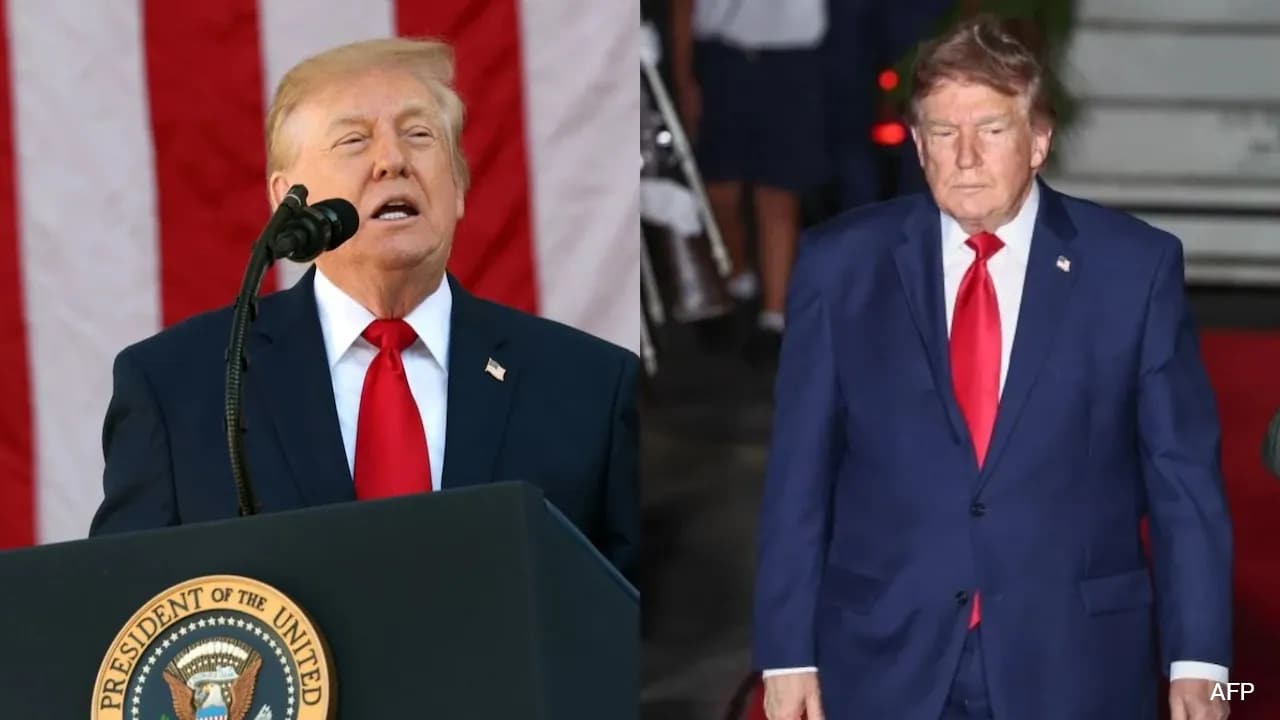
For years, that alliance wobbled violently. During the presidency of Rodrigo Duterte, Manila openly courted Beijing, threatening to tear up the Visiting Forces Agreement and cursing American officials in late-night television broadcasts. The diplomatic machinery rattled near collapse. When Donald Trump arrived in Manila in November 2017 to wrap up a twelve-day Asian journey at the ASEAN summit, observers watched closely to see whether personal rapport between two populist leaders could paper over deep structural cracks.
Years later, the geopolitical pendulum swung back hard, yet the underlying anxiety remained identical. Under subsequent administrations in both capitals, military access expanded under the Enhanced Defense Cooperation Agreement—known locally as EDCA—opening up nine Philippine bases to rotational American forces, including sites facing directly toward Taiwan and the contested Spratly Islands.
But treaties and base agreements are ink on paper. Ink does not stop a water cannon.
The Invisible Stakes Behind the Motorcade
When the presidential limousine glides down Roxas Boulevard behind a phalanx of motorcycle outriders, the public sees armored glass and fluttering flags. Inside the conference rooms at the Philippine International Convention Center or the historic halls of Malacañang, the conversation strips away the pageantry and turns coldly transactional.
Every Philippine leader who sits across from a visiting U.S. president arrives with three urgent questions, even if diplomatic etiquette forbids phrasing them bluntly:
First, where is the red line? Washington has repeatedly stated that an armed attack on Philippine public vessels, aircraft, or armed forces anywhere in the South China Sea triggers American mutual defense commitments. Yet modern maritime friction rarely looks like an invasion. It looks like gray-zone coercion: laser pointers aimed at coast guard bridges, steel hulls ramming fiberglass resupply boats bound for the rusting wreck of the BRP Sierra Madre at Second Thomas Shoal, and swarms of maritime militia vessels blocking access to Scarborough Shoal. When does a bump become an attack? Nobody in Manila wants to discover the answer is "not quite yet."
Second, what happens to the Philippine economy if tensions boil over? Trade does not travel on aircraft carriers. China remains one of the Philippines’ largest trading partners, supplying everything from steel rebar for Manila’s endless condominium towers to cheap consumer electronics in provincial malls. If the Philippines leans too visibly into Washington’s security embrace, Beijing has shown across Asia—from South Korean department stores to Australian wine exports—that it knows how to weaponize commerce without firing a shot. Manila wants American investment, semiconductor supply chains, and infrastructure financing that can match Beijing’s checkbook, not merely promises of destroyers parked over the horizon.
Third, how durable is American attention? This is the quietest fear in Southeast Asia, spoken mostly in lowered voices over coffee in Makati boardrooms. Asian capitals watch American elections with an intensity that would surprise most voters in Ohio or Pennsylvania. They have seen Washington announce a "Pivot to Asia," only to get pulled back into crises in Eastern Europe or the Middle East. They have watched trade agreements negotiated for years get discarded with a single stroke of a pen on Inauguration Day.
To live in a middle-power nation caught between two giants is to spend your life checking the wind direction before you step outside.
Voices Beneath the Flight Path
Leave the diplomatic bubble around Manila Bay and walk two miles inland into neighborhoods like Pasay or Tondo, where corrugated tin roofs bake under the tropical sun, and the presidential visit takes on an entirely different texture.
Here, the geopolitical chess match translates into immediate, personal realities. Nearly two million overseas Filipino workers send billions of dollars in remittances home every year from jobs in the United States, the Middle East, and across East Asia—money that pays for nursing degrees, concrete house extensions, and dialysis treatments. Meanwhile, hundreds of thousands of young graduates work overnight shifts in gleaming call centers in Bonifacio Global City, speaking in practiced American accents to troubleshoot broadband routers for customers in Texas and California.
The bond between the two countries is woven through kitchens, hospital wards, and family group chats long before it reaches a summit table.
Yet confusion lingers alongside that warmth. Talk to a university student riding the elevated LRT train past the heavily guarded perimeter of the U.S. Embassy—a sprawling compound sitting right on the edge of Manila Bay—and you hear an honest ambivalence. They scroll through viral videos of Philippine Coast Guard sailors dodging massive Chinese vessels at sea, feeling a surge of anger and patriotism. Minutes later, they see clips of American political division on the very same feed and wonder aloud whether a superpower struggling to agree with itself at home can truly be counted on to risk its own ships for a shoal seven thousand miles away.
It is an uncomfortable question. Even seasoned diplomats admit privately that deterrence relies heavily on psychology—on convincing an adversary that a promise will be kept before anyone is forced to test it. Once doubt creeps into the room, the math begins to shift.
The Long Shadow of the Pacific
As evening falls over Manila Bay, the tropical sky bruises into deep purple and burnt orange, famous across the archipelago for turning polluted water into liquid gold for twenty brief minutes before dark.
Across the bay, past the container cranes of the Port of Manila and the dark silhouette of Corregidor Island—where American and Filipino troops once held out in subterranean tunnels against overwhelming odds—the open South China Sea stretches toward the horizon. Out there in the gathering night, coast guard crews are standing watch on rolling decks, radar screens glowing green in darkened wheelhouses, tracking blips that do not belong there.
Back in the capital, the motorcades have cleared the boulevards. The street sweepers have pushed the fallen banners into neat piles along the curbs. The summit communiqués have been drafted, vetted by lawyers, and released to the press, filled with familiar phrases about ironclad commitments, free and open seas, and enduring friendship.
Tomorrow, the presidential aircraft will lift off from the runway, climbing steeply over the bay to carry the weight of American power onto the next stop of its Asian itinerary. Traffic will surge back onto Roxas Boulevard in a deafening wave of horns and exhaust. And before sunrise on the western coast of Luzon, Mateo will untie his wooden boat from the pier, push off into the dark surf, and look toward the horizon to see whose lights are waiting on the water.