Two thousand pounds of steel moving at highway speed does not make a sound until it is already too late.
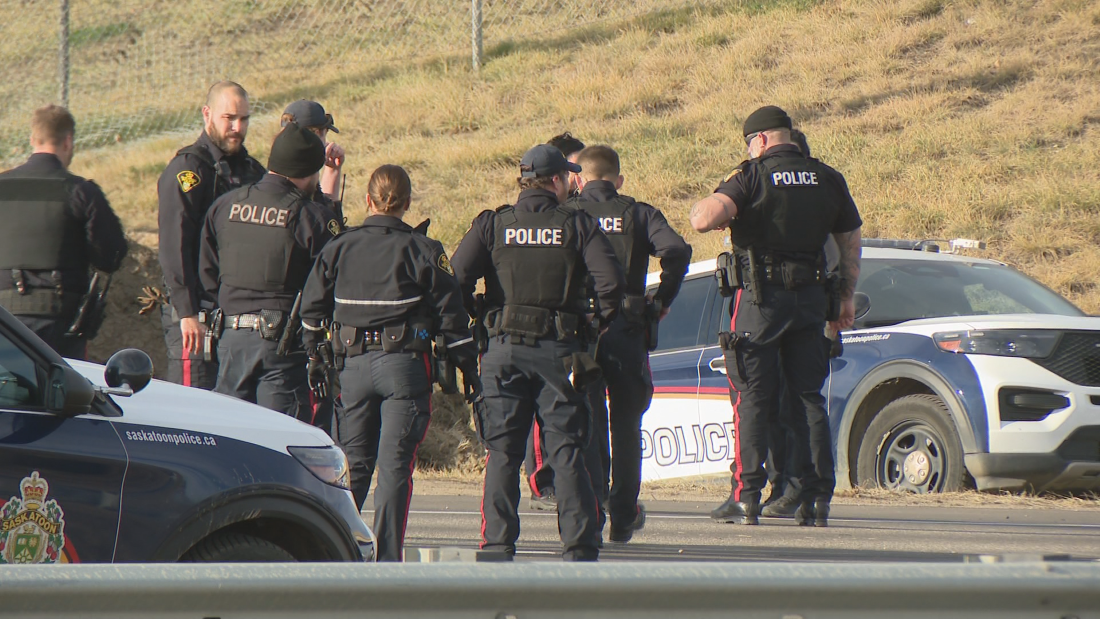
You hear the rush of displaced air first. Then comes the sickening, metallic thud that vibrates straight through the soles of your boots and up into your teeth. On a cold street in Saskatoon, a local police officer stepped out into the dark to do a routine job, and in a fraction of a second, the ordinary rhythm of a city night shattered into flashing red and blue lights.
The news reports will give you the clinical skeleton of what happened. They will tell you a Saskatoon Police Service officer was struck by a vehicle. They will note that emergency crews rushed to the scene, that the officer was transported to the hospital, and that their condition is currently listed as stable. They will wrap the entire terrifying ordeal in neat, administrative language designed to reassure the public and move on to the next headline.
Stable.
Read that word again. In medical terminology, "stable" simply means a patient is not actively dying at this exact second. It means vital signs have plateaued. It does not mean painless. It does not mean unbroken. And it certainly does not capture the quiet, suffocating dread sitting in the fluorescent-lit waiting rooms of Royal University Hospital while a family stares at a closed door, praying for a doctor to walk out with good news.
The Thin Neon Line
To understand what happened on that Saskatoon asphalt, you have to understand the sheer vulnerability of roadside policing. Most people view a police cruiser with its emergency lights spinning as an invincible fortress. We see the badge, the heavy utility belt, the commanding presence, and our brains subconsciously assign a layer of armor that simply does not exist.
In reality, when an officer steps out of a patrol car onto a city street or a Saskatchewan highway, their only real protection is a thin vest of reflective fabric and the fragile hope that passing drivers are paying attention.
Consider a hypothetical scenario—one that plays out hundreds of times every single night across Canadian cities. Imagine a patrol officer named Marcus, seven years on the force, pulling over a sedan with a busted taillight on a slick stretch of Circle Drive. It is 1:30 AM. The temperature is dropping, turning damp pavement into black ice. Marcus checks his mirrors, steps out into the biting wind, and walks toward the stopped car. He is focused on the driver's hands, the traffic passing inches from his left elbow, and the glare of headlights blinding his peripheral vision. Meanwhile, three hundred yards back, a tired commuter looks down at a glowing phone screen for just two seconds. At sixty miles per hour, a car travels nearly the length of a football field in those two seconds. The commuter drifts toward the shoulder. Physics takes over.
This is not a rare anomaly. Traffic-related incidents consistently rank among the leading causes of line-of-duty injuries and fatalities for law enforcement officers across North America. According to data compiled by national safety councils and police associations, roadside collisions kill and maim more officers each year than almost any other threat they face. Yet, because these events lack the cinematic drama of a high-speed chase or a standoff, they barely register in the public consciousness. We read a three-paragraph blurb over morning coffee, feel a fleeting pang of sympathy, and forget about it before we reach the bottom of our mug.
The Anatomy of a Split-Second
Why do drivers hit stationary emergency vehicles lit up like Christmas trees? The answer lies in a bizarre psychological trap known as target fixation, or the moth effect.
When human beings drive at night, our eyes are naturally drawn to bright, contrasting lights in the darkness. Under normal circumstances, looking where you want to go is how you steer a car. Your hands unconsciously follow your eyes. When a driver sees the intense strobe of red and blue emergency lights cutting through the dark, their gaze locks onto the cruiser. If that driver is fatigued, distracted, or impaired, their brain fails to process the spatial boundary between the lane and the shoulder. Because they are staring directly at the flashing lights, they subtly steer straight toward them.
I have stood on the shoulder of a busy roadway at night, feeling the wind blast from passing semi-trucks rock me back on my heels. Until you experience it firsthand, you cannot comprehend how fast a vehicle closes the distance. You do not have time to jump. You do not have time to shout. Your nervous system barely registers the blinding twin suns of the headlights before impact.
For the Saskatoon officer currently recovering in a hospital bed, that theoretical physics lesson became brutal reality. The kinetic energy of a moving automobile transfers instantly into the human body, causing injuries that rarely heal on a clean timeline. Fractures, internal trauma, concussions, and torn ligaments are only the beginning. The physical recovery stretches from weeks into months, and often into years of grueling physical therapy.
What Happens When the Sirens Stop
When an officer is struck, the shockwave radiates outward through an entire community, though most of the damage stays hidden from public view.
First, there is the immediate squad—the partners and shift mates who were first on the scene. Law enforcement officers are trained to compartmentalize emotion so they can function in chaos. When they arrive at a collision and realize the person lying on the pavement is wearing their own uniform, that compartmentalization fractures. They still have to secure the perimeter, direct traffic, interview witnesses, and preserve evidence for the collision analysts. They do their jobs with mechanical precision while their stomachs are tied in knots, waiting for radio updates from the trauma bay.
Then, there is the family. Every police spouse and parent lives with a low-grade hum of anxiety every time their loved one buckles on a duty belt and walks out the door. They make a silent bargain with the universe each shift, trading peace of mind for public service. When the phone rings at an odd hour and the caller ID shows a supervisor's name instead of their partner's, the floor drops out from under their lives.
And finally, there is the quiet reckoning for the officer themselves. Waking up in a hospital bed, tethered to monitors and IV lines, brings a jarring identity crisis. People who spend their careers being the ones who run toward emergencies are suddenly entirely helpless, dependent on nurses to help them sit up or reach a cup of water. The psychological toll of surviving a catastrophic impact often lingers long after the bones have knitted back together. Hypervigilance sets in. The sound of screeching tires or the sight of approaching headlights triggers a surge of adrenaline that is hard to turn off.
The Rules We Forget on the Asphalt
We tend to view traffic laws as mere suggestions—minor inconveniences designed to slow down our commute. We treat speed limits as minimums and yellow lights as challenges. When we see flashing lights ahead on the shoulder, our instinct is often annoyance at the sudden bottleneck rather than caution for the human beings standing inches from live traffic.
Saskatchewan, like nearly every jurisdiction in North America, enforces strict "Slow Down, Move Over" legislation. The law is simple: when passing stopped emergency vehicles with their lights activated, drivers must slow down to a designated safe speed—typically 60 kilometers per hour in Saskatchewan—and move into the far lane whenever possible.
Yet, ask any patrol officer, paramedic, or tow truck operator in Saskatoon how often drivers actually obey that rule. They will tell you about the mirrors clipped off their cruisers while they were writing a citation. They will tell you about diving over guardrails to avoid drivers who refused to tap their brakes. They will tell you about the casual indifference of motorists who speed past at full velocity, staring straight ahead, completely oblivious to the fact that a single twitch of the steering wheel could end a life.
The legislation exists because lawmakers recognized an undeniable truth: flashing lights alone cannot stop a two-ton vehicle. Only human discipline can.
The Long Road Back
Right now, in a quiet hospital room in Saskatoon, an officer is staring at the ceiling, listening to the steady, rhythmic beep of a heart monitor. Outside, the city keeps moving. Commuters rush to beat the morning traffic, coffee cups balanced in center consoles, radios humming, eyes darting to text messages at red lights.
The official update says the officer is stable. The investigation into the crash continues, piecing together skid marks, witness statements, and dashcam footage to determine exactly how and why a routine shift turned into a tragedy. Eventually, the press releases will stop. The news cycle will move on to weather forecasts, city council debates, and hockey scores.
But tonight, another squad of Saskatoon police officers will line up for roll call, check their gear, and drive out into the dark streets to keep watch while the rest of the city sleeps. They will step out onto cold asphalt with nothing between them and oncoming traffic except a strip of reflective tape and a quiet, unspoken trust that the person behind the wheel is actually looking at the road.
Next time you see those red and blue lights cutting through the dark ahead of you, take your foot off the gas, move over a lane, and look closely at the silhouette standing beside the cruiser—because that uniform is not made of steel.