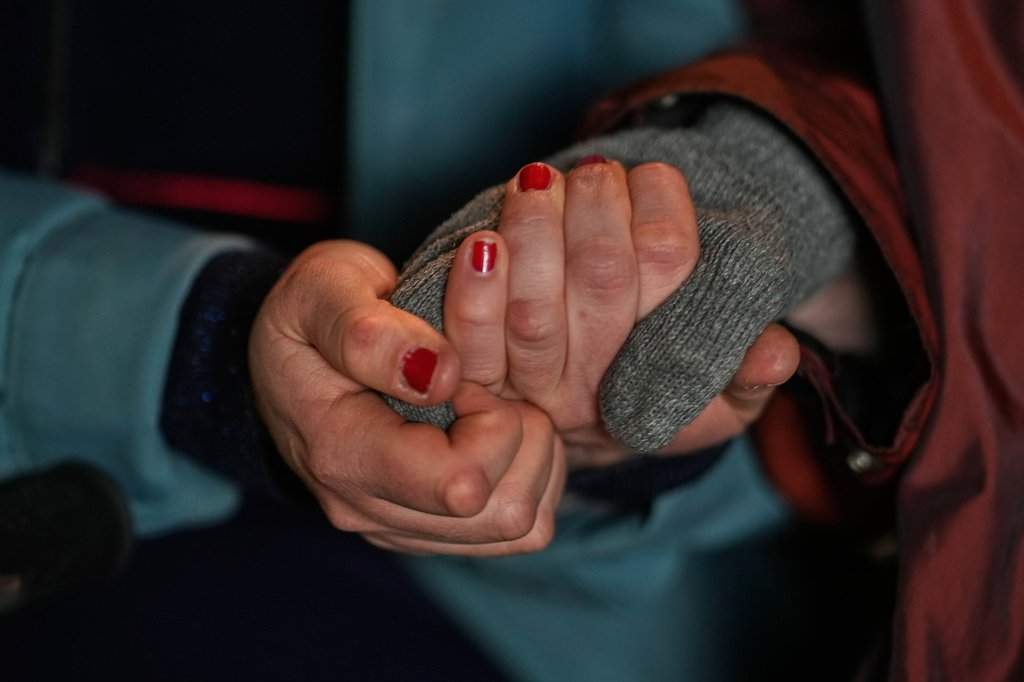
There is a very specific taste to October in New Delhi.
If you have never stood on a rooftop in Lajpat Nagar just as the afternoon sun begins to fail, it is difficult to describe. It is not the sharp, clean bite of autumn frost you might find in northern Europe, nor the damp, earthy chill of a coastal monsoon. It is metallic. It sits on the back of your tongue like the dust from a freshly swept concrete floor, paired with the faint, sweet ghost of burning sugar cane and dry leaves.
You do not just see the air change. You taste it before the meteorological stations even update their digital boards.
Consider a hypothetical evening in the life of Aarav, a forty-two-year-old schoolteacher living in East Delhi with his seven-year-old daughter, Maya. Every year, as the Hindu festival of Diwali approaches, Aarav faces a quiet, exhausting war inside his own living room. Maya wants sparklers. She wants the small, spinning clay pots that erupt in showers of gold, illuminating the courtyard and making the whole neighborhood laugh. She wants the joy she sees in old photographs and hears about in stories from her grandparents.
Aarav wants her to sleep through the night without waking up gasping for air.
Between those two desires sits a thick, choking wall of gray particulate matter, an annual enforcement order banning firecrackers, and a city of thirty million people caught between ancient celebration and modern survival.
The Invisible Architecture of a Crisis
To understand why the Delhi government routinely imposes strict bans on the manufacture, storage, sale, and bursting of firecrackers ahead of Diwali, you first have to stop thinking of the sky as an open room.
In the peak of summer, the plains of northern India bake under relentless heat. Warm air rises, carrying dust, exhaust, and industrial smoke high into the atmosphere, where winds sweep it away toward the Bay of Bengal. The sky acts like a chimney with a strong draft.
Then comes late October and November. The temperatures drop. The wind dies down to a whisper.
Think of the geography of the Indo-Gangetic Plain as a massive, shallow bowl, with the towering wall of the Himalayas blocking the northern edge. When the weather cools, a layer of warm air settles high above the city, acting like a heavy glass lid placed directly over that bowl. Meteorologists call this a temperature inversion. Beneath that lid, the cold air stays trapped near the ground, unable to rise, unable to escape, and unable to disperse whatever we pump into it.
When the Air Quality Index—commonly known as the AQI—climbs past 300, officials classify it as "Very Poor." When it breaches 400, it enters the "Severe" category. At that point, breathing the ambient air in Delhi is no longer just uncomfortable; it becomes a measurable biological assault.
The primary culprits are microscopic particles known as PM2.5—particulate matter smaller than 2.5 micrometers in diameter. To put that size into perspective, a single human hair is roughly seventy micrometers wide. You could line up nearly thirty of these toxic particles across the width of one strand of hair. Because they are so vanishingly small, the tiny hairs and mucus in your nose and throat cannot trap them. They slip right past your body's natural defenses, travel deep into the furthest reaches of your lungs, and pass directly into your bloodstream.
Once inside, they do not simply vanish. They trigger systemic inflammation, thicken the blood, irritate the delicate lining of your arteries, and place immense strain on the heart and lungs.
The Arithmetic of a Single Night
A common point of friction in Delhi every autumn is the question of blame. People ask, quite reasonably, why a single night of fireworks should bear the brunt of government crackdowns when trucks rumble down the highways all year, construction dust coats every neighborhood, and agricultural fires burn across neighboring states.
The frustration is real, and it deserves an honest answer. Firecrackers are not the sole author of Delhi's winter pollution. Throughout October and November, farmers in Punjab and Haryana burn millions of tons of leftover paddy stubble to quickly clear their fields for the winter wheat crop. Prevailing winds carry those massive plumes of smoke straight toward the capital. Add in vehicular emissions from millions of cars and two-wheelers, coal-fired power plants on the periphery, and unregulated construction dust, and you already have a baseline of hazardous air before a single match is struck.
Here is where the danger of firecrackers lies. They are not a slow, steady drip; they are a sudden, concentrated chemical explosion inside an already sealed room.
Traditional firecrackers are packed with heavy metals and toxic compounds designed to create vivid colors and deafening booms. Barium produces green sparks; strontium creates red; copper yields blue; aluminum and magnesium provide the blinding white flashes. When ignited, these substances release a dense cloud of sulfur dioxide, nitrogen oxides, carbon monoxide, and ultra-fine metallic dust directly at street level—right at the height where children run and elderly neighbors sit on their verandas.
When the city's air is already stagnant under an autumn inversion, adding tens of thousands of localized chemical bursts pushes PM2.5 concentrations from dangerous to catastrophic within hours. In past years, monitoring stations across Delhi have recorded PM2.5 levels shooting past 900 micrograms per cubic meter the morning after Diwali—more than sixty times the safe daily limit recommended by the World Health Organization.
Living Inside the Haze
Statistics have a way of flattening human suffering into clean, digestible numbers. Saying "the AQI reached 412" sounds like a weather report. Living inside a 412 feels entirely different.
It begins with a subtle scratch at the back of the throat, the kind you try to clear with a sip of water, only to realize the irritation isn't going away. By midday, your eyes feel gritty, as though you have been staring into a fan for hours. If you walk briskly up a flight of stairs, your chest feels slightly tight, refusing to expand quite as deeply as it did in August.
For the vulnerable, the timeline is much shorter and far more frightening.
Pediatric wards across Delhi see a predictable, heartbreaking surge every late October. Parents arrive at midnight carrying toddlers who are wheezing, their ribs pulling inward with every shallow breath. Elderly residents with chronic obstructive pulmonary disease or heart conditions find themselves tethered to nebulizers and oxygen concentrators, watching the festival through closed glass windows while wet towels are stuffed along the bottom gaps of doors to keep the smoke out.
Even healthy adults feel the cognitive fog. Poor air quality reduces oxygen efficiency and triggers low-grade inflammation that leaves people feeling sluggish, irritable, and perpetually exhausted. You wake up tired. You go to bed with a dull headache behind your eyes. You begin checking your phone's air quality app before you even check the time, letting a number dictate whether you are allowed to take a walk, open a window, or let your children play outside.
It is an exhausting way to live, and it breeds a deep sense of helplessness. When the very act of breathing feels risky, trust in public systems begins to fray.
The Enforcement Dilemma and the Gray Market
Every year, as the Supreme Court and the Delhi Pollution Control Committee reiterate comprehensive bans on firecrackers—extending not just to bursting them, but to manufacturing, storing, and selling them—a familiar cat-and-mouse game unfolds across the National Capital Region.
Enforcement teams conduct raids on illegal warehouses in outer Delhi and neighboring districts, seizing thousands of kilograms of banned explosives. Police checkpoints appear along border roads connecting Delhi to Haryana and Uttar Pradesh, inspecting trunks and delivery vans for smuggled cartons.
Yet, anyone who has spent Diwali night in Delhi knows that the bans are porous.
Part of the problem is geographical. Delhi does not exist in a vacuum; it is woven seamlessly into satellite cities like Noida, Gurugram, Ghaziabad, and Faridabad. When rules differ across state lines, or when enforcement varies from one district to the next, firecrackers easily slip across invisible administrative borders. Even where bans are uniform across the region, a thriving underground market quickly adapts, shifting sales from open roadside stalls to discreet neighborhood networks and unmarked delivery bags.
The deeper challenge, however, is cultural and emotional.
Diwali is not merely a date on a calendar; it is the centerpiece of the year for millions of families. It is a festival celebrating the triumph of light over darkness, knowledge over ignorance, and good over evil. For generations, the crackle of firecrackers has been woven into the sensory memory of the holiday, right alongside the glow of clay diyas, the scent of cardamom and roasted sweets, and the warmth of family reunions.
When authorities issue blanket prohibitions without winning the hearts of the people, many citizens view the ban not as a public health intervention, but as an intrusion into their heritage. They feel singled out, asked to sacrifice a cherished tradition while industrial smokestacks continue to belch fumes and political leaders across state lines trade blame over crop burning instead of forging lasting solutions.
That sense of unfairness fuels defiance. Lighting a firecracker becomes, for some, an act of quiet rebellion against rules that feel arbitrary or selectively enforced.
The Myth of the "Green" Compromise
In recent years, policymakers and scientists have tried to thread the needle by introducing "green crackers"—formulations developed by India's Council of Scientific and Industrial Research. These alternatives eliminate hazardous heavy metals like barium and reduce particulate emissions by roughly thirty percent compared to conventional fireworks.
On paper, they look like a bridge between tradition and public health. In practice, they have created profound confusion.
When the air is already choked with smoke from stubble burning and stagnant winter winds, a thirty percent reduction in emissions from a firework is like swapping a heavy sledgehammer for a slightly lighter one while hitting a cracked window. The glass still shatters. Moreover, the market has been flooded with counterfeit packaging—standard, toxic firecrackers stamped with fake green logos and forged QR codes that consumers have no reliable way to verify on a crowded street.
Because enforcement agencies cannot easily distinguish genuine low-emission fireworks from illegal ones during a chaotic festival night, authorities in Delhi have repeatedly been forced to uphold total bans rather than risk opening a loophole that swallows the entire rulebook.
It is an imperfect, blunt instrument. Nobody—not the doctors, not the environmental scientists, and certainly not the parents—believes a cracker ban alone will cure Delhi's winter air. True recovery requires year-round structural transformation: subsidizing machinery so farmers do not need to burn crop stubble, electrifying public transit, enforcing dust control at every construction site, and transitioning regional industries away from dirty fuels.
Until those massive wheels finish turning, however, the ban remains an emergency tourniquet. It is meant to stop the bleeding during the exact week when the city's lungs are weakest.
Reclaiming the Light
Return for a moment to Aarav and his daughter Maya on their East Delhi balcony.
It is eight o'clock on the night of Diwali. Outside, the city hums with a muffled, restless energy. Down in the lane below, a sudden volley of firecrackers erupts, shaking the windowpanes and sending a sharp, sulfurous plume curling upward toward the third floor. Aarav instinctively steps forward, sliding the glass balcony door shut and clicking the latch.
Maya watches the brief, violent flash of white sparks fade into a thick gray cloud that lingers stubbornly under the streetlights, refusing to drift away. She looks disappointed, her small fingers resting against the cool glass.
Aarav feels a pang of guilt—the quiet ache every parent knows when they have to say no to a child's joy for reasons too big and invisible for a seven-year-old to fully grasp. He cannot explain temperature inversions or heavy metal toxicity to her tonight. He only knows that her inhaler is sitting on the nightstand beside her bed, and he would give anything to keep it untouched until morning.
So he kneels beside her, strikes a single wooden match, and lights a row of small, hand-painted clay diyas lined up along the interior windowsill.
The flames do not roar. They do not fill the room with acrid smoke or rattle the glass. They sit steady and quiet, casting a warm, golden glow across Maya's face, reflecting softly in her dark eyes. For thousands of years before gunpowder ever reached the plains of northern India, this was the true heart of the festival—the simple, defiant act of lighting a small flame against the gathering dark.
Outside the glass, the gray haze presses against the city, heavy and unresolved. Inside, Maya leans closer to the warmth, watches the tiny flames dance, and takes a deep, unhurried breath.